Monthly Archives: March 2026
The Last Stand: How Exurban Coffee Shops Became the New Front Lines of American Culture
The Tide Turns Back
The great suburban exodus is officially over. After fifteen years of Americans fleeing strip malls and cul-de-sacs for city centers, the Census Bureau’s 2025 Urban Migration Report confirms what those of us tracking cultural shifts have been sensing: cities added 1.8 million residents last year while suburban growth flatlined. But here’s the twist nobody saw coming. The real action isn’t happening in Brooklyn lofts or downtown Austin condos.
It’s happening in the places people left behind. Specifically, in the coffee shops that sprouted up in their wake.
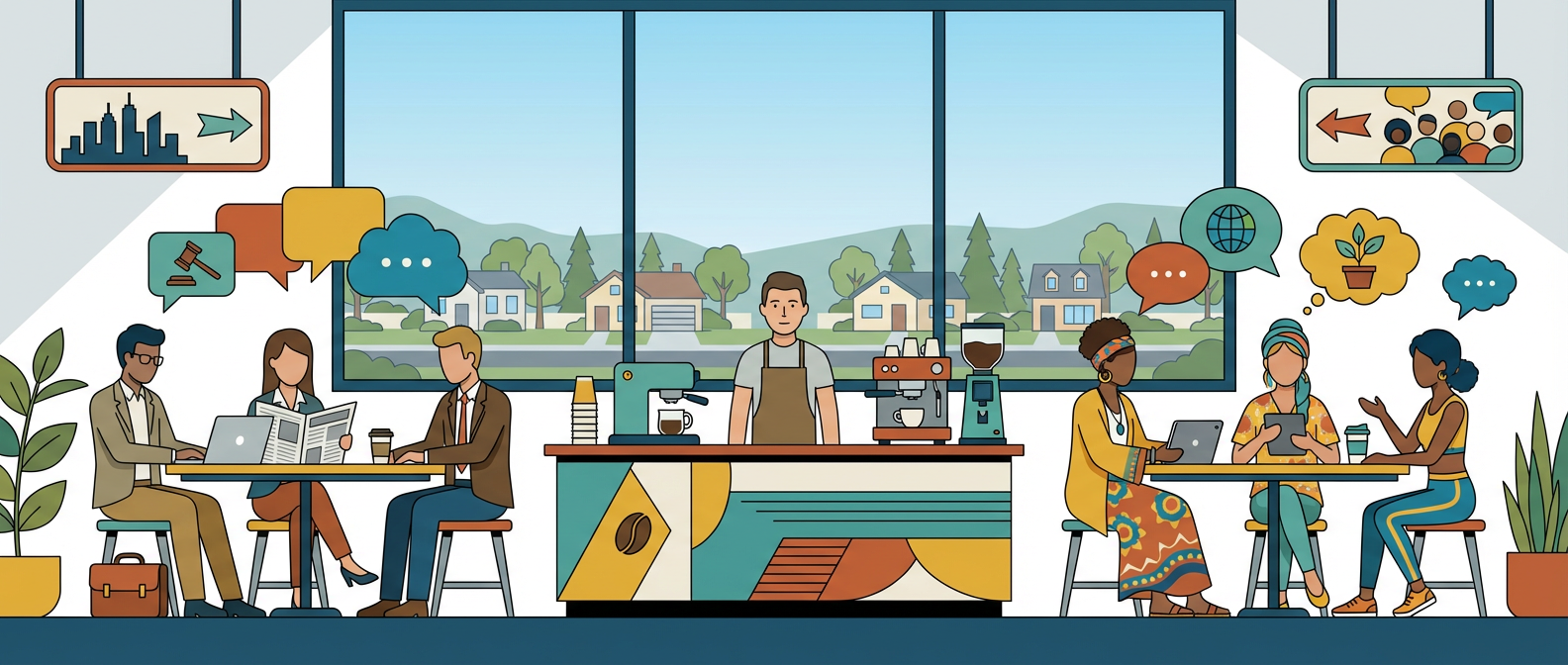
Drive through Alpharetta, Georgia or Plano, Texas today and you’ll find something unexpected. Where Starbucks once dominated every corner plaza, independent roasters now pull shots with the precision of downtown baristas. These aren’t your typical suburban coffee chains. We’re talking about third-wave coffee culture dropping into communities that still debate whether pineapple belongs on pizza.
The Numbers Don’t Lie
The Specialty Coffee Association’s Exurban Expansion Study tracked 847 independent coffee shops opening in previously chain-dominated exurban locations throughout 2025. That’s more than two new specialty coffee shops every day in places where “specialty” used to mean adding an extra pump of vanilla syrup.
Meanwhile, Starbucks shuttered 340 suburban locations in the final quarter alone. The surviving independent shops in those same areas saw revenue spike by an average of 234%. This isn’t just market correction. It’s cultural revolution brewing at 195 degrees Fahrenheit.
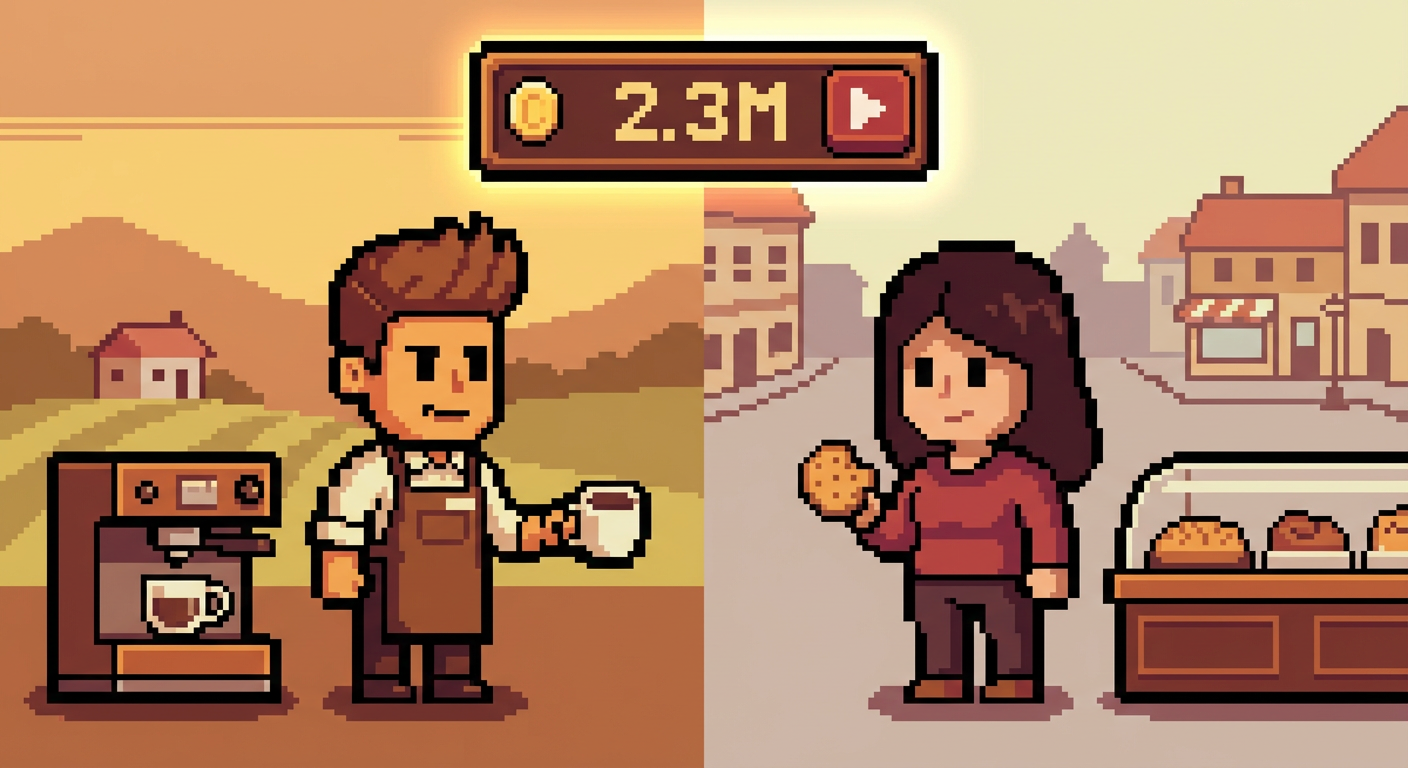
The documentary ‘Baristas vs. Biscuits’ captured this tension perfectly. Following coffee culture clashes across Georgia’s outer suburbs, it racked up 2.3 million YouTube views in its first month. Viewers came for the drama but stayed for something deeper: the recognition that coffee shops have become proxy battlegrounds for competing visions of American community.
When Worlds Collide Over Single Origins
Local news outlets documented 156 incidents of “coffee shop cultural conflict” across 23 states between October and February. These aren’t riots. They’re something more subtle and potentially more telling: quiet standoffs between longtime residents and the coffee shops that suddenly appeared in their neighborhoods.
Take Meridian Coffee Collective in suburban Atlanta. Owner Sarah Chen sources beans from single-origin farms and posts tasting notes that read like wine reviews. Her regulars discuss extraction ratios and grind consistency with religious fervor. But every morning at 7 AM, Jerry Martinez orders “regular coffee, black” and pays with exact change. He’s been coming since they opened, not because he loves the coffee, but because it’s walking distance from his house.
This isn’t gentrification in the traditional sense. It’s something newer and stranger. The coffee shops appeared because chain rents dropped and foot traffic disappeared. The baristas moved here because they could afford it. The longtime residents stayed because they always lived here. Nobody planned this collision of coffee cultures.
What’s fascinating is how both sides are adapting. Meridian now has “house blend” alongside their rotating single origins. Jerry learned to pronounce “cortado” correctly. It’s messy and imperfect, but it’s also genuinely American in a way that feels both nostalgic and forward-looking.
The New Geography of Taste
These coffee shops succeed because they’re solving a problem nobody expected: exurban areas suddenly needed third places again. When people fled for cities, they left behind communities that had been held together by weak ties. The coffee shop fills that gap, but with a level of intentionality that suburban chain stores never provided.
The baristas working these shops aren’t just making drinks. They’re cultural ambassadors translating between worlds. They know Mrs. Patterson takes her latte extra hot and that teenage Emma only comes in when her parents fight. They remember names, orders, and the small details that make a place feel like home.
But they’re also introducing concepts that would have seemed absurd in these locations five years ago. Fair trade sourcing. Seasonal menu rotations. Coffee cupping sessions. Latte art that actually matters to the people drinking it.
The result is a hybrid culture that couldn’t exist anywhere else. It’s too sophisticated for old-school suburban tastes but too rooted in community for urban coffee snobs. It’s creating something genuinely new.
What Happens Next
The coffee shop cultural conflicts aren’t really about coffee. They’re about who gets to define community in spaces caught between urban sophistication and suburban familiarity. The answer emerging from these 847 new shops suggests it might be both.
These aren’t destination coffee shops. You won’t drive across town to try their latest Ethiopian roast. But if you live within walking distance, you’ll probably end up there eventually. And once you do, you’ll discover something unusual: a place that’s both deeply local and genuinely cosmopolitan.
The suburban exodus may be over, but the cultural remixing it set in motion is just beginning. In exurban coffee shops across America, the future of American community is being negotiated one cup at a time.
What coffee shop culture clashes have you witnessed in your area? The conversations happening over espresso and house blend might be shaping more than just morning routines.


The Collapse of Suicide Squad: Kill the Justice League and What It Reveals About Live Service Fatigue in 2026
The short version: this matters more than the headline suggests.
The Spectacular Fall of a Superhero Game
I watched one of gaming’s most dramatic collapses unfold in real-time when Suicide Squad: Kill the Justice League lost players faster than you could say “live service.” What started as a promising venture from Rocksteady Studios turned into a masterclass in how not to chase the live service dragon. The game’s crash from launch to near-abandonment shows us exactly why this business model is hitting a wall.
Here’s what I keep coming back to on this. The conventional take on this is incomplete — and the gap matters.
The numbers are brutal. In just eight months, the game lost 96% of its player base, dropping from 278,000 daily players to a pathetic 11,000 according to Steam player count analytics. This happened despite Rocksteady’s rock-solid reputation from the Batman Arkham series and Warner Bros. throwing marketing money at the problem.
The financial bloodbath was even worse. Warner Bros. took a $200 million write-down on the title in their Q4 2025 earnings report. Executives blamed “market oversaturation” for the commercial disaster. That’s one of the biggest single-title losses in gaming history, proving just how expensive these live service gambles can be when they go wrong.

A Market Reaching Saturation Point
Suicide Squad’s failure isn’t happening in a vacuum. The live service gold rush is officially over. Newzoo’s latest market analysis shows concurrent live service launches dropped 43% in 2025 compared to 2024. Publishers are finally waking up to reality.
Player retention has completely tanked. The average live service game now keeps only 8% of its launch-week players after six months. That’s down from 15% in 2023. Players are getting picky about where they spend their time, and honestly, who can blame them?
The competition is fierce. Back in the day, a decent live service game could find its audience and make money. Now you’re competing against established giants like Fortnite and Apex Legends that have spent years perfecting their hooks. Breaking into this market requires something truly special, not just another hero shooter with a DC skin.
The Human Cost of Live Service Failures
Here’s what really gets me angry about these failures. Rocksteady laid off 120 people in January 2026 after Suicide Squad flopped. That’s a quarter of their workforce gone. Real people with families and mortgages, sacrificed because executives chased impossible live service dreams.
These layoffs destroyed years of accumulated knowledge and expertise. The remaining developers face an uncertain future at a studio that’s lost credibility within Warner Bros. The people who got cut? They’re job hunting in a market where “live service experience” might actually hurt their chances.
This boom-and-bust cycle has become the industry standard. Studios pour everything into these massive projects, then slash and burn when they don’t hit unrealistic targets. It’s created an environment where playing it safe gets rewarded while taking creative risks gets you fired.
Player Fatigue and Evolving Expectations
Players have gotten smarter about recognizing cash grabs. We can spot manipulative monetization from a mile away, and we’re tired of shallow gameplay loops designed to extract money rather than provide fun. Suicide Squad failed because it treated players like walking wallets instead of people looking for entertainment.
Today’s gamers expect respect for their time and money. We want meaningful progression, substantial content updates, and fair monetization. Suicide Squad delivered none of this, instead offering repetitive missions wrapped in increasingly desperate attempts to squeeze revenue from whoever was still playing.
Most people can only actively play two or three live service games at once. The successful ones have built such strong loyalty that breaking in requires something revolutionary. Players don’t have time for mediocre when excellent options already exist.
Lessons for an Industry in Transition
Suicide Squad’s crash teaches us that brand names and big budgets can’t save a fundamentally flawed game. DC characters and Rocksteady’s reputation weren’t enough to overcome basic design problems and tone-deaf monetization.
Publishers need to stop chasing quick monetization wins and start building sustainable player communities. The most successful live service games put long-term player satisfaction first. Revenue follows naturally when people actually enjoy playing your game.
The industry desperately needs realistic expectations about live service success. The development costs are astronomical, the market is saturated, and failure rates are climbing. Maybe it’s time to make fewer, better games instead of throwing everything at the wall and hoping something sticks. The studios that figure this out first will survive what’s coming next.
For more on mobile gaming, gacha culture, and where the industry is heading, metatrend.app covers this space with the depth it deserves.
The best cultural moments reward close attention. This is one of them. Come find us — we’ll be the ones arguing about the opener.
The Last Hour Before They Turn the Lights Out
It’s 9:47 PM and Marcus is still hand-selling novels to a couple debating between two debut authors while the espresso machine hisses one final time behind the poetry section. This is how independent bookstores actually close — not with corporate efficiency, but with someone who knows that the right book recommendation can change a Tuesday night into something memorable. Three blocks away, the chain store locked up at nine sharp, leaving fluorescent silence. Here at Dog Eared Books, the real magic happens in these stolen minutes after official closing time.
Independent bookstore culture isn’t dying. It’s changing into something more essential than it’s been in decades, and the numbers back this up. After bottoming out at 1,651 stores in 2009, the American Booksellers Association counts 2,433 indie bookstores operating today. But the real story isn’t in the recovery statistics. It’s in how these spaces have become cultural nerve centers in ways their founders never imagined.
The Evening Reading That Started Everything
Three years ago, Mira Gonzalez was reading from her poetry collection to maybe fifteen people in the back corner of Skylight Books. The author event was supposed to end at eight, but someone asked about her writing process, then another person shared how one particular poem had helped them through a breakup. Suddenly it was nine-thirty and nobody wanted to leave. Store manager Jenny Chen made a decision that night: keep the lights on and see what happens.
That spontaneous extension became a monthly series called “After Hours,” where readings turn into genuine conversations about craft, life, and the weird intersection of literature and living. Last month, a debut novelist ended up workshopping a problematic chapter with twelve strangers who had originally come just to browse. The series now has a waiting list, but more importantly, it created a template that independent bookstores across the country have borrowed for their own communities.
The Inventory That Tells Stories
Walk into Housing Works Bookstore in SoHo and you’ll find three different books about gentrification in the front window display — not because they’re bestsellers, but because the neighborhood is wrestling with displacement in real time. Owner Rebecca Martinez curates her front tables like a DJ reading the room, responding to what her regulars are actually discussing over coffee.
This hyper-local curation is what separates indie bookstores from algorithm-driven recommendations. When the Supreme Court overturned Roe v. Wade, Martinez didn’t just stock reproductive rights books. She created an entire section on bodily autonomy that included everything from disability studies to trans healthcare, because she knew her customers were thinking about the broader implications. Sales of those titles increased 340% over six months, but the real impact was watching customers discover connections between issues they hadn’t considered before.
The curation extends beyond current events. Pegasus Books in Berkeley tracks which local authors are teaching at UC Berkeley each semester and stocks their backlists accordingly. When a professor assigns a novel, students discover the author’s entire catalog, often buying books that won’t be discussed in class. It’s retail anthropology disguised as business strategy.
The People Who Make It Work
Kenji Nakamura has been working at Green Apple Books for seven years, and he can tell you not just what’s selling, but why specific customers buy what they buy. The woman who comes in every Friday for literary fiction set in Japan because she lived in Kyoto for two years and misses it. The teenager who’s systematically reading through the science fiction section in alphabetical order by author. The elderly man who buys poetry chapbooks for his granddaughter who lives across the country.
This isn’t customer service. It’s community archaeology. Nakamura maintains relationships with forty-seven local authors, tracks which book clubs meet in the neighborhood, and knows that Tuesday afternoons are when the homeschooling parents browse for educational materials. He’s become a cultural connector, introducing customers to each other when he realizes they’re reading the same obscure biography or wrestling with similar questions about urban planning.
Independent bookstore staff have become something like cultural concierges. They’re part librarian, part therapist, part critic, and part neighbor. When Portland’s Powell’s Books started training their staff in “literary hospitality,” they were acknowledging what successful indie bookstores already knew: the human element isn’t just customer service, it’s the entire value proposition.
The Ecosystem Beyond Books
Word Up Community Bookshop in Washington Heights doesn’t just sell books. They run a bilingual story time that’s become essential childcare for working parents, host immigration lawyers for free consultations, and partner with the local food pantry to distribute groceries during their Saturday morning events. Owner Veronica Liu realized early that helping her predominantly Latino community meant understanding that literacy support and economic justice were connected.
This holistic approach gets replicated differently at each independent bookstore, but the pattern holds: these spaces have become civic infrastructure. Brookline Booksmith runs financial literacy workshops for local artists. Book Culture in New York hosts voter registration drives. E.R. Hamilton Booksellers in Tarboro, North Carolina, became an informal community center during Hurricane Florence, staying open to provide phone charging and WiFi when other businesses closed.
The bookstores that thrive understand they’re not just selling literature. They’re providing cultural continuity in neighborhoods where chain stores and online retail have eroded gathering spaces. They’re accidentally becoming what urban planners call “third places,” neither home nor work, where social life happens organically.
Why This Moment Matters
Independent bookstore culture hit its stride precisely because it learned to be something Amazon couldn’t replicate: genuinely local, impossibly specific, and relentlessly human. The stores that survived the digital transition were the ones that doubled down on what made them irreplaceable. Not convenience or price, but cultural intimacy.
This renaissance isn’t accidental. It’s happening because people are hungry for spaces where browsing is encouraged, where conversation happens naturally, where you might discover something you didn’t know you were looking for. These bookstores succeeded by becoming more themselves, not by trying to compete with online retail on its own terms.
Next time you’re near an independent bookstore, go in fifteen minutes before closing. Watch how the space transforms when the pressure of commerce relaxes and the real purpose emerges. That’s when you’ll understand what we’re actually trying to preserve.
Why Your Favorite Local Venue Is Probably Dying (And It’s Not Just Rent)
The Empty Room Problem
The Basement closed last month, and nobody really noticed until the For Lease sign went up. Sure, people posted the obligatory “RIP to a real one” stories on Instagram, but where were those same people when The Basement was booking Slow Pulp six months ago to a crowd of thirty-seven? I counted because I was there, standing near the merch table, watching one of the best indie rock acts in the country play to an audience that could have fit in someone’s living room.
This is the uncomfortable truth about our local music scene: we’re all talk and no show. We love the idea of supporting local venues more than we actually support them. The Basement didn’t close because of rent increases or noise complaints, though those didn’t help. It closed because even the people who claimed to love it couldn’t be bothered to show up consistently.
The Instagram Paradox
Everyone wants to be seen at the cool underground show, but only after someone else has declared it cool. Marcus from The Echoplex told me last week that their most successful shows have the worst music. “The experimental noise acts that actually push boundaries? Twenty people. The indie folk duo that sounds like every other indie folk duo? Packed house,” he said while restocking beer before another sparsely attended Tuesday night showcase.
Social media created this weird feedback loop where people attend shows not for the music, but for the content. The lighting at venues like The Hideaway gets more compliments than the bands. I’ve watched people spend entire sets taking photos and videos they’ll never watch again, missing the actual performance happening three feet in front of them. The venue becomes a backdrop for personal branding rather than a space for musical discovery.
The Economics Nobody Talks About
Here’s what most people don’t understand about running a music venue: the money isn’t in the door. When The Mercury Room charges fifteen dollars for a show, maybe three of that goes to the venue after paying the bands, sound engineer, and door staff. The real money comes from drinks, and guess what? The same people who complain about expensive beer are the ones nursing a single Tecate for three hours.
Sarah Chen, who books for three different venues in the area, broke it down for me over coffee last month. “We need people spending money at the bar to make the room rentable. But the demographic that goes to underground shows doesn’t want to pay cocktail prices for well drinks. It’s this impossible math.” She’s right. The venues can’t survive on door sales alone, but raising drink prices drives away the exact audience that makes these spaces culturally relevant.
Meanwhile, the bigger venues are getting corporate sponsorship deals that let them book established acts at a loss because Red Bull or Spotify pays the bill. Local rooms can’t compete with that, so they’re stuck in this middle ground where they’re too expensive for true underground acts but not profitable enough to stay open.
The Gentrification Squeeze
The noise complaints aren’t coming from longtime residents. They’re coming from people who moved to the neighborhood specifically because it was “authentic” and “artistic,” then immediately started trying to sanitize it. The Foundry survived forty years in the same location, weathering actual gang activity and urban decay, only to get shut down because someone who paid three grand for a studio apartment across the street couldn’t handle drums after 10 PM.
City council meetings became performative theater where the same people who post about supporting local culture vote against variance permits for music venues. They want the aesthetic of a vibrant cultural district without any of the actual culture. It’s like demanding a beach town without sand.
The zoning restrictions get tighter every year. New venues need sound mitigation systems that cost more than most small businesses make in profit. The licensing process became so bureaucratic that only people with significant capital can navigate it. This pushes out the scrappy, artist-run spaces that actually nurture emerging talent.
What We’re Actually Losing
When venues close, we don’t just lose rooms for bands to play. We lose the entire ecosystem that develops around them. The Satellite wasn’t just a music venue; it was where three different record labels got started, where dozens of bands met their future members, where music journalists discovered acts before they hit streaming playlists. Those connections don’t happen at corporate amphitheaters or festival stages.
The closing of local venues means emerging artists have fewer stepping stones to larger stages. They go from playing house shows to trying to book theaters, with nothing in between. The middle tier of venues, the 100-300 capacity rooms that let bands build real fanbases, is disappearing faster than anyone is replacing them.
Maybe the real question isn’t how to save these venues, but whether we actually deserve them. Supporting local music means more than buying a t-shirt and taking a selfie. It means showing up for bands you’ve never heard of, buying drinks even when they’re overpriced, and treating venues like the cultural infrastructure they actually are. The next time you wonder why all the good venues are closing, check your calendar. How many shows did you actually attend last month?
Why Your Favorite Block Party Probably Sucks (And How to Fix It)
The $8 Beer Problem
I watched a woman at last weekend’s Riverside Arts Festival pay eight dollars for a Bud Light and realized we’ve lost the plot entirely. This wasn’t some bougie craft situation or festival markup gone wild. This was Linda from the neighborhood association selling warm beer from a Coleman cooler, looking genuinely confused when people walked away shaking their heads.
Community events have become corporate theater performed by volunteers who learned everything they know about event planning from Pinterest boards. We’ve swapped the messy authenticity that made neighborhood gatherings special for Instagram-ready moments that nobody actually wants to experience. The result? Events that feel like work for everyone involved, including the people supposedly being celebrated.
When Community Planning Goes Corporate
The rot starts in those fluorescent-lit community center meetings where someone inevitably pulls out a laminated “best practices” guide they downloaded from some municipal website. Suddenly, your block party needs liability insurance, branded signage, and a social media strategy. Maria, who’s been organizing the annual tamale cook-off for fifteen years, gets steamrolled by newcomers who want to “professionalize” everything.
I’ve sat through enough of these planning sessions to recognize the pattern. The loudest voices belong to people who moved here last year but have strong opinions about “activating the space” and “creating synergy with local stakeholders.” Meanwhile, the folks who actually know where to get tables donated and which food truck will show up on time get pushed to the margins. The event becomes about the planners, not the community.
Take the Highland Park Summer Series, which morphed from a simple concert series into a three-committee operation complete with branded tote bags and QR code surveys. Attendance dropped by half, but hey, they got featured in the chamber of commerce newsletter.
The Authenticity Trap
Here’s where it gets uncomfortable: sometimes the authentic community event actually is a bunch of white people in a park drinking overpriced beer while a DJ plays Top 40 hits. Sometimes the gentrification isn’t coming from outside forces but from well-meaning neighbors who think adding “cultural programming” will fix everything.
I watched this play out at the monthly artists market on Broad Street. Original vendors, mostly older Black women selling homemade goods, gradually got priced out as booth fees increased to pay for “professional event management.” The replacement vendors sell the same mass-produced jewelry and bath bombs you see at every craft fair from here to Portland. The organizers celebrate increased foot traffic while ignoring that the community they’re supposedly serving can no longer afford to participate.
The trap is thinking that professional equals better. Sometimes the best community events are the ones that would make a city planner’s eye twitch. Sometimes authentic means someone’s uncle handling sound through a car stereo and folding tables from 1987.
Small Victories and Real Solutions
The East End block party gets it right by doing almost everything wrong according to modern event planning wisdom. No permits beyond the basic street closure. No sponsors. No social media presence beyond a handwritten sign taped to a telephone pole. Mrs. Chen coordinates everything through group texts and arguments in the grocery store checkout line.
What makes it work is that it belongs to the people who live there. Kids ride bikes through vendor setups while adults argue about whose turn it is to bring the generator. The food comes from actual home kitchens, not food trucks with Instagram-ready logos. When it rains, everyone just moves into whoever has the biggest living room.
Real solutions start with admitting that community events should serve the community that already exists, not the one you want to attract. This means asking uncomfortable questions about who’s making decisions, who’s getting paid, and whether the people the event claims to celebrate can actually afford to attend it.
The Reckoning
The hardest truth about community events is that they reflect who has power in that community. When longtime residents feel like guests at their own neighborhood festival, that’s not an event planning problem. That’s a community power problem that fresh branding and better logistics can’t fix.
Maybe the goal shouldn’t be creating events that look good on social media or impress visitors. Maybe it should be creating spaces where neighbors actually want to spend time together, even if that means accepting that some of those neighbors have different ideas about what constitutes a good time.
Next time you’re in a community event planning meeting and someone starts talking about “elevating the experience,” ask them who they think needs elevating and who gets to decide. The answer will tell you everything you need to know about whether you’re planning a community event or a performance of community for people who don’t actually live there.
The Heartbeat Underground: How Three Venues Are Rewiring Our Music DNA
The Sacred Geometry of Small Rooms
Walk into The Burrow on a Tuesday night and you’ll understand why sound engineers geek out over room dimensions. This 80-capacity basement venue carved out of a former print shop has acoustic properties that make vocals sit perfectly in the mix without any digital magic. Owner Maya Chen didn’t plan it this way when she gutted the space in 2019, but physics doesn’t lie.
The magic happens because of the exposed brick walls and that weird alcove where they used to store paper rolls. It creates this natural reverb that makes even bedroom pop artists sound like they’re channeling some ancient ritual. Last month, I watched indie folk duo Compass Rose perform here, and when they hit their harmonies during “Midwest Ghosts,” the entire room went silent between songs. Not polite-applause silent. Cathedral silent.
Maya books acts three months out now, which is wild considering she started by hosting open mics for her barista friends. The venue pulls from a 200-mile radius, drawing artists who specifically request The Burrow because word travels fast about rooms that make you sound better than you actually are. That’s not shade on the artists. It’s just the truth about why certain venues become pilgrimages.
Where the Weirdos Win
If The Burrow is our acoustic sweet spot, then Frequency Labs is where genres go to die and get reborn as something nobody has a name for yet. This former auto repair shop turned experimental venue doesn’t just book eclectic acts. They actively nurture musical mutations. Think noise pop meets Ethiopian jazz, or what happens when a classical composer discovers trap beats.
Booking coordinator Jules Martinez told me they get about fifty submissions a week from artists who’ve been turned down everywhere else. Not because they’re bad, but because they’re too left-field for standard venues. “We’re not trying to be difficult,” Jules explains over coffee at Rooster’s Crow. “We just think the most interesting music happens in the spaces between established genres.”
Case in point: last Friday’s show had Thermal Dynamics, a three-piece that builds songs using contact mics on radiators, viola da gamba, and a drum kit made from repurposed kitchen equipment. Sounds pretentious on paper, but watching seventy people lose their minds to rhythms scraped from heating pipes was proof that experimental doesn’t mean inaccessible. It just means you need the right room and the right crowd.
The venue’s aesthetic matches its mission. Exposed ductwork hangs over a concrete floor scattered with mismatched rugs and furniture that looks like it was rescued from five different estate sales. The sound system was built by local audio engineer Sam Kowalski, who designed it specifically for spatial audio experiments. Artists can place speakers throughout the room, creating immersive soundscapes that conventional PA systems can’t handle.
The Living Room Philosophy
Meanwhile, across town at Velvet Parlor, they’re proving that intimacy scales. This 45-seat venue in a converted Victorian house books singer-songwriters and indie acts who thrive on eye contact with their audience. Co-owners and life partners David Kim and Alex Rodriguez designed the space around their belief that the best shows feel like house parties where everyone happens to be strangers.
The front room still has the original hardwood floors and bay windows, now filled with plants that Alex tends between shows. The “stage” is just a corner with good lighting and a small PA system. Artists perform from what used to be the dining room while audiences sit on vintage couches and chairs arranged in a loose semicircle. It’s the anti-arena experience.
This setup creates a feedback loop between performer and audience that you can’t replicate in larger venues. I’ve watched artists completely restructure their sets mid-show based on crowd energy, or stop songs to have actual conversations with people in the front row. Last week, folk artist Penny Arcadia scrapped her planned encore and instead played three songs requested by audience members, including a cover she’d never performed publicly before.
The venue’s booking philosophy focuses on artists who understand this dynamic. They’re not looking for performers who need distance from their audience. They want musicians who feed off connection. David keeps a detailed database of how different artists interact with the room, using it to curate bills where each act complements the venue’s intimate energy.
The Ripple Effect Economy
These venues don’t exist in isolation. They’re nodes in a creative ecosystem that includes the record store two blocks from Frequency Labs, the coffee roastery that sponsors Velvet Parlor’s monthly songwriter series, and the screen printing co-op that makes merch for half the artists who play The Burrow.
The economic impact runs deeper than ticket sales and drink tabs. Musicians travel here specifically for these rooms, spending money on hotels, food, and local shops. More importantly, artists who play these venues often relocate here permanently. The city’s music scene has grown by roughly thirty percent in the past three years, according to data from the local arts council, with venue proximity being the top factor in musicians’ relocation decisions.
This growth is creating its own challenges. Rising rents threaten all three venues, and the success that draws artists here also attracts developers eyeing the neighborhoods where these spaces operate. Each venue has had to get creative about sustainability, from Velvet Parlor’s membership program to The Burrow’s equipment rental side business to Frequency Labs’ artist residency partnerships with local colleges.
The scene’s strength lies in its interconnectedness. When The Burrow’s sound board died last month, Frequency Labs loaned them equipment for two weeks. When Velvet Parlor needed help promoting their benefit show for the local food bank, artists from all three venues shared the event across their networks. This isn’t just mutual aid. It’s strategic collaboration between spaces that understand they’re stronger together than competing.
The Next Movement
Something’s shifting in how these venues approach programming. They’re moving beyond just booking good bands toward creating experiences that couldn’t happen anywhere else. The Burrow is launching a monthly series pairing musicians with local poets. Frequency Labs is planning installations where visual artists respond to musical performances in real time. Velvet Parlor is experimenting with dinner shows that treat food as another artistic medium.
What excites me most is watching artists rise through this ecosystem. Bedroom producer Luna Moth played her first show at Velvet Parlor six months ago, opened for a touring act at The Burrow in December, and just headlined Frequency Labs’ New Year’s show. That trajectory doesn’t happen without venues committed to developing local talent alongside booking established acts.
These rooms are writing the soundtrack for our city’s cultural identity. Every weird Tuesday night show, every artist who takes a chance on playing a town they’ve never heard of, every venue owner who chooses community over profit margins. It’s all adding up to something that feels bigger than the sum of its parts. If you want to understand where our music scene is heading, skip the big venues and spend your weekends in the basements and living rooms where the future is getting tuned up right now.