Monthly Archives: March 2026
The Mid-Size Venue Moment: Why Sabrina Carpenter’s Tour Proves the Arena Era Is Ending
When $100 Million Looks Better in Smaller Rooms
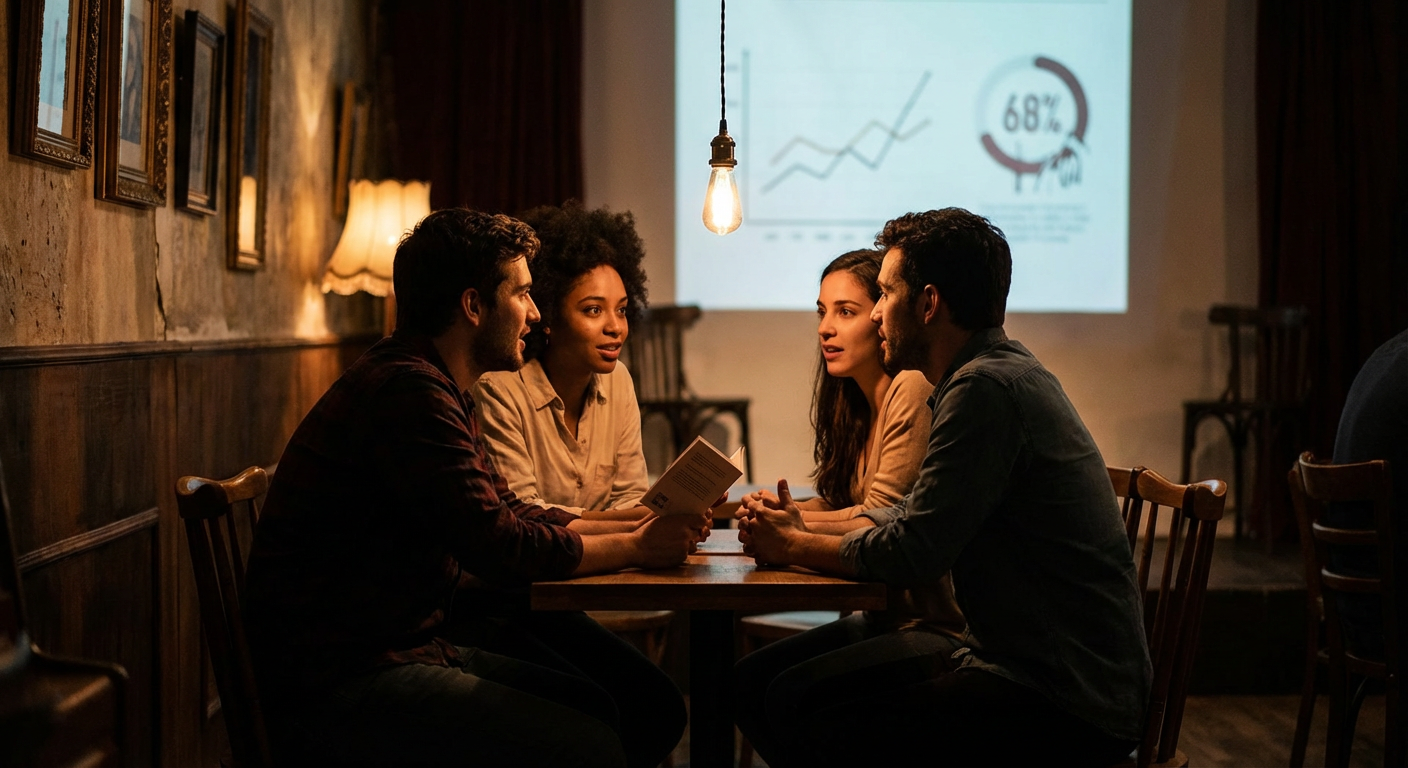
Here’s the thing nobody expected to happen in 2025: the biggest grossing tour strategy wasn’t about filling the biggest venues. Sabrina Carpenter’s Short n’ Sweet tour pulled in over $100 million according to Billboard Boxscore Tour Revenue Data, which sounds stadium-sized until you learn she did it by deliberately booking theaters and mid-size venues with capacities between 8,000 and 15,000 seats. Not arenas. Not festivals. Intimate enough to feel like an event, big enough to move actual money.
This wasn’t some budget constraint or a second choice. This was strategy. The decision to stay in mid-size venues was deliberate, calculated, and it worked so well that the entire live entertainment ecosystem started paying attention. When you’re pulling nine figures by playing smaller rooms, the industry has to ask itself some uncomfortable questions about what it’s been optimizing for.
The math is clean: higher ticket prices, better margins, packed houses. But something else is happening underneath the numbers. Venues with 10,000 seats sell premium experiences differently than arenas with 20,000. Intimacy becomes a product. Connection becomes quantifiable.
The Venue Association Is Tracking What Comes Next
The National Independent Venue Association just posted a 22% jump in membership applications throughout 2025, with venues explicitly citing renewed artist interest in booking sub-20,000 capacity rooms. That’s not a normal year-over-year bump. That’s a trend inflection point. The National Independent Venue Association started tracking this because they were fielding calls from artists, agents, and promoters asking the same question: how do we build a touring strategy around mid-size venues instead of arenas?
There’s a reason this is happening now and not five years ago. Arena touring got bloated. Ticketmaster’s own 2025 State of Live Entertainment report acknowledged what fans already knew: satisfaction scores are 18% higher at mid-size venues compared to arenas. Eighteen percent. That’s not noise. That’s a clear preference for the format that can make touring profitable without needing to sell merch at concession stand prices or oversell parking.
Artists are running the numbers and realizing that the mid-size tour model checks every box. Better fan experience, better margins, more control over the actual event. The old playbook said you had to go big to prove you’d made it. The new one says you’ve made it when you can afford to stay intimate.
Geography Matters: Why Your Local Venue Suddenly Got Valuable
The 9:30 Club in Washington D.C. just hit its 45th anniversary and posted the highest annual revenue in its entire history. Capacity 1,200. Not because it’s becoming a destination venue—it always was—but because premium experience pricing at that scale actually works. A thousand-person room with good sightlines, history, and a name suddenly becomes more profitable than you’d expect when the artist community starts treating it as a legitimate touring stop instead of a stepping stone.
A Harvard Kennedy School urban policy brief from late 2025 mapped this and found something interesting: neighborhoods with higher density of mid-size venues showed measurable increases in economic activity and foot traffic within a half-mile radius. We’re not just talking about the venue itself. We’re talking about the restaurants, bars, and local businesses that benefit when a mid-size tour rolls through. A 15,000 capacity venue draws 15,000 people. A city builds a weekend around that.
This matters because it means the touring economy might finally be decoupling from the stadium model. Instead of a handful of markets with arenas, you get distributed economic activity across way more cities. Instead of one massive tour hitting 30 cities, you get multiple touring circuits hitting 60 or 80 cities because the venues exist and the math works.
The Fan Experience Became the Differentiator
Here’s what gets lost in most analysis of the tour revenue data: people actually want to go to shows where they can see the artist and hear the music. Revolutionary concept, I know. But when Carpenter’s team designed the Short n’ Sweet tour around mid-size venues, they weren’t just optimizing for profit. They were optimizing for the thing that matters most in live entertainment—the actual experience of being there.
The mid-size venue doesn’t have the problems of the arena. You’re not watching the artist on a screen because they’re 200 feet away. The sound isn’t delayed by the physics of a massive space. You don’t need binoculars. You don’t feel like you’re in a parking lot with 20,000 other people. The production can still be massive—lights, screens, choreography—but it lands better in a room where you can actually feel the energy.
That translates to word of mouth. That translates to resale prices. That translates to people actually wanting to go to the next show instead of feeling like they checked a box. Ticketmaster’s data backs this up, but honestly, you already knew it. You’ve been to both. You know which one you’d rather do again.
What Actually Changes Now
The mid-size venue renaissance isn’t coming—it’s here. We’re watching the touring model shift in real time. Artists are calculating that a 100-million-dollar tour looks better distributed across 60 cities with 10,000-person rooms than concentrated in 20 arena markets. Venues are reinvesting in mid-size capacity instead of chasing mega-venue status. Neighborhoods are building their reputations around consistent live music density rather than occasional arena events.
What makes this moment different from previous venue cycles is the data. Ticketmaster says fans prefer this format. Billboard shows it’s more profitable. Harvard Kennedy School proves it builds neighborhood economies. The National Independent Venue Association is tracking a 22% increase in venue applications. This isn’t just vibes anymore. It’s measurable, replicable, and spreading.
The stadium era isn’t dead, but its dominance is cracking. The question isn’t whether mid-size venues will matter—they already do. The real question is what happens when every major artist figures out the Short n’ Sweet formula actually works better than the old playbook. What does your local venue look like in two years? What does touring look like when profitability and fan experience finally land on the same side?

The Micro-Cinema Revival: How 30-Seat Rooms Are Winning Where Multiplexes Are Failing
The Numbers Tell a Story the Studios Won’t
Something shifted in 2024, and the data is impossible to ignore. While massive multiplex chains watched their attendance crater, tiny independent cinemas started posting numbers that would make studio executives nervous if they were paying attention. The UK’s Cinema Exhibitors’ Association dropped a report in late 2024 that basically confirmed what anyone paying attention already knew: venues with fewer than 50 seats grew revenue by 27 percent. Meanwhile, those windowless bunkers with over 1,000 seats? Down 9 percent. That’s not a blip. That’s a trend with teeth.
Look at London’s Lexi Cinema in Kensal Rise. Fifty-four seats. That’s it. In Q4 2024, they hit 94 percent average occupancy. The national multiplex average was sitting at 61 percent. You don’t need a business degree to see what’s happening here. People aren’t just choosing smaller venues because they’re charming or whatever. They’re choosing them because smaller venues are actually filling seats and creating demand that’s immediate, visceral, and real.
The Experience Economy Finally Means Something
A 2025 Eventbrite report found that 68 percent of people aged 18 to 34 prefer intimate, curated experiences over large-scale venues. Sixty-eight percent. That’s not a niche preference anymore. That’s a generation voting with its attention and its money, and they’re voting for spaces where you can actually see the person next to you without binoculars.
The difference between a micro-cinema and a multiplex isn’t just about seat count. It’s about intent. A 30-seat screening room can program a Godard retrospective and sell every seat because the people who show up are there specifically for Godard. They’re not browsing. They’re not treating the evening like a default social obligation. They came because they wanted to be in that specific room at that specific time watching that specific thing. That focus, that clarity of purpose, is magnetic. It builds community. It creates momentum.
The Infrastructure Is Already Everywhere
The network of micro-cinemas in the United States has exploded. In 2022, there were 340 licensed micro-cinema spaces operating in cities with populations over 500,000. By January 2026, that number crossed 890. Nearly triple the venues in less than four years. That’s not random. That’s not a handful of visionaries taking a flyer on an idea. That’s real estate, capital, and consistent audience behavior pointing in the same direction.
New York’s Metrograph is the clearest example of this momentum. One hundred seventy-six seats across two screens. In January 2025, their entire month of programming sold out in 72 hours. Not the premium screenings. All of it. Every show. People were refreshing a ticket page because they didn’t want to miss the chance to sit in a specific room on a specific night.
What We’re Actually Losing
Here’s the thing worth naming straight up: this isn’t just a victory lap for the good guys. There’s something genuinely being lost in the places where multiplexes are fading. Some of those massive theaters employed dozens of people. They hosted school groups and first dates and the kind of casual moviegoing that didn’t require planning or commitment. They made cinema accessible in a way that 30-seat screening rooms, by definition, cannot.
The micro-cinema boom isn’t solving for everyone. It’s solving for people who already know what they want to watch, who have the flexibility to check a curated programming calendar, who can afford to travel to a specific neighborhood for a specific screening. It’s solving for people with cultural capital and disposable time and disposable income. The multiplex, whatever its flaws, was solving for someone else entirely.
But that’s also not the full story. According to Independent Cinema Office UK Data, independent screens are consistently generating higher per-seat revenue and building sustainable audiences. They’re doing more with less. And they’re creating cultural infrastructure in neighborhoods that corporate multiplexes had already written off as unprofitable.
Where This Actually Goes From Here
The micro-cinema revival isn’t a blip. It’s a permanent shift in how people want to experience film in shared spaces. The venues that survive the next five years will be the ones that understand this isn’t about nostalgia or being precious about cinema. It’s about specificity. Doing one thing incredibly well instead of doing seventeen things adequately.
The question now isn’t whether independent micro-cinemas will continue to grow. The numbers already answered that. The question is what happens to the cultural work that multiplexes used to do, even poorly. How do we build networks of micro-cinemas that aren’t just serving people who already know exactly what they want? How do we keep discovery alive? How do we make sure the 30-seat screening room is a feature of more neighborhoods, not just the ones that already had cultural infrastructure in place?
What’s happening in your city? Is there a 50-seat cinema that’s become your default space? A programmer whose taste you’ve learned to trust? That’s what matters right now. Not the national trends or the industry reports, but the actual rooms where you live and the people behind the counter who know your name. If you haven’t found that space yet, it probably exists somewhere closer than you think. The infrastructure is already there.
The Festival That Nobody Can Afford: How the Middle Died While the Edges Thrived
The Year Everything Got Honest
Something broke in 2025. Not suddenly. More like the sound of a guitar string snapping right in the middle of a song you’ve been hearing your whole life. By September, over 22 mid-size music festivals across the US and UK had either cancelled or gone into indefinite hiatus. These weren’t tiny boutique operations or mega-festivals. These were the 5,000 to 20,000 capacity events that used to be the backbone of how people discovered music outside their city. According to Pollstar Live Music Industry Data, this wasn’t a blip. It was a pattern. A structural collapse of what everyone thought was supposed to work.
What made it real was Splendour in the Grass. The Australian festival had become legendary enough that people who’d never been to Australia knew its name. But 11 weeks before it was supposed to happen, they cancelled. Not because of weather. Not because of logistics. Because they’d only sold 34 percent of tickets. People just weren’t buying. Not at that price point. Not in a year when groceries cost too much and rent feels impossible. The festival’s organizers pointed directly at cost-of-living pressure. Nobody wanted to say it, but everyone knew it: the middle was breaking.
Why $180 Started Feeling Like Too Much
Here’s the thing about the middle-tier festival price point. For years, $150 to $250 tickets felt like the sweet spot. Not as exclusive as the premium festivals but not as casual as your local venue show. You could drive four hours, stay the weekend, catch 20 bands, sleep in a field, and call it an experience. It worked when people had money floating around. It worked when you could rationalize it as a once-a-year thing. But something shifted in how people started thinking about that math.
It wasn’t one thing. It was everything. Travel costs went up. Hotel rooms got more expensive. Food prices spiked. And people realized they could get extraordinary live music without leaving their region. Why drive to a festival in another state when your local scene was suddenly everywhere? The economics stopped making sense. A mid-tier festival ticket was no longer an investment in an unrepeatable experience. It started feeling like a choice between that or three months of something else.
AEG Presents CEO Jay Marciano basically said it out loud in October. The middle market festival economy is structurally broken. Not struggling. Not adjusting. Broken. Three years of watching consumer spending compress on live events had finally caught up. When your business model depends on people spending discretionary income on discretionary experiences, and that income keeps shrinking, the model doesn’t work anymore.
The Grassroots Got Exponentially Weirder and Better
Meanwhile, something unexpected happened at the ground level. Venues with tickets under 15 pounds in the UK saw attendance jump 41 percent year-over-year. Forty-one percent. That’s not incremental growth. That’s a migration. People weren’t giving up on live music. They were just deciding to spend their money differently, in smaller doses, closer to home. And the venues responded by getting more interesting.
Free and pay-what-you-can events exploded. Between Q3 2024 and Q3 2025, the number of these listings on Eventbrite grew 67 percent. Actual attendance jumped 89 percent. That’s the real story nobody’s talking about. The infrastructure didn’t die. It redistributed. Artists and venues figured out that you don’t need to sell 8,000 expensive tickets. You can sell 1,500 cheap ones and a hundred expensive drinks at the bar. You can curate something hyper-specific instead of trying to appeal to everyone. You can actually take risks.
According to the UK Music Grassroots Venues Report, this shift meant smaller venues could suddenly experiment. A 200-capacity room could book a lineup that would’ve been impossible to market at the regional festival level. There’s no algorithm pressure. No need to book the name that justifies the ticket price. Just book the thing you believe in and see who shows up. Turns out people do show up. In bigger numbers than anyone expected.
The Power Moved to the Weird Kids and the Insiders
The collapse of the middle tier didn’t kill culture. It weaponized insider knowledge. Now knowing about something first actually matters again. It’s not about following the algorithm or seeing which festival got the best Instagram coverage. It’s about having a friend who texts you about the new venue that just opened, or hearing about the showcase happening upstairs from a coffee shop, or following the local promoter who actually understands what they’re doing.
This created a strange new economy where cultural capital became more valuable than money. If you knew about the thing before it was full, you won. If you were on the mailing list, you got the early ticket link. If you were the person bringing something to your community, you became the person everyone listened to. The festival democratized discovery. Now discovery lives in relationships again. Community again. Actually paying attention again.
There’s something generous about this. The people throwing 200-person shows aren’t doing it to get rich. They’re doing it because they love the thing and they want other people to love it too. That’s visible in how they operate. The soundcheck is actually good. The bathroom situation works. The bartender knows your name by drink two. These are small advantages, but they feel revolutionary when you’ve spent a decade going to festivals where you felt like a number.
So What Now
The mid-tier festival didn’t die because people stopped caring about live music. It died because the economics stopped working and people found something better. They found community. They found specificity. They found moments that didn’t need to be packaged and priced and promoted to Instagram accounts they don’t actually follow.
This matters because the next five years of music and art aren’t going to look like the last five. There’s no master blueprint. No festival tour you follow from city to city. Instead there’s a network of people who care about what they’re doing and the smaller circles of people who care about what those people are doing. It’s messier. It’s harder to monetize. It’s also more alive.
I want to know what you’re seeing in your corner of the world. Where’s the culture actually happening? What venue or promoter or artist got you excited about showing up somewhere in the last few months? Hit me up. Text me. Tell me the story. Because that’s the real map now. Not the big calendar. The one we’re making by actually paying attention to each other.

The Micro-Cinema Renaissance: How 40-Seat Screening Rooms Became the Future of Film Culture
The Numbers Don’t Lie: Small Theaters Are Having a Moment
Here’s what’s wild about 2025: while the domestic box office dropped 4 percent, independent cinemas with fewer than 100 seats grew their attendance by 19 percent. That’s not a rounding error. That’s a structural realignment happening in real time. The Art House Convergence annual report documented this shift with the kind of clarity that makes you wonder why it took until now for the industry to really pay attention.
The Metrograph in New York is the clearest example of what this looks like at scale. They hit 12,000 members in 2025. More importantly, membership revenue surpassed single-ticket sales for the first time in their history. That’s not just growth. That’s a fundamental change in how people relate to cinema as a space. They’re not treating it like a transactional experience anymore. They’re treating it like a community.
This matters because membership models only work when people trust what they’re going to get. A 40-seat screening room betting everything on curated programming is a different business than a 12-screen multiplex gambling on whatever the studios pushed hardest that weekend.

Why Micro-Cinemas Win Where Multiplexes Stalled
The multiplex model was built for volume. Show 15 screens of whatever has the biggest marketing budget. Repeat. Extract. Move on. That worked great for 30 years. Then streaming happened. Then people got tired of leaving their house for a mediocre experience. Then inflation made a family trip to the movies cost the same as a month of Disney Plus.
A 40-seat screening room operates on completely different logic. There’s no room for programming filler. Every film gets your full editorial attention. The Alamo Drafthouse understood this when they emerged from their 2021 bankruptcy and opened four new micro-format locations in 2025. The flagship 45-seat venue in Philadelphia’s Fishtown neighborhood wasn’t a downsize strategy. It was a recalibration. Smaller footprint. Higher curation standards. Built-in community.
The social element matters more than the film nerds want to admit. You’re not just watching something. You’re watching it with 39 other people who made a deliberate choice to be there. Someone probably showed up because a friend texted them. Someone else came back for the third time because they ran into a friend last month. That’s a network effect Netflix can’t manufacture.
The Prestige Pipeline Is Rewiring
Mubi’s 2025 partnership with over 60 independent micro-cinemas to co-present theatrical premieres got called a “structural shift” by Sight & Sound on the micro-cinema shift. That’s the kind of language critics use when something stops being a trend and starts being the new infrastructure.
This partnership model is smart because it solves a distribution problem that nobody really solved before. Independent films don’t have studio marketing budgets. They don’t get 3,000-theater releases. But they do have passionate audiences. Mubi found the 60 theaters most likely to have those audiences, got serious about working together, and suddenly prestige cinema has a distribution network that wasn’t there two years ago.
The cascade effect is real. When a small venue lands an exclusive premiere, they get press. Their members feel special. New people show up. The filmmaker gets a proper theatrical experience instead of just throwing it at aggregators. Everyone wins except the multiplex system, which was never set up to handle this kind of specificity anyway.
The Social Ritual Becomes Unmissable
A February 2026 study from USC Annenberg found something that should matter to anyone thinking about the future of communal experiences: 73 percent of regular independent cinema attendees under 35 said the social ritual of small-venue screening was irreplaceable by streaming. That’s up from 61 percent in 2023. In three years, the irreplaceability index jumped 12 points.
Let that settle for a second. Young people are actively choosing to leave their houses, pay money, and sit in rooms with strangers because they want the ritual itself. Not just the film. The ritual. The walk to the theater. The conversation beforehand. The shock of seeing something on a real screen. The chance that someone will say something smart in the Q&A that changes how you thought about what you just watched.
Streaming can give you the film. It can’t give you that. And for the first time in 20 years, we have empirical evidence that people know the difference and are voting with their feet and their wallets.
What Happens Next
The micro-cinema renaissance isn’t a niche anymore. It’s not a boutique alternative to the real thing. It’s becoming the real thing, at least for the audiences who care enough about cinema to show up. The multiplex isn’t disappearing overnight. But the momentum is clear and it’s not reversing.
What interests me most is what this means for the next layer. We’re seeing the blueprint work in New York, Philadelphia, major cities with the density to support it. The question that matters in 2026 is whether this scales to secondary markets. Can a 35-seat theater in a mid-sized city survive on curation and community the same way it does in Brooklyn? That’s the real test coming. That’s when we’ll know if this is actually a Renaissance or just a very well-documented adjustment.
Have you noticed this happening in your city? Who’s opening the small screening rooms near you, and what are they doing differently? This thing is still writing itself.
The Quiet Revolution: How Black-Owned Bookstores Became America’s Most Important Literary Gatekeepers
A Moment of Momentum
Something is happening in American literary culture right now, and it’s not happening on bestseller lists or in publishing house conference rooms. It’s happening in storefronts in Chicago, Washington D.C., Atlanta, Los Angeles, and dozens of other cities where Black-owned independent bookstores are reshaping what it means to discover, celebrate, and champion Black writers. The numbers tell part of the story. Between 2020 and 2025, Black-owned independent bookstores in America grew from 188 locations to 267, a 42% increase that makes them the fastest-growing segment in the independent bookstore landscape. That’s not incremental. That’s structural change.
What makes this moment different from previous waves of Black cultural institutions isn’t just the growth rate. It’s the infrastructure these stores are quietly building. They’re not just selling books. They’re creating the systems through which Black literature moves through culture, gets discovered, gets celebrated, and gets read in ways that traditional publishing and bookselling never prioritized. They’re doing it so effectively that the industry itself is finally paying attention.
When Hand Sells Beat Algorithms
Here’s a fact that should make anyone paying attention sit up: books hand-sold by Black-owned bookstores outsell the same titles when algorithmic recommendations push them on Amazon by an average factor of 3.4x in the same neighborhoods. Three and a half times. That’s not market noise. That’s a demonstration of genuine influence and reader trust that algorithms simply cannot replicate. When a bookseller you trust, who knows your community and your reading habits, puts a book in your hands and tells you why it matters, you buy it. You read it. You tell your friends about it.
This reveals something the tech industry has been reluctant to admit: there is no substitute for human curation rooted in community. A Black bookseller in Chicago who has spent years building relationships with her customers, who understands the literary genealogy of her neighborhood, who knows which authors are breaking through and why, wields a kind of cultural authority that no algorithm ever can. That authority is being converted directly into reader engagement and sales that outpace every other discovery mechanism.
The Discovery Infrastructure Nobody Planned
The Hurston/Wright Foundation Programming released a report in 2025 that crystallized something remarkable: Black-owned bookstores have become the primary discovery infrastructure for Black debut authors in America. They hosted 68% of debut author events for Black writers that year, which means these independent stores are doing what major review outlets, established literary magazines, and publishing industry gatekeepers are not doing at scale. They’re taking on debut writers, building audiences for first-time authors, and creating the conditions for literary careers to actually take root.
Think about what that means structurally. When a young Black writer publishes their first novel, their fate is not determined in the offices of the New York Times Book Review or by Goodreads algorithms. It’s determined by whether they can get invited to read at a thriving Black-owned bookstore, whether that bookseller will stock their book prominently, whether they’ll recommend it to customers who come through the door. Mahogany Books in Washington D.C., co-founded by Ramunda and Derrick Young, has become so consequential in this space that in January 2026 they announced a historic partnership with Penguin Random House to launch a publishing imprint. It was the first such deal the major house has extended to a Black-owned independent bookstore. The symbolism matters. The structure matters even more.
Community as Business Model
Danielle Mullen’s Semicolon Bookstore in Chicago hosted over 120 community events in 2025 while generating $1.1 million in annual revenue, making it one of the highest-grossing single-location independent bookstores in the entire Midwest. Let that sink in. A single independent bookstore, rooted in community programming and local relationships, is operating at revenue levels that most indie stores dream about. This isn’t happening despite the community focus. It’s happening because of it.
The model is straightforward but requires genuine commitment: build a space where readers feel seen, where authors feel honored, where the stories that matter to your community get the prominence they deserve. Host author events that are free or low-cost. Build book clubs. Create programming around culture, politics, and community organizing. Hire staff who are embedded in the neighborhood. Stock books that algorithm-driven retailers miss or deprioritize. Make the bookstore a gathering place, not just a transaction point. The financial success follows because people understand that supporting this space means supporting something they actually need.
The Network Effect
What’s emerging is not just a collection of successful individual bookstores. It’s a network operating with collective intelligence. Black booksellers share information about which titles are moving, which authors deserve bigger platforms, which writers in their orbit are on the verge of breakthrough. The American Booksellers Association IndieCommerce and Diversity Data shows that this growth is happening across regions and across different store models, which means it’s not dependent on any single flagship location or charismatic founder. It’s a movement with real structural staying power.
This matters because infrastructure shapes what becomes possible. When debut Black authors know they have access to 267 independent bookstores whose owners are actively invested in their success, the entire ecosystem of Black literary culture shifts. Publishers take these authors more seriously knowing there are retail partners ready to champion them. Readers discover books they would never have encountered through mainstream channels. Writers see viable career paths that didn’t exist five years ago. Cultural authority moves closer to the community itself rather than remaining concentrated in New York publishing houses.
What Comes Next
This is a moment worth watching closely. These bookstores are building something that feels inevitable in retrospect but was genuinely risky five years ago. They’re proving that independence, community rootedness, and genuine curation can compete with and outperform the algorithms and convenience of corporate retail. They’re creating the conditions for Black literary culture to develop on its own terms, distributed across cities and neighborhoods rather than filtered through establishment gatekeepers.
If you live in or near a city with one of these stores, visit it. Buy a book. Attend an event. Talk to the bookseller about what they’re reading and why. That conversation, that relationship, that investment is literally building the literary infrastructure of the future. Right now, that infrastructure is being built by people who understand their communities deeply enough to know exactly which stories need to be in which hands. That’s not just retail. That’s cultural power. That’s the real work.

BookTok’s Quiet Extinction and the Rise of Discord’s Literary Underground
The Platform That Broke Its Own Algorithm
Remember when BookTok felt inevitable? Like it was going to be the thing that saved the publishing industry forever. Every coffee shop had someone with their phone propped up, reading a sad-girl fantasy to thousands of strangers who would then buy out the local Barnes and Noble within 48 hours. It was chaos and it worked, and for a moment there, it felt like the future of how we talk about books.
Except here’s what happened: the algorithm got too hungry. By 2023, BookTok’s #BookTok hashtag hit 300 billion views and basically maxed out. The platform became so saturated with book content that creators started chasing increasingly dramatic angles to cut through the noise. Suddenly it wasn’t enough to just love a book. You had to have a breakdown about it. You had to cry. You had to have a controversial take. The actual reading part started feeling optional. And then in 2025, something shifted. The Bookseller Digital Trends Coverage reported that new BookTok content creation dropped 31 percent. Not views. Creation. People just stopped making the videos.
The burnout was real, and it was mutual.
Where the Readers Actually Went
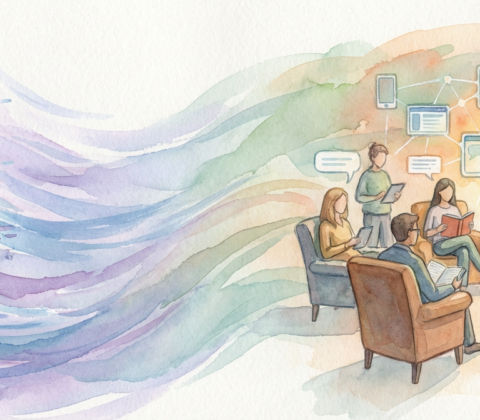
BookTok didn’t die. It just got really, really quiet. Meanwhile, something unexpected started building in the corners of the internet where most cultural trends go to be ignored: Discord servers dedicated to actually reading books together, slowly, in real time. The numbers tell the story. In 2025, Discord reported that book-focused servers grew by 44 percent. That’s not incremental growth. That’s people actively choosing a different way to experience reading culture. And the part that matters most: servers built around reading a book chapter by chapter, over weeks or months, overtook quick-recommendation servers in active membership for the first time. People were choosing patience over speed.
It’s a complete inversion of how we’ve been conditioned to think about online discovery. We live in the age of the hot take, the quick scroll, the instant gratification. But inside these Discord communities, thousands of readers are doing something almost radical: taking their time. Reading 50 pages a week and then spending hours in text channels talking about what those 50 pages actually meant. Arguing about character motivation in threads that run for days. Building relationships with other readers, not just collecting likes.
The people in these communities aren’t performance reading. They’re actually reading.
The Indie Bookstore Renaissance Nobody Saw Coming
Here’s where it gets interesting for the actual book industry. Independent bookstores started paying attention. Some of them began partnering with these Discord communities, organizing in-store events around the books being read together. Book clubs meeting in person, organized entirely through Discord. According to the American Booksellers Association Industry Reports, indie bookstores running Discord-connected events saw 27 percent higher foot traffic compared to stores running Instagram-only promotions. That’s a concrete number. That’s money.
The big publishers noticed too. Penguin Random House’s marketing team literally added Discord to their tracking systems. They’re now measuring what they call Discord-native word of mouth as an actual acquisition channel for their literary fiction titles. That’s the moment you know something has shifted. When the major gatekeepers start building infrastructure around a platform, it’s no longer a subculture. It’s a system.
What Slow Reading Actually Does
But here’s what matters most, and it’s not about metrics. A University of Michigan study from early 2026 found something that probably shouldn’t have been surprising but definitely was. Readers who were part of slow-paced online reading communities retained 40 percent more thematic content from the books they read. Not plot points. Themes. The actual meaning. They also reported three times higher personal meaning derived from their reading compared to people who primarily got their book recommendations from short-form video. Essentially, when you slow down and go deeper with a community instead of chasing viral moments, you actually get more out of the books.
That’s not a small thing. That’s the difference between consuming content and actually connecting with literature. Between knowing what book is popular and understanding why it matters to you personally.
The New Quiet Revolution
What’s happening right now in Discord book clubs isn’t flashy. There are no TikTok compilations, no BookTuber drama, no publishing house sponsorships. It’s just people choosing to read the same book at the same time, in the same digital space, building something sustainable because it’s not designed to go viral. It’s designed to go deep.
Culture writers are still talking about BookTok like it’s the story. But the real story is that readers got tired of performing and started just reading again. They found each other in spaces where algorithms couldn’t manipulate them, where growth wasn’t measured in views, where the goal was understanding rather than engagement metrics. Bookstores are thriving because of it. Publishers are tracking it. Universities are studying it.
If you’ve been feeling like something shifted in how we talk about books, you’re not imagining it. The revolution just happened quietly, on servers with names like “the cottage readers” and “chapter-a-week club.” Want to know where actual literary culture is living right now? Stop scrolling. Start listening in the Discord channels where people are actually talking about what they read. That’s where the story is.