The White Cube’s Queer Erasure: How Berlin’s Galleries Police Desire

Empty white gallery space with polished concrete floor and track lighting, representing institutional neutrality
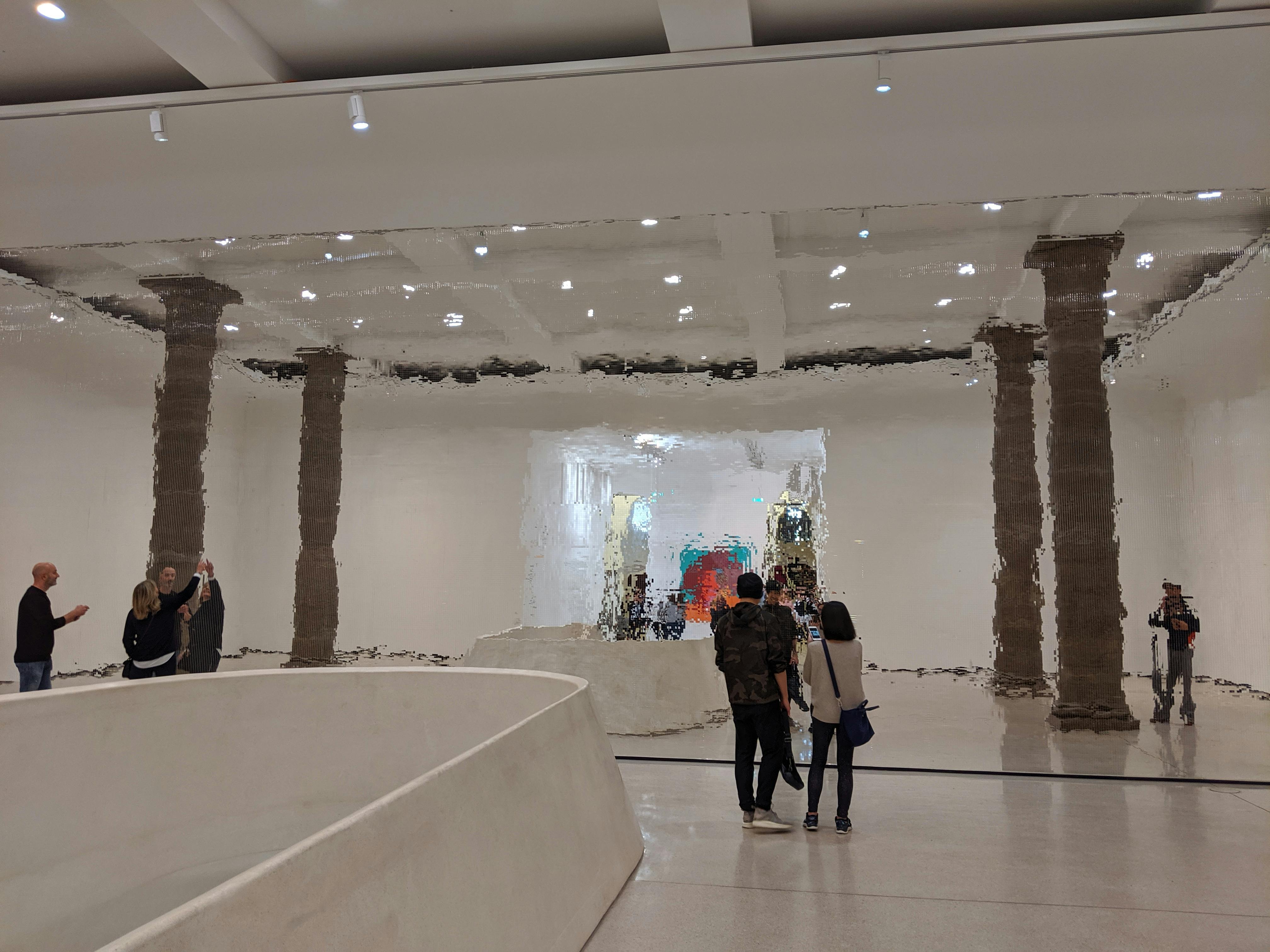
The pristine void of the contemporary gallery—a space that claims neutrality while enforcing strict codes of visibility.

Berlin sells itself as a city of radical openness. The tourism pitch practically sweats with promises of hedonism, subculture, and sexual liberation. But walk into any of the city’s mid-tier to blue-chip galleries—those white cubes clustered around Potsdamer Strasse, the slick conversions along the Landwehrkanal, the ascetic spaces metastasizing through Charlottenburg—and you’ll encounter a strange phenomenon. Queerness is permitted only as a curated object, never as a structural presence. The bodies that built Berlin’s reputation for dissidence are welcome as content, not as context. The gallery scene has perfected a technique of extracting queer aesthetics while discarding queer subjectivity.

This isn’t about representation statistics. It’s about how space itself is organized to neutralize threat. The Berlin gallery operates on a logic of antiseptic professionalism that’s fundamentally hostile to the messiness of queer life—its leaky temporalities, its refusal of productive labor, its insistence on pleasure as a form of knowing. When queer work does appear, it’s framed as a safely historical artifact or a digestible provocation, never as a living challenge to the institution’s own operations.

The Architecture of Disappearance

Start with the physical space. The typical Berlin gallery—whether a converted factory floor in Wedding or a purpose-built cube in Mitte—performs a specific kind of violence through its architecture alone. White walls. Polished concrete. Track lighting calibrated to eliminate shadow. This environment is designed to strip objects of their context and render them available for frictionless consumption. It insists on its own neutrality while actively producing a mode of looking that is detached, evaluative, and fundamentally straight.

Queer aesthetics, historically, have emerged from spaces of density and texture. The darkroom. The cruising ground. The community center repurposed for a ball. The apartment crammed with too many bodies for a DIY performance. These are environments thick with history, risk, and mutual implication. When queer work is transplanted into the white cube, it undergoes a kind of taxidermy. The gestures remain, but the pulse is gone. The gallery doesn’t simply display queer art—it performs a conversion operation, transforming lived practice into legible commodity.

Abstract queer art installation with neon lights and reflective surfaces in a gallery setting
Queer aesthetics domesticated: neon and reflective surfaces become safe signifiers rather than disruptive interventions.

This conversion isn’t accidental. It’s the gallery’s primary function. The white cube is a machine for producing value, and value in the contemporary art market demands a certain kind of legibility—one that flattens the specificities of queer experience into recognizable forms. Berlin’s gallery scene has become expert at this flattening. It knows how to take the residue of a radical sexual culture and package it as lifestyle aspiration for collectors whose relationship to queerness is purely aesthetic.

The Curatorial Closet

Berlin’s curatorial class operates with a particular form of bad faith. They’re fluent in the language of inclusion, diversity, and “giving voice to marginalized perspectives.” But their programming decisions reveal a deeper logic. Queer artists are welcome when they produce work that can be framed as “exploring identity”—a phrase that safely contains any threat by positioning queerness as a theme rather than a structural position. The curator becomes a kind of ethnographer, collecting specimens of otherness for display in a context that remains resolutely unmarked, implicitly straight, and professionally detached.

This dynamic is most visible in the treatment of trans and gender-nonconforming artists. Berlin galleries have discovered that trans bodies generate buzz—they’re, in market terms, “interesting” content. But the interest is strictly conditional. The work must be legible within existing frameworks of aesthetic value. It must not demand too much of the viewer. It must not implicate the gallery itself in systems of violence. The trans artist is welcome as a guest, but only if they behave like one: grateful, well-mannered, and willing to perform their difference in ways the host finds edifying.

The structural exclusion operates through a thousand small mechanisms. The afterparty where only certain people are told the location. The studio visit that never gets scheduled because the artist’s practice is “not quite ready.” The grant application that requires institutional affiliations queer artists are systematically denied. The curator who loves your work but can’t “find the right context” for it—meaning a context that won’t disturb their other artists, their board, their collectors. These aren’t accidents. They’re the immune system of an art world that has learned to tolerate queerness only in homeopathic doses.

The Gentrification of Desire

Berlin’s transformation from a city of cheap rents and experimental spaces to a node in the global art market isn’t just an economic story. It’s a story about the disciplining of desire. The same forces that turned Schöneberg’s queer bars into tourist attractions, that converted Kreuzberg’s anarchist squats into luxury apartments, have also reshaped the gallery system. The galleries that now dominate the scene aren’t neutral platforms; they’re active agents of this gentrification, importing a model of professionalized art dealing that’s structurally incompatible with queer ways of making and being.

The professional gallery requires predictability. It needs artists who can produce consistent work for a market that operates on a two-year exhibition cycle. It needs work that photographs well for Instagram and Artforum. It needs artists who can perform the role of the creative professional—articulate, reliable, appropriately grateful, and above all, safe. Queer practice, in its most vital forms, refuses these demands. It’s often episodic, responsive to community needs, embedded in social relations that don’t translate to press releases, and fundamentally unconcerned with market viability.

Berlin street scene at night with neon signs and reflections on wet pavement, evoking queer nightlife
The Berlin of queer nightlife and street-level culture exists in tension with the sanitized spaces of the commercial gallery circuit.

The gallery system’s response to this incompatibility isn’t to adapt its structures but to select for queer artists who have already internalized its demands. The result is a scene populated by what we might call “gallery-friendly queers”—artists whose work references queer experience but whose professional comportment is indistinguishable from their straight peers. They attend the same dinners, speak the same art-lingo, and produce work that critiques power without ever threatening the power structures that sustain their careers. This isn’t a conspiracy; it’s a market logic operating with perfect efficiency.

The Violence of Inclusion

There’s a particular cruelty in the way Berlin galleries perform inclusion while maintaining exclusion. The group show that features one queer artist—always the same one, rotating through every space in the city—as proof of the gallery’s progressive credentials. The panel discussion on “Queer Futures” moderated by a straight curator who has never set foot in a queer space except as a researcher. The collector’s dinner where the artist is expected to be charming and decorative, to provide the frisson of otherness without the discomfort of actual difference.

This isn’t inclusion; it’s extraction. The gallery takes what it needs from queer culture—the aesthetic innovation, the edge, the cachet of transgression—and leaves behind everything that makes queer culture threatening to institutional power: the solidarity, the critique of property and propriety, the refusal of respectability, the insistence that pleasure and care are political practices, not lifestyle choices.

The violence here is subtle but real. It’s the violence of being seen but not heard, of being displayed but not consulted, of having your existence acknowledged only when it can be monetized. For queer artists who refuse this bargain, the consequences are material: exclusion from exhibition opportunities, from funding, from the networks that make sustainable careers possible. The choice the Berlin gallery scene offers isn’t between visibility and invisibility, but between a visibility that requires self-mutilation and an invisibility that is economically punishing.

Against the Curatorial Gaze

What would a gallery look like that refused this logic? Not a gallery that “includes” queer artists, but one that is itself queered—that reorganizes its spatial, temporal, and economic structures around queer ways of knowing and being? Such a space would have to abandon the pretense of neutrality. It would have to acknowledge that every architectural decision, every temporal rhythm, every economic arrangement is a political act that includes some bodies and excludes others.

A queered gallery might refuse the white cube entirely, opting instead for spaces that retain the traces of previous uses, that allow for darkness and intimacy, that can accommodate bodies in states other than standing and looking. It might reject the exhibition cycle in favor of longer, more porous engagements—residencies that blur into hangouts, openings that are actually open, programming that responds to community needs rather than market calendars. It might rethink the economic model entirely, moving away from the speculative commodification of objects toward something more like mutual aid.

These aren’t utopian fantasies. They’re descriptions of practices that already exist in Berlin’s queer underground—in the DIY spaces, the community archives, the collective studios that operate on shoestring budgets and survive through networks of care. The problem isn’t that these spaces are marginal; it’s that the gallery system actively extracts from them while refusing to recognize their legitimacy. The “professional” art world treats these spaces as training grounds or raw material sources, never as valid alternatives to its own model.

The Market’s Straightening Function

At the root of this dynamic is the art market itself—a structure that demands objects be alienable, prices be stable, and artists be manageable. Queer practice, at its most radical, refuses all three. It produces experiences rather than objects, values use over exchange, and insists on forms of relationality that cannot be reduced to contract. The market cannot tolerate this; it must either exclude such practice or transform it into something marketable. The Berlin gallery scene has chosen transformation, developing sophisticated techniques for converting queer intensity into safe, sellable product.

This conversion process isn’t neutral. It changes the work, stripping it of the very qualities that made it queer in the first place. A performance that was once embedded in a specific community, responding to specific needs and histories, becomes a re-performed documentation for an audience of collectors. A sculpture that emerged from a collaborative process of mutual care becomes a singular, authored object with a price tag. The market doesn’t just sell queer art; it straightens it, imposing the logic of the proper, the bounded, the ownable onto practices that were defined by their refusal of these categories.

Berlin’s galleries are particularly adept at this straightening because they operate in a city whose brand is built on queer culture. The contradiction is productive for them: they can claim proximity to radical scenes while maintaining the distance necessary for market operations. They can invoke the city’s sexual history while sanitizing its present. They can sell the aura of transgression without ever risking actual transgression. This is the core competency of the Berlin gallery scene, and it is a form of violence that the art world refuses to name.

FAQ

Why focus on Berlin specifically? Isn’t this a problem in all major art markets?

Berlin presents a particularly acute case because its global brand is so deeply entangled with queer subculture. The city markets itself as a haven of sexual freedom and artistic experimentation—a reputation built on actual queer communities that are now being displaced by the very art market that exploits their image. Other cities have similar dynamics, but Berlin’s hypocrisy is especially stark because its economic strategy depends on selling a queer authenticity that its institutions simultaneously destroy.

Are there any Berlin galleries that do support queer artists properly?

Some smaller, often collectively-run spaces operate with genuine accountability to queer communities. These tend to exist outside the commercial gallery circuit—project spaces, artist-run initiatives, and community venues that prioritize relationships over sales. The problem is structural: the closer a space gets to the commercial gallery model, the more it must discipline queer practice to fit market demands. The issue is not individual bad actors but a system that rewards domestication.

What would meaningful change look like in the Berlin gallery scene?

Meaningful change would require galleries to cede power, not just diversify programming. This means queer people in decision-making positions with actual authority over budgets, spatial design, and institutional priorities. It means funding models that support process and community rather than just objects. It means abandoning the fantasy of the neutral white cube and building spaces that accommodate queer temporalities, embodiments, and modes of relation. Anything less is just more efficient extraction.

The White Cube’s Closet: How Berlin’s Gallery Scene Marginalizes Queer Voices

Berlin loves to flaunt its queerness. The city sells itself as a playground of sexual liberation, a place where the techno never stops and identity is just another costume. But walk into the commercial galleries—the white cubes that decide what counts as serious art—and the story flips. Here, queerness gets a makeover. It’s tidied up, stripped of its anger, and packaged for collectors who want the thrill of transgression without the mess. The Berlin gallery scene doesn’t just overlook queer voices; it actively filters them out through a machinery of aesthetic gatekeeping, economic exclusion, and a quiet terror of work that refuses to play nice.

The Gentrification of Dissent

Berlin’s art market hungers for the edgy, the underground, the radical—but only after it’s been sanitized. Queer art that names structural violence, that points a finger at the systems doing the oppressing rather than dressing it up in metaphor, gets labeled “too political” or “not gallery-ready.” This isn’t a bug. It’s the whole operating system. The gatekeepers—gallerists, curators, selection committees—have internalized a neoliberal logic where marketability equals merit. Work that questions the market’s right to exist is, by definition, unmarketable. So it’s quietly shown the door.

Think about the artists who tackle the ongoing HIV crisis, transphobic violence, or the economic squeeze on queer lives. Their work rarely makes it into the white cubes of Potsdamer Straße or Auguststraße. Instead, it’s pushed into project spaces, one-night stands, or community-run venues with shoestring budgets. Meanwhile, the galleries display queer-adjacent work that’s formally safe: abstract paintings with a whisper of homoeroticism, photographs of gender-nonconforming bodies that are beautiful but never angry, installations that hint at trauma without naming its source. This is gentrification applied to dissent. The radical gesture gets absorbed, polished, and sold back to you as a luxury good.

Abstract representation of fragmented identity in Berlin's art scene

The Economics of Erasure

Money is the silent enforcer here. Berlin’s gallery system isn’t a meritocracy; it’s a network of patronage, inheritance, and access to private wealth. Queer artists—especially those who are trans, Black, or from working-class backgrounds—often lack the safety net that lets others float through unpaid internships, prestigious art schools, and years of precarity until a gallery finally picks them up. The romantic myth of the starving artist is just that: a myth. In reality, those without family money or a partner with a steady income get weeded out long before they ever see a gallery wall.

And if they do break through? Their work gets priced lower. Galleries frame it as “niche” or “hard to place” with serious collectors. It’s a self-fulfilling prophecy: price it cheap, signal it’s less valuable, attract less attention, and then point to the lack of attention as proof it was worth less all along. Meanwhile, abstract or conceptually vague work by straight-identified artists—or by queer artists who downplay their politics—commands premium prices. The market punishes specificity and rewards ambiguity. It’s a tax on telling the truth.

The Curatorial Closet

Curators are the doorkeepers of this system, and most of them share the same academic and economic pedigree. They operate with a shared set of assumptions about what “serious” art looks like. Queer work that’s too overtly political gets dismissed as didactic or activist—words that function as slurs in the art world. The preference is for work that “transcends” identity, as if identity were a stain to be scrubbed away rather than the lens through which the world is understood. This is the curatorial closet: a demand that queer artists universalize their experience until it’s unrecognizable.

When queer artists do get included in major exhibitions, it’s often under the banner of a vague, depoliticized “diversity.” The work is chosen to represent a category, not to unsettle the viewer. It becomes a token, a checkbox on a funding application. The radical potential of queer art—its capacity to disturb, to refuse, to imagine otherwise—gets neutralized. The artist is welcomed inside, but only if they check their politics at the door.

Berlin gallery interior with minimalist white walls and sparse attendance

The Performance of Inclusion

Berlin’s art scene has perfected the performance of inclusion. Panel discussions on queer art take place in pristine white cubes, sponsored by the very institutions that exclude the artists being discussed. Pride month triggers a flurry of queer-themed exhibitions, but they’re often curated by straight gallerists who treat queerness as a seasonal trend. The artists get paid in exposure, their work used to buff the gallery’s progressive credentials, then quietly dropped when the next theme—ecology, post-colonialism, whatever’s trending—rolls around.

This performance seeps into the language of press releases and catalog essays. Words like “subversive” and “transgressive” get thrown around like confetti, but they’re hollow. Actual subversion would threaten the gallery’s relationships with collectors, many of whom are conservative in their tastes if not their politics. Actual transgression would question the art market’s legitimacy as an arbiter of cultural value. So the language stays safely rhetorical—a velvet glove over an iron fist.

The Violence of Taste

Taste is never innocent. It’s a weapon of class distinction, a way of marking who belongs and who doesn’t. In Berlin’s gallery scene, taste is defined by a narrow set of references: a specific kind of conceptualism, a specific relationship to the European avant-garde, a specific coolness coded as intellectual sophistication. Queer art that draws on different traditions—community-based practices, activist aesthetics, the visual cultures of ballroom or drag—gets dismissed as unsophisticated, too loud, too emotional. This isn’t a judgment of quality. It’s a judgment of who the artist is and where they come from.

The violence of taste hits hardest in the treatment of trans artists. Their work is often exoticized or pathologized, framed as a window into a “fascinating” experience rather than as serious artistic production. Galleries that would never dream of tokenizing an artist based on race or gender feel perfectly comfortable doing it with trans artists, reducing them to their identity while claiming to celebrate it. This isn’t inclusion. It’s a form of epistemic violence that denies trans artists the capacity to produce complex, rigorous work.

The Alternative Scene and Its Limits

Yes, Berlin has a thriving alternative art scene. Squats, collectives, and underground spaces host queer exhibitions that are raw, political, and unapologetic. But these spaces are precarious, constantly threatened by gentrification, police raids, and a chronic lack of funding. They exist in a parallel universe, rarely intersecting with the commercial gallery world. The art market treats them as a kind of farm system: a place where interesting ideas can be harvested, polished, and sold, but never a place taken seriously on its own terms.

This separation isn’t natural. It’s maintained by the gallery system’s refusal to engage with work that challenges its economic foundations. A queer art that demands the abolition of the art market, that insists on new models of ownership and distribution, cannot be accommodated by galleries whose existence depends on commodifying objects. The alternative scene is tolerated precisely because it’s contained—a pressure-release valve that prevents real disruption.

Queer artist working in a makeshift studio space in Berlin

Toward a Refusal

What would it mean for queer artists to refuse this machinery? Not to beg for inclusion in a system that demands their erasure, but to build something else. This isn’t a call for separatism; it’s a call for critical, strategic disengagement. Queer artists might choose to exhibit only in spaces that are collectively owned, to sell work only under terms that challenge the speculative logic of the art market, to create work that is deliberately ephemeral or uncollectible. These aren’t new ideas, but they stay marginal because the gravitational pull of the gallery system is so strong.

The Berlin gallery scene’s marginalization of queer voices isn’t a glitch. It’s a feature. It’s how the system maintains its coherence, its market value, its cultural authority. To demand inclusion is to accept the terms of that system. The more radical move is to refuse those terms entirely, to build alternative structures that don’t depend on the approval of gallerists, curators, or collectors. This isn’t a retreat from the art world. It’s an insistence that the art world as currently constituted is not the only world worth building.

Frequently Asked Questions

Why do Berlin galleries claim to support queer art while excluding radical voices?

Galleries operate within a market that rewards work that is formally innovative but politically safe. Queer art that directly challenges power structures threatens the gallery’s relationships with conservative collectors and state funding bodies. Inclusion is permitted only when it can be depoliticized and commodified. The system absorbs the aesthetic of queerness while rejecting its political substance.

How does economic precarity specifically affect queer artists in Berlin?

Queer artists, especially those from marginalized backgrounds, often lack the family wealth or institutional support that sustains artists through unpaid internships, low-paying gallery jobs, and years of undercompensated labor. The Berlin art market’s reliance on this “precarity pipeline” means that those who cannot afford to participate are filtered out long before they reach gallery representation. Additionally, queer work is frequently undervalued in pricing, creating a cycle of economic marginalization.

What can queer artists do to resist this marginalization?

Resistance can take many forms: building independent, collectively-run exhibition spaces; creating work that is deliberately difficult to commodify (performance, digital, or community-based practices); refusing to participate in tokenizing “diversity” initiatives; and forming solidarity networks that share resources outside the gallery system. The goal is not to be included in a broken system but to construct alternatives that operate on different economic and aesthetic principles.

Is there any gallery in Berlin that genuinely supports queer art?

A few smaller, artist-run spaces and project rooms operate with integrity, but they remain marginal to the commercial market. The structural pressures of the art market—rent, collector expectations, fair participation—make it nearly impossible for a commercially viable gallery to consistently platform politically radical queer work. The problem is not individual gallerists but the system they are embedded in.

The Velvet Rope of Taste: How Berlin’s Galleries Keep Queer Art in Its Place

Berlin sells itself as a city of radical openness. The tourism board’s copy practically sweats with promises of creative freedom, sexual liberation, and a nightlife that dissolves every boundary. But step into the white cubes along Potsdamer Straße, or the self-serious project spaces tucked into Kreuzberg backyards, and you hit a different reality: a meticulously policed aesthetic regime where queer voices get a conditional pass. Sanitize it. Theorize it into abstraction. Package it as market-ready trauma. The city’s art infrastructure, for all its posturing, runs a velvet rope policy—queer work gets in only when it flatters the sensibilities of straight collectors and institutional boards.

Empty white gallery space with polished concrete floors and track lighting

The mechanism isn’t crude exclusion. Berlin galleries are too slick for overt bigotry. Instead, they lean on a set of curatorial reflexes that filter out anything too embodied, too angry, too inconveniently specific. The queer art that makes it through the door tends to be abstract, conceptually dense, scrubbed clean of explicit desire—work you can discuss over wine in terms of “identity deconstruction” rather than the messy facts of cruising, dysphoria, or communal care. A canvas of blurred, genderless figures in pastel gradients will hang on Auguststraße. A series of photographs documenting actual trans sex workers in Kreuzberg? Not a chance.

The Abstract Alibi

Abstraction is the primary alibi. When a gallery does show a queer artist, the work selected almost always leans non-figurative. Geometric paintings that “question binary structures” through color field tension. Video installations where bodies dissolve into data streams. These pieces let curators invoke queer theory without ever confronting queer flesh. The press release does the heavy lifting, grafting political significance onto images that, on their own, could hang comfortably in a corporate lobby. This preference for the abstract over the representational isn’t an aesthetic judgment; it’s a containment strategy. Abstract queer art can be discussed safely over canapés. It doesn’t risk making anyone feel implicated.

Look at what happens to figurative queer painting in Berlin’s primary market. Artists working with direct depictions of queer intimacy—kissing, touching, the specific architecture of a darkroom—get routinely shunted toward off-circuit venues: pop-up shows in borrowed flats, one-night events in basement bars. The gallery system treats such work as documentary or illustrative, beneath the seriousness of “contemporary practice.” This distinction is a class marker, a way of coding certain bodies and experiences as raw material rather than refined product. The queer artist who paints lovers in a Kreuzberg apartment gets framed as a folklorist; the straight artist who abstracts queer slogans into neon gets framed as a conceptualist.

Person standing alone in a dimly lit gallery corner, looking at a small framed artwork

The Performance Economy and Its Discontents

Performance art sits in a weird spot in this ecology. Berlin galleries and institutions program queer performance with apparent enthusiasm—bodies in motion, durational works, drag interventions. But that enthusiasm masks a deeper instrumentalization. Performance is cheap. No storage, no insurance, no costly fabrication. A gallery can fill an evening with radical queer gestures, soak up the glow of edginess, and return the next morning to selling paintings to collectors from Zurich. The performance is the alibi, the proof of political commitment that licenses the business-as-usual of the primary market.

And the performers themselves? Rarely compensated properly. A typical arrangement in a Berlin project space: the artist gets a small production budget, maybe €200, and the “opportunity” to perform. The gallery absorbs the symbolic capital—the Instagram documentation, the critical mention, the aura of risk-taking—while the artist absorbs the actual risk. Queer performers, especially those who are trans, Black, or disabled, are asked to make themselves vulnerable in spaces that won’t protect them, for audiences that won’t pay them, in service of institutions that won’t represent them long-term. The body gets extracted; the career doesn’t get built.

The Collector as Censor

Behind every curatorial decision, the collector lurks. Berlin’s gallery scene, for all its anti-commercial rhetoric, is tethered to a small group of private buyers whose tastes shape what gets shown. These collectors—often straight, often male, often German or Swiss—have learned the vocabulary of progressive art discourse. They’ll speak fluently about “challenging heteronormativity.” But put a work in front of them that actually challenges their own position, and the checkbooks close. A painting of a gay orgy is “too literal.” A sculpture referencing fisting is “not for our collection.” The gallery, anticipating this response, pre-emptively filters. The collector never has to say no, because the work never reaches the wall.

This dynamic creates a feedback loop that narrows the definition of acceptable queer art. Galleries internalize the collector’s unspoken limits and pass them off as curatorial standards. The result? A scene that congratulates itself on its diversity while exhibiting a remarkably homogenous range of queer expression. The queer art that succeeds in Berlin is art that a straight collector can buy without discomfort—art that affirms his sophistication without threatening his sense of self.

Gallery visitor in silhouette, observing a large abstract painting on a white wall

Institutional Complicity: The Case of Public Funding

Berlin’s public art institutions—the nGbK, the Berlinische Galerie, the KW Institute—aren’t innocent bystanders. They get substantial state funding and carry a mandate to represent the city’s cultural diversity. Yet their exhibition histories reveal a pattern of tokenism and belated recognition. Queer artists get programmed during Pride month or anniversary years (50 years since Stonewall, 100 years since Hirschfeld) and then vanish from the calendar. This episodic inclusion treats queer art as a thematic unit rather than an ongoing practice. It suggests that queer experience is a special interest, not a permanent and generative force in culture.

The funding structures themselves discourage sustained engagement. Project grants favor novelty over continuity. An artist can secure €5,000 for a single queer-themed installation but can’t find support for a decade of queer painting. The system rewards the spectacular intervention and penalizes the slow, stubborn commitment to a queer visual language. This shapes not only what gets shown but what gets made. Artists, rationally responding to incentives, learn to package their queerness into fundable formats. The grant application becomes a closet of its own.

The Gentrification Connection

You can’t talk about Berlin’s gallery scene without talking about gentrification. The same economic forces that have pushed queer residents out of Kreuzberg and Neukölln have also reshaped the art world. Galleries follow capital; capital follows real estate speculation. As queer neighborhoods get dismantled, the galleries that once drew vitality from them become detached, floating in a sterilized cityscape of co-working spaces and luxury renovations. The queer artists who remain are increasingly those with family wealth, foreign passports, or academic affiliations—a narrowing demographic that further homogenizes the voices heard.

The gallery system participates actively in this displacement. A new white cube opens on a street where a queer bar recently closed. The gallery’s presence raises property values, attracts further investment, and accelerates the expulsion of the very communities it might claim to represent. This isn’t a contradiction; it’s a function. The gallery needs the aura of queer radicalism to brand itself, but it needs the actual queers to be elsewhere—visible only as curated content, not as neighbors or claimants to space.

What Gets Left Outside

Let’s get specific about what the velvet rope excludes. First, art that deals with queer sex as sex, not as metaphor. The Berlin gallery scene is comfortable with desire when it’s sublimated into theory, but uncomfortable with the wet, the sticky, the explicit. Second, art made by queer people who aren’t artists in the professional sense—community practitioners, sex workers, activists who use visual media as a tool rather than a career. The gallery demands a certain biographical trajectory: MFA, residencies, previous exhibitions. It mistrusts the autodidact, the organizer, the person whose practice emerged from necessity rather than ambition. Third, art that insists on the local. Berlin galleries favor work that can travel, that speaks a globalized curatorial Esperanto. Art rooted in the specific queer geography of Berlin—the Tiergarten cruising areas, the remnants of the Schöneberg leather scene, the Tempelhofer Feld hookup spots—is too parochial for the international market.

This triple exclusion produces a queer art scene that is paradoxically straight: professionalized, depoliticized, and deracinated. It’s queer in theme but not in structure, queer in content but not in context. The gallery system has learned to extract the signifier “queer” while discarding the signified—the actual lives, communities, and struggles that give the term meaning.

Theoretical Detour: Rancière and the Distribution of the Sensible

Jacques Rancière’s concept of the “distribution of the sensible” offers a useful framework here. For Rancière, politics isn’t primarily about laws or institutions but about what is visible and sayable in a given social order. The aesthetic regime determines who can appear as a subject, what can be perceived as art, and which voices register as speech rather than noise. Berlin’s gallery scene enforces a distribution of the sensible that partitions queer expression: some of it gets admitted into the sphere of art, but only after being processed into forms that the existing order can recognize. The rest gets consigned to the sphere of the private, the pathological, or the merely social—not art, but “community work,” not politics, but “identity assertion.”

This partitioning isn’t a conspiracy. It’s the normal operation of an art system that mistakes its own conventions for universal criteria. When a gallerist says a queer figurative painting is “not strong enough,” they’re not lying. They’re applying standards of quality that were developed to evaluate a very different kind of work—standards that encode class, education, and cultural capital as aesthetic values. The tragedy is that these standards are experienced as neutral by those who wield them. The gallerist genuinely believes they’re judging art, not policing identity. But the effect is the same: a narrowing of the sensible, a foreclosure of what queer art can be.

Strategies of Refusal

Some queer artists in Berlin have responded by refusing the gallery system altogether. They organize independent exhibitions in their apartments, in squats, in the back rooms of bars that still exist. They form collectives that pool resources and share networks, bypassing the gatekeepers. This refusal isn’t a retreat; it’s counter-institution building, an attempt to create alternative distributions of the sensible where queer art can be seen on its own terms. These spaces are fragile, underfunded, and often short-lived—eviction or exhaustion closes them within a year or two. But they matter because they preserve possibilities that the official scene extinguishes.

Other artists take a more ambivalent tactic: they work both inside and outside, taking gallery opportunities when they come but refusing to adapt their practice to gallery expectations. They show the explicit work in the basement bar and the abstract work in the white cube, maintaining a split practice that keeps something recalcitrant alive. This is a psychologically costly strategy, a kind of institutional bilingualism that requires constant code-switching. But it prevents the total absorption of queer vision into market-friendly form.

The Critic’s Responsibility

Art criticism in Berlin has largely failed to address these structural conditions. Reviews focus on individual works and artists, evaluating them within the terms set by the gallery system. A queer exhibition gets praised for “bravery” or “urgency” without asking why bravery is required, what structures make queer art risky to show. The critic who wants to do more must shift from evaluating objects to analyzing systems, from asking “Is this good art?” to asking “What conditions allow this art to be seen, and what conditions suppress other art?” This is a theoretical task, but it’s also a practical one: it requires naming the galleries, the collectors, the funding bodies, and the specific decisions that shape the visible field.

Such criticism will be unwelcome. Berlin’s art world is a small, incestuous scene where critics, curators, and gallerists attend the same openings and drink at the same bars. Writing that disturbs these social bonds risks professional isolation. But the alternative is complicity—continuing to write as if the gallery system were a neutral platform rather than an active filter, as if the absence of certain queer voices were an accident rather than a structural effect.

FAQ

Why does Berlin have a reputation for queer-friendliness if its galleries are so exclusionary?

Berlin’s reputation rests on its nightlife, its activist history, and its comparatively liberal social attitudes—not on its commercial art market. The club scene, particularly venues like Berghain and Schwuz, does offer spaces for queer expression that are less mediated by market forces. But the gallery system operates under different pressures: collector taste, international branding, and the professionalization of curatorial practice. These pressures select for a version of queerness that is palatable to wealth and power. The city can be both genuinely queer in its streets and hypocritically straight in its white cubes; these realities coexist without cancelling each other.

Are there any Berlin galleries that consistently support challenging queer art?

A few smaller, artist-run spaces—like Horse & Pony, or the now-closed Centrum—have made genuine commitments to queer work that doesn’t compromise. But these spaces are marginal within the market, operating on shoestring budgets and often excluded from major fair participation. The larger galleries with significant market power (Sprüth Magers, CFA, König) occasionally program queer artists, but the work selected tends toward the abstract and the internationally legible. The structural problem isn’t that no queer art gets shown; it’s that the system as a whole filters out the most disruptive, specific, and embodied queer practices.

What can artists and audiences do to change this situation?

Artists can form collectives that share resources and create independent exhibition platforms, reducing dependence on commercial galleries. They can also be strategic about which opportunities they accept, refusing to sanitize their work for inclusion. Audiences—including collectors—can direct their attention and money toward artist-run spaces and independent projects rather than defaulting to established galleries. Critics and writers can shift their focus from individual works to the structural conditions of the scene, naming the gatekeepers and the mechanisms of exclusion. Change won’t come from the galleries voluntarily; it will come from pressure applied by artists, audiences, and the broader queer community demanding a redistribution of visibility and resources.

The White Cube’s Quiet Violence: Berlin’s Gallery Circuit and the Erasure of Queer Art

Berlin wears its myth well. The city markets itself as a sanctuary for freaks, dissidents, queers—anyone who doesn’t fit the neat geometries of polite society. You hear it in the techno pilgrimage stories, see it in the Magnus Hirschfeld plaques, feel it in the lingering dust of the squats that once carved autonomous zones out of Cold War rubble. But walk into a commercial gallery on Potsdamer Straße during an opening. Stand in a Mitte white cube with a glass of cheap prosecco. Watch who speaks, who buys, who gets to be more than decoration. The myth cracks. What seeps through is a system that tolerates queerness only when it’s been scrubbed of politics, flattened into something pretty, and priced per square centimeter.

The Architecture of Exclusion

Start with the walls themselves. Berlin’s gallery geography is a map of displacement. Mitte, once cleft by the Wall and home to immigrants, artists, and squatters, is now a polished corridor of concept stores and high-rent exhibition spaces. Kreuzberg’s raw concrete galleries sit on streets where the queer Turkish kids who defined the Kottbusser Tor of the nineties can no longer afford a döner. The artists who once lived in these neighborhoods have been shoved to Wedding, Lichtenberg, Marzahn—outer rings where the U-Bahn thins out and the art tourists never wander. But the galleries stayed. They kept the postcodes and the edgy aura, displaying work that never mentions the communities they helped push out.

This isn’t accidental geography. It’s a filtering mechanism. Queer artists, especially trans artists, non-binary artists, Black artists, have to commute into spaces that were never built for them. The white cube demands a performance: the right clothes, the right vocabulary, the right deferential posture toward curators and collectors. It’s a conditional invitation. You can hang your trauma on the wall if you agree to neuter it first. The architecture itself—the stark lighting, the echoing floors, the absence of anywhere to sit that isn’t a concrete bench—tells you that you are a guest, and guests behave.

Empty white gallery space with polished concrete floors and harsh overhead lighting

Tokenism as a Business Model

Every June, the rainbow flags appear. Berlin’s galleries suddenly remember that queer people exist, and the group shows bloom like opportunistic fungi: Queer Visions, Beyond the Binary, Fluid Identities. Curated, more often than not, by straight cis people who’ve spent the previous eleven months ignoring anything that wasn’t a white male abstractionist. The formula is rigid. Some blurry photographs of androgynous bodies—thin, white, young. A video loop of a drag performance, volume turned low so as not to disturb the collectors. Maybe a text piece about pronouns, framed in Helvetica, safely conceptual. Nothing that names the gallery’s landlord. Nothing that asks who owns the building, who skims the commission, whose bodies are actually safe in the bathroom during the opening.

This is tokenism as quarterly strategy. Queer art becomes a seasonal product, aligned with corporate sponsorship cycles and EU cultural funding deadlines. The same galleries that mount these shows keep zero queer artists on their permanent rosters. The collector who buys a gauzy photograph of a trans torso during Pride wouldn’t touch an installation about trans exclusion from healthcare—too angry, too specific, too likely to make the dinner party awkward. The market wants queerness that decorates, not queerness that demands.

The Violence of Professionalization

Berlin’s art world has a script for what a serious artist looks like. Consistent output. A studio practice. Regular attendance at openings, panel discussions, the right afterparties. A vocabulary fluent in art-historical references, dropped with casual precision. A CV that climbs in a straight line. This script assumes a stable self, a linear life, and a cushion of resources that many queer artists simply don’t have—and don’t want to perform having.

Queer lives are often non-linear by necessity. They’re shaped by displacement, by stretches of precarity, by the brute fact that survival eats the hours you’d otherwise spend in the studio. A trans artist who can’t afford hormones isn’t likely to have the financial padding to rent a workspace in Berlin’s superheated property market. A queer artist of color navigating the city’s racist housing system—the Schufa checks, the landlords who suddenly stop answering emails—may not have the energy to schmooze at three openings a week. The demand for professionalization isn’t a neutral standard. It’s a sieve that selects for class privilege, institutional backing, and the ability to pass in rooms dominated by white cis people. It punishes the very conditions queerness often entails.

Lone figure standing in a cavernous empty gallery with high ceilings and white walls

The Gentrification Feedback Loop

Galleries don’t float above the city; they’re engines of its reshaping. The pattern is numbingly familiar: a gallery opens in a cheap neighborhood, cultural capital accumulates, property values spike, and the communities that made the area worth colonizing get priced out. Queer spaces—bars, community centers, collective housing projects—are especially vulnerable. When a gallery appears next to a historic queer venue, it’s rarely solidarity. It’s usually the first tremor before the venue’s closure.

The irony is so sharp it cuts. Galleries feed on the edgy, queer aura of a neighborhood while actively displacing queer people. They sell transgression to collectors who want to feel adventurous, while the actual transgressors are packing their bags for Marzahn. This isn’t a flaw in the system. It’s the system’s digestive process. The art market needs marginality as raw material. It has no use for the marginalized themselves, except as ghosts that haunt the property values upward.

The Language of Erasure

Read a Berlin gallery press release. You’ll find queer art described as “exploring identity,” “questioning norms,” “challenging binaries.” These phrases are so generic they could preface a radical performance piece or a mildly unconventional portrait of someone’s cat. The vocabulary flattens difference into abstraction. A trans artist’s work about medical gatekeeping becomes “a meditation on the body.” A lesbian artist’s documentation of community care networks becomes “an investigation of social structures.” The language scrubs away anger, depoliticizes resistance, and makes queerness safe for the canapé crowd.

This linguistic violence is compounded by a refusal to name power. Press releases never mention capitalism. They don’t say white supremacy or cisheteropatriarchy. Instead, they gesture at “societal expectations” or “normative frameworks,” as if the forces that marginalize queer people are philosophical puzzles rather than material systems of domination. By refusing to name the enemy, the gallery positions itself as a neutral platform—just a pretty room for artistic expression—while quietly reinforcing the structures it pretends to critique.

The Economics of Exclusion

Follow the money and the picture sharpens. Berlin’s gallery scene leans hard on international collectors, many from countries with deeply repressive attitudes toward queer people. These buyers want art that signals sophistication and cosmopolitanism, not art that implicates them. A painting that whispers same-sex desire is fine. An installation that names and shames specific regimes is not. Galleries, dependent on these sales, curate accordingly. They become gatekeepers who filter out anything that might make a buyer shift uncomfortably in their Margiela boots.

This economic reality splits the scene in two. Queer artists who produce market-friendly work—abstract, ambiguous, non-confrontational—get access to commercial representation. Those whose work is explicitly political, or whose very existence is political, are shunted to the non-profit sector, where they scramble for meager grants and residencies. The non-profit spaces become a containment zone, a quarantine ward where radical queer art can exist but never thrive, safely cordoned off from the market’s tender sensibilities.

Dimly lit gallery with red lighting and a solitary visitor contemplating the artwork

The Performance of Inclusion

Gallery openings are theater, and queerness is often part of the set design. Drag performers are hired to entertain. Queer bodies are photographed, filtered, and posted to Instagram as proof of progressive credentials. But look at who’s making decisions: the directors, the curators, the board members. These roles remain overwhelmingly occupied by white, cis, straight people, or by a narrow band of acceptable queers—white, cis-passing, middle-class, fluent in the right codes.

This isn’t inclusion. It’s extraction. Queer culture is mined for its aesthetic value while queer people are denied structural power. The drag performer gets a flat fee and a taxi home. The trans artist whose work hangs on the wall gets a percentage of sales, if they’re lucky, but no say in how the gallery operates, whose work is shown alongside theirs, or how their art is framed in curatorial texts. The gallery uses queerness as decoration while keeping queer people out of the rooms where decisions actually happen.

Alternative Infrastructures

Despite this machinery of exclusion, queer artists in Berlin have built their own architectures. Artist-run spaces, community archives, underground performance series—they operate outside the commercial system, often in precarious conditions but with far greater integrity. Schwules Museum provides historical grounding. Projects like Queer Art Lab and collective studios in Lichtenberg and Neukölln create platforms for work that would never survive a white cube’s sterilization process. These initiatives aren’t waiting for permission from the art market. They’re building their own contexts, their own audiences, their own economies, often on a shoestring and a prayer.

But these alternative spaces face constant pressure. Rising rents threaten their existence. City funding is unpredictable and tangled in bureaucratic requirements that demand the same professionalization the commercial sector enforces. The success of a queer artist-run space can become its own trap, as galleries scout for talent to extract and incorporate into the market. The struggle isn’t just to create. It’s to survive without being swallowed.

What Would Real Change Look Like?

Real change would require more than a diversity statement buried on a gallery’s website. It would demand a redistribution of resources: funding for queer artists with no strings attached, affordable studio spaces protected from market pressures, and decision-making power actually transferred to queer communities. It would mean galleries refusing to show work by artists from oppressive regimes unless that work explicitly challenges those regimes. It would require collectors to be educated about the political contexts of the art they buy, and to be held accountable for their own positions within systems of power—not just patted on the back for their taste.

Most fundamentally, it would require the art world to abandon its pretense of neutrality. Galleries are not neutral platforms. They are political actors that shape which voices are heard and which are silenced. Until they acknowledge this, until they are willing to cede power and resources, their claims of supporting queer art will remain hollow. The white cube is not a sanctuary. It’s a sorting mechanism, and right now, it’s sorting queer voices out.

Frequently Asked Questions

Why does Berlin have a reputation as a queer-friendly city if its galleries are so exclusionary?

Berlin’s queer-friendly reputation is rooted in its nightlife, its activist history, and its relatively progressive legal framework. But the commercial art world plays by different rules. Galleries are businesses first; their primary allegiance is to collectors and the market. The city’s overall tolerance doesn’t automatically translate into equitable representation inside its cultural institutions. In fact, the myth of Berlin as a queer utopia can make it harder to see the exclusion happening right there on the white walls.

Are there any Berlin galleries that genuinely support queer artists?

A handful of smaller, artist-run spaces and project galleries operate with integrity, often led by queer curators and artists themselves. These spaces tend to exist outside the commercial mainstream and frequently struggle with funding and visibility. The problem is structural: the larger, influential galleries that define Berlin’s art market rarely engage with queer art beyond tokenistic gestures. Supporting the smaller, community-oriented spaces is one way to push back against this dynamic.

How can collectors and audiences support queer artists without reinforcing tokenism?

Start by looking beyond the major galleries and art fairs. Seek out artist-run spaces, independent publications, and community archives. When buying work, think about the artist’s long-term career sustainability rather than treating queer art as a novelty. Advocate for transparency in gallery representation and ask hard questions about who makes decisions and who profits. Most importantly, listen to what queer artists themselves are saying about their needs and struggles, rather than imposing external ideas of what support should look like.

The Glass Wall: How Berlin’s Gallery Circuit Keeps Queer Art in Its Place

Berlin loves the story it tells about itself. Radical openness, techno temples, rainbow flags flapping next to brutalist landmarks—the tourism board has perfected the pitch. Subversion, they insist, is the civic brand. But walk into the commercial gallery circuit, the white cubes along Potsdamer Straße or the polished lofts carved out of Kreuzberg warehouses, and a different logic clicks into gear. Queer art is welcome. On certain conditions. It has to behave. It has to translate its messy desires into a language the market already knows how to read. What you get isn’t exclusion by overt bigotry. It’s something sneakier: a glass wall that looks like an open door but works like a container.

I’ve watched this mechanism from both sides—as a critic and as someone who’s drifted through enough openings to know the choreography by heart. The gallerists aren’t villains. Most would call themselves allies, and they mean it. The problem sits deeper, baked into the economic and aesthetic assumptions that decide what gets shown, what gets sold, what gets written into history. Queer voices get admitted on condition that they perform a recognizable version of queerness. Legible. Collectible. And, in the end, safely depoliticized.

The Currency of Legible Queerness

Do a headcount at Gallery Weekend Berlin. The number of queer-identified artists has climbed over the past decade—press releases wave this around as proof of progress. Now look at the work itself. What you’ll find, overwhelmingly, is a narrow band of queer aesthetics: camp-inflected figuration, neo-surrealist dreamscapes, bodies draped in glitter or shot through a soft-focus nostalgia filter. I’m not saying these are bad works. Plenty of them are compelling. The problem is the narrowing of the spectrum, the way the market selects for queerness that can be framed as whimsical, decorative, or safely transgressive.

I call this the curatorial comfort zone. A gallery hangs a painting of two men kissing and pats itself on the back for doing its bit for representation. But representation without structural critique is just decoration. The market swallows queer imagery and neutralizes it, turning dissent into a premium product. Berlin’s gallery scene has gotten frighteningly good at this alchemy: take the sharp edges of queer experience, sand them down, and sell the resulting smoothness as “challenging work.”

What gets left out? Art that refuses to be charming. Art that insists on the material realities of queer life—precarity, medical discrimination, the slow violence of bureaucratic erasure. Art that is formally difficult, conceptually demanding, or aesthetically resistant to easy consumption. This work exists in Berlin. It’s being made in shared studios in Wedding, performed in squats in Lichtenberg, screened in basement spaces that run on a whisper network. It rarely surfaces in the commercial circuit. The glass wall isn’t a ban. It’s a filter.

Abstract neon light installation in a dark gallery space

The Gentrification of Dissent

To understand how the filter works, follow the money. Berlin’s gallery economy leans harder every year on international collectors, many parked in cities with far more conservative cultural climates. A collector in Dubai or Shanghai might buy a queer artwork as a badge of cosmopolitan sophistication. That purchase depends on the work staying inside certain lines. Too explicit, too angry, too tangled up with local activist struggles—and the sale evaporates. Galleries, even the well-intentioned ones, internalize these constraints. They turn into gatekeepers who preemptively edit the queer imagination to fit the buyer’s comfort level.

This sets up a feedback loop. Artists who want to survive learn to self-censor. They produce work that gestures toward queerness without risking actual confrontation. The gallery then markets this work as “bold” and “unflinching,” laundering timidity through the language of bravery. The collector buys the story along with the object. Everyone gets to feel progressive. The actual structures of marginalization sit there untouched.

Look at Schwules Museum, one of the few Berlin institutions explicitly dedicated to queer history and culture. Its exhibitions dig into archival material that commercial galleries would never touch—police surveillance records, HIV activist ephemera, the visual culture of pre-unification gay liberation movements. The museum runs on a shoestring, perpetually scrapping for funding while commercial galleries down the street sell six-figure canvases by queer painters who never reference this history. The knowledge is there. The market chooses to look away.

The Performance of Inclusion

Berlin’s gallery scene has built a slick vocabulary for talking about diversity. Panel discussions, diversity statements, curated group shows with titles like “Queer Futures” or “Beyond the Binary.” These events do double duty: they signal institutional virtue while soaking up critical energy that might otherwise get aimed at the institution itself. The panel becomes a release valve. Queer artists and curators are invited to speak, to share their frustrations, to perform their marginalization for an audience that includes the very gallerists whose practices they’re critiquing. Everyone nods. Nothing changes.

I’ve sat through enough of these panels to know the script cold. The moderator asks about “challenges in the art world.” The panelists describe structural barriers. The gallerist in the front row takes notes, later incorporates a single suggestion—maybe a more diverse internship program—and the cycle resets. The deeper questions never get asked. Who owns the gallery real estate? Who sits on the boards of the foundations that fund these spaces? Who decided what “quality” means in the first place? These are questions about power, not representation, and the inclusion theater is designed precisely to dodge them.

Empty white gallery room with polished concrete floor and track lighting

The Architecture of Exclusion

Look at the physical spaces themselves. The typical Berlin gallery is a converted industrial shell: high ceilings, exposed brick, polished concrete, track lighting. This architecture is not neutral. It broadcasts a set of values—cleanliness, order, the primacy of the object over the body. Queer art that messes with bodily fluids, the abject, the ephemeral, often clashes hard with this environment. A performance piece involving sweat and screaming feels out of place under those pristine white lights. A video installation about public sex needs a darkness and intimacy that the open-plan layout flat-out refuses.

The architecture also scripts the social choreography of the opening. Guests circulate with glasses of Sekt, keeping a polite distance from the work and from each other. The space discourages lingering, touching, any kind of engagement that might get too intense. This is the opposite of queer sociality, which has historically thrived in cramped, dark, improvised spaces—bars, clubs, bedrooms, parks. The gallery demands that queer art adapt to straight spatial norms. When it can’t, it gets labeled “unprofessional” or “not gallery-ready.”

There’s a deeper historical irony here. Berlin’s reputation as a queer haven was built in exactly those spaces the gallery system now excludes. The cabarets of Weimar Berlin, the underground clubs of the divided city, the squats and collectives that sprouted after the Wall fell—these were sites of artistic production that refused to separate art from life. The current gallery boom, driven by real estate speculation and global capital, is actively erasing that history even as it markets its queer-friendly image.

Who Gets to Be an Artist?

The marginalization operates at the level of labor, not just aesthetics. To sustain a gallery career in Berlin, an artist needs resources: a studio, materials, time, and the social capital to navigate the network of openings, dinners, and studio visits that make up the professional circuit. These resources get distributed unequally along lines of class, race, citizenship status, and gender. A white queer artist with a trust fund and an EU passport faces a very different Berlin than a trans artist of color who is undocumented and working three service jobs.

The gallery system doesn’t acknowledge this differential. It presents itself as a meritocracy where “good work” rises to the top. But “good work” is defined by those who already hold power, and the capacity to produce it is shaped by material conditions the system refuses to address. The result is a queer art scene that is visibly stratified: a small elite of market-approved queer artists at the top, and a vast underclass of queer cultural workers whose contributions stay invisible, unarchived, and unpaid.

This stratification isn’t accidental. It serves the market’s need for a controlled supply of queer art. Too many queer voices would flood the system, devalue the brand, and potentially introduce genuinely destabilizing content. The glass wall makes sure only a trickle gets through—enough to maintain the appearance of diversity, not enough to threaten the underlying order.

Person standing alone in a vast empty gallery with high ceilings

Resistance Beyond the White Cube

If the commercial gallery is a containment site, where does queer art actually breathe? The answer sits in the parallel infrastructure queer artists have built for themselves. Project spaces run out of living rooms. Zines handed out by hand. Screenings in community gardens. Online platforms that skip the gatekeepers entirely. These aren’t “alternatives” in the sense of being lesser versions of the real thing. They are the real thing—the continuation of a lineage the market has tried to appropriate and sanitize.

Take MONOM, a Berlin-based collective that organizes listening sessions and performances in a custom-built spatial sound environment. Their work engages with queer temporality, with the experience of time as non-linear, cyclical, haunted by loss. This isn’t art you can hang on a wall or ship to a fair. It demands presence, duration, a willingness to be unsettled. The gallery system has no framework for valuing such work, so it ignores it. But the audiences come anyway, finding out through word of mouth, through networks that run on trust rather than transaction.

Another example: the Queer Art Spaces Berlin network, a loose affiliation of venues that prioritize queer and trans artists, often operating on a non-commercial basis. These spaces—some legal, some occupying the gray zones of Berlin’s rental landscape—host exhibitions, workshops, and parties that refuse the separation between cultural production and community life. They’re under constant threat from gentrification and policing, yet they persist. Their persistence is itself a form of critique, a demonstration that art can function without the gallery’s validating stamp.

Theoretical Refusal: Against Inclusion

At this point, a certain liberal impulse might suggest a fix: make the galleries more inclusive. Diversify the boards. Hire queer curators. Establish quotas. These aren’t bad ideas, but they miss the fundamental problem. The gallery, as an economic form, is built on exclusion. Its business model requires scarcity—of space, of attention, of legitimation. You can’t democratize a system whose value proposition is gatekeeping. The demand for inclusion within the existing structure is a demand to be included in your own marginalization.

This is where a more radical theoretical stance becomes necessary. Drawing on queer theory’s critique of normativity—from Guy Hocquenghem’s analysis of the “homosexual category” as a mechanism of social control to contemporary work on homonormativity and homonationalism—we can see the gallery’s embrace of queer art as a form of normative capture. The market doesn’t simply exclude queer voices; it selects, shapes, and rebrands them as evidence of its own enlightenment. The queer artist who accepts this bargain becomes complicit in the erasure of those who can’t or won’t make the same deal.

What would a practice of refusal look like? It might mean declining the gallery invitation, not out of purity but out of strategic calculation. It might mean building institutions that are not galleries—spaces that prioritize process over product, community over commerce, disturbance over decoration. It might mean insisting on the political content of queer art even when that content makes the work unsellable. Refusal isn’t withdrawal; it’s a reorientation of energy toward structures that don’t demand the sacrifice of what makes queer art queer in the first place.

The Archive and the Market

One of the quietest but most consequential forms of marginalization happens through the archive. Galleries don’t just sell art; they produce art history. The works they show, the catalogs they publish, the critics they cultivate—all of this feeds into the historical record. Queer art that bypasses the gallery system risks disappearing from that record. It exists in ephemeral forms, in memories, in undocumented performances. The market’s power isn’t only economic; it’s historiographic. It decides what gets remembered.

This is why the independent archiving projects emerging in Berlin are so vital. Groups like Spinnboden Lesbenarchiv and the aforementioned Schwules Museum are doing the preservation work the market neglects. But they’re under-resourced and often forced to rely on volunteer labor. The contrast is stark: a single gallery can blow more on an opening party than an archive receives in a year of public funding. The message is clear. Queer history is valuable only when it can be commodified; the rest is left to decay.

Artists themselves are responding by building archives into their practice. They document their own communities, create oral histories, collect ephemera. This is preemptive preservation, a refusal to let the market be the sole arbiter of what survives. It’s also a political act, asserting that queer lives and queer art matter regardless of their market value.

Conclusion: The View from the Glass Wall

Berlin’s gallery scene isn’t going to transform itself. The incentives are too strong, the structures too entrenched. Change will come, if it comes, from pressure applied at the margins—from artists, collectives, and audiences who demand something other than the sanitized queerness on offer. This pressure has to be theoretical as well as practical. It has to challenge not just who gets shown but the very premises of showing: the white cube, the speculative market, the reduction of art to asset.

Queer art has always been more than its marketable surface. It’s a practice of world-making, of survival, of imagining otherwise. The glass wall tries to separate the respectable from the unruly, the sellable from the dangerous. But glass can be shattered. The question is whether we’re willing to risk the break.

Frequently Asked Questions

Why does Berlin’s gallery scene claim to support queer art while marginalizing it?

The contradiction isn’t hypocrisy in the individual sense; it’s structural. Galleries operate inside a market that rewards certain forms of queerness—visually striking, conceptually safe, collectible—while filtering out work that challenges the economic or political foundations of the art system itself. Inclusion becomes a branding strategy rather than a genuine commitment to queer voices.

What kinds of queer art are most likely to be excluded from commercial galleries?

Art that engages directly with political activism, material precarity, or formally difficult aesthetics tends to get excluded. Performance and time-based works that can’t be easily sold as objects also face barriers. On top of that, art by queer creators who lack institutional connections, financial resources, or legal citizenship status is systematically marginalized, regardless of its quality.

How can queer artists resist this marginalization without leaving Berlin?

Resistance can take a lot of forms: building independent project spaces, participating in non-commercial networks, creating self-organized archives, and refusing the pressure to produce market-friendly work. Some artists strategically engage with galleries while keeping an autonomous practice outside them. The key is recognizing that the gallery isn’t the only path to legitimacy and investing in alternative infrastructures that prioritize community and political integrity over commercial success.

Are there any Berlin institutions that genuinely support radical queer art?

Yes, but they tend to operate outside the commercial circuit. Spaces like Schwules Museum, Spinnboden Lesbenarchiv, and various grassroots collectives do vital work preserving and presenting queer art that challenges normative frameworks. These institutions are often underfunded and precarious, but they represent a more authentic engagement with queer cultural production than the commercial gallery scene.

The White Cube’s Silent Refusal: How Berlin’s Gallery Scene Marginalizes Queer Voices

Berlin wears its tolerance like cheap perfume—loud, instantly clockable, and masking something a little off. The city sells itself as a queer promised land, a place where bodies unspool free of the usual judgments. Tourists pour in for the myth of Berghain’s darkrooms and Kreuzberg’s rainbow flags, confusing the theatre of acceptance with the real thing. But walk into the scrubbed, sanctified spaces where art lives, and the fantasy cracks. Berlin’s white cubes—those temples of cultural clout—run on a quiet, methodical brutality. No slurs on the door. No signs barring entry. They just curate. And in the gaps of what they choose to show, queer voices get nudged to the edges, rendered invisible, or squeezed into shapes that defang their disruptive bite.

Berlin gallery interior with minimalist white walls and sparse visitors

The machinery of this exclusion isn’t accidental. It’s baked into how art gets funded, validated, and sold. Galleries run on scarcity and cachet, gatekeeping what aesthetics deserve investment. Queer art—work that refuses to scrub away its fury, its desire, its beef with cisheteropatriarchy—gets tagged too risky, too niche, too loud. It’s shunted into underground pop-ups or pride-month spotlights, token cameos that let the mainstream self-congratulate without shifting a single internal gear. The result is a doubled vanishing act: queer artists get locked out of the big narrative, and the few who scrape through are expected to perform a watered-down, depoliticized queerness, one that soothes instead of stings.

The Economy of Invisibility

Art galleries don’t float in some pure aesthetic ether. They’re knots in a capitalist net where value gets assigned by a tiny crew. In Berlin, that crew is a handful of gallerists, collectors, and curators whose tastes steer the market. They’ll tell you their choices are strictly aesthetic, but aesthetics wear ideology like a second skin. When a gallery doubles down on abstract expressionism from straight white guys or safe conceptual pieces fit for a corporate lobby, that’s a political call. Queer art, especially work rooted in the grit of lived marginalization, gets branded “overtly political” or “autobiographical”—shorthand for lacking universal pull. The irony is almost funny: a canvas dripping with some dude’s existential angst gets framed as transcendent human expression, but a photograph catching trans joy gets boxed as niche activism.

This economic gatekeeping leaves real scars. No gallery rep means no residencies, no grants, no critical ink—the scaffolding that turns practice into career. A lot of queer artists in Berlin are stuck in a grind of self-funding, juggling part-time gigs that chew up the energy for making work. The city’s old cheap-rent rep has been a lifeline, but as gentrification tightens its grip, even that safety net’s fraying. Galleries, in the meantime, serve up lip-service diversity with curated panels on inclusion while their artist rosters stay stubbornly pale and male. The charade of progress stands in for actually moving resources around.

Take the composite figure of Augustin Maurs, a painter whose work digs into the erotics of failure. Maurs’ canvases, heavy with impasto and refusal, have shown in squats and borrowed rooms across Neukölln. But when a mid-tier Charlottenburg gallery got a pitch, the answer was a classic: “We dig the energy, but it’s not quite our audience.” Decoded from art-speak: the queerness is too loud, too likely to spook a collector eyeing a safe bet. Maurs’ story isn’t a one-off; it’s a loop playing across town, a soft no that calcifies into a wall.

Close-up of a textured abstract painting with bold colors and emotional depth

The Curatorial Gaze as Disciplinary Apparatus

If the market is one pillar of shut-out, the curatorial gaze is its slyer sibling. Curators build the meaning, picking what enters the hallowed rooms and how it’s framed. In Berlin’s big institutions—think Hamburger Bahnhof or the Berlinische Galerie—queer art either doesn’t appear or gets historical quarantine. A show on Weimar-era sexual liberation? Fine, it’s safely in the rearview. Contemporary queer voices, especially Black and brown and working-class ones, rarely get the same stage. And when they do, the curation often adopts a teacherly tone, explaining queerness to an imagined straight audience rather than speaking from inside the community.

This sets a trap. Queer artists land in a bind of invisibility or hypervisibility, their work plucked and pinned like specimens. The wall text becomes a cage, taming the raw charge of the art into neat talking points about “identity” and “representation.” What gets lost is the formal invention, the way the work might rewire how you see. A performance piece using BDSM imagery to gut-check state violence gets shrunk to a “provocative take on sexuality,” its political fangs yanked out. The gallery, in its demand for legibility, strips queer art of its power to unsettle.

Berlin’s independent spaces offer a partial fix, but they scrape by on the margins, starved of the cash and crowds that prop up the big venues. Projects like Schwules Museum serve up essential counter-stories, yet their very existence gets weaponized by mainstream institutions as proof the system’s working—“See? You’ve got your space!”—while the structural rot stays untouched. The indie scene isn’t a solution; it’s a pressure valve, bleeding off enough dissent to stop things from blowing.

The Violence of Inclusion Rhetoric

The language of inclusion has become a cudgel. Galleries pump out diversity pledges, hire inclusion officers, run one-night events spotlighting queer artists. But these moves are decorative, meant to armor the institution against critique without shifting who holds power. When a gallery’s board stays overwhelmingly white and straight, when its money choices keep favoring blue-chip names, the inclusion talk stands exposed as a branding play. It’s a form of gaslighting: the institution claims openness while its structures stay bolted shut, leaving the shut-out artist to feel the failure’s on them—if only they’d been more marketable, more agreeable, more grateful.

This script also piles on an exhausting gratitude tax. Queer artists who do land shows are expected to be good ambassadors, to radiate thankfulness, to not make waves by asking for systemic change. The emotional haul of navigating these spaces—smiling through microaggressions, schooling gallerists on why misgendering cuts—is a levy on those least able to pay. Burnout runs rampant, a quiet epidemic nobody addresses because the system thrives on a churn of fresh faces who haven’t yet tallied the cost.

Refusing to Be Palatable

What would a refusal look like? A practice that stops begging for entry into the white cube and starts building other architectures of visibility and care? Some Berlin collectives are already on it, spinning up DIY networks that prioritize mutual aid over market clout. These spaces—often fleeting, always cash-poor—run on a logic of radical hospitality. They don’t demand artists neuter their work or pitch a clean elevator line. They offer a temporary zone where the mess of queer life can erupt without apology. The catch is sustainability; these projects constantly wobble on the brink of financial wipeout.

The theoretical backbone here leans on José Esteban Muñoz’s queer futurity, a refusal of the present’s terms for a horizon still out of reach. Berlin’s galleries are sunk in the present—capital’s circulation, reputation’s upkeep. Queer art, in its most unruly form, gestures toward something else: a world where value isn’t pegged to a sale price, where aesthetics aren’t divorced from ethics. Demanding a seat in the white cube might be a tactical play, but it risks legitimizing a system that’s fundamentally hostile. The wilder move might be to just walk, to let the galleries petrify into relevance-tombs while life sparks up elsewhere.

Berlin street art with a defiant queer message on a concrete wall

The Sound of Erasure

There’s a particular silence that rides with this marginalization—not the silence of absence, but the hum of active suppression. It’s the hush that drops when a queer artist’s name floats up in a board meeting, the little beat before the rejection email hits send. This silence is a species of violence, a denial of not just platform but existence. Art history gets written by whoever runs the archives, and Berlin’s galleries are archival gatekeepers. What they shut out of their rooms gets shut out of the record, left ephemeral and forgettable. The queer voices they sideline aren’t just muted now; they’re scrubbed from tomorrow’s memory.

That erasure compounds because Berlin’s queer art scene isn’t a monolith. It spans drag performers, trans painters, non-binary sculptors, collectives working the knot of race and sexuality. The gallery system’s flattening gaze squashes this variety into a checkbox: “We’ve already got our queer artist.” Tokenism is the velvet glove on the iron fist of exclusion. It lets institutions wave the representation flag while blocking any real multiplicity. The one queer artist on the roster morphs into a shield, their presence used to deflect demands for deeper change.

FAQ

Why does Berlin’s gallery scene claim to be inclusive while excluding queer artists?

The contradiction comes from market logic. Galleries need to signal progressive values to hold onto cultural cred, especially in a town like Berlin where queerness is part of the brand. But their bottom line prioritizes financial safety and prestige, so they gravitate to artists whose work reads as a safe bet. Queer art that pushes against norms gets flagged as a risk, shuffled off to token events or ignored entirely while the institution keeps up its open-door act.

How can queer artists survive in this hostile environment?

Survival often means building parallel setups. Many artists lean into DIY venues, online platforms, and community-based networks that operate outside the gallery circuit. These alternatives don’t match the financial payoff, but they protect space for uncompromised work. Mutual aid, collaboratives, and skill-sharing are practical moves. Some artists also deal with galleries tactically when it fits their aims, but with a clear-eyed read on the compromises involved.

What can audiences do to support marginalized queer art in Berlin?

Audiences have more power than they tend to think. Redirecting attention and cash away from institutions that enforce exclusion can shift the ground. Hitting independent shows, buying work straight from artists, and boosting queer creators online are solid steps. But support has to go past consumption into advocacy: pressing galleries on their artist rosters, demanding funding transparency, and kicking back against the story that inclusion is a favor, not a right.

Is there any hope for change within the gallery system?

Change is possible but demands a structural gut rehab, not a cosmetic touch-up. That means diversifying who calls the shots, reworking funding streams to reward risk, and rethinking what counts as artistic value. A few smaller galleries are tinkering with cooperative ownership or sliding-scale pricing, but these stay outliers. Without steady pressure from artists, audiences, and critics, the system will keep soaking up dissent into its branding while leaving the core machinery intact.

The white cube’s silent refusal isn’t passive; it’s a deliberate enforcement of order. Berlin’s galleries, all their radical posturing aside, are conservative machines that discipline desire and sand down difference. The queer voices they push to the margin aren’t begging for a chair at a table built to keep them out. They’re making new tables, new rooms, new worlds. The real question is whether we’ve got the nerve to follow them there, or whether we’ll hang back in the sterile halls, mistaking silence for peace.