Posts in Category: Uncategorized
The Moment That Landed: Internet subcultures and the fandom economy
Here is the thing I keep coming back to on this. The topic of internet subcultures and the fandom economy rewards more careful attention than the typical coverage provides, and the reason is not complicated once you know where to look.
What I find most interesting, and I think you will too, is parasocial relationships with creators studied as psychological phenomenon. The precise and reverential without being sentimental reading of the situation is also the more accurate one once you examine what the evidence actually shows.
The Analysis: Setting the Terms
The global fandom market estimated at $34 billion including merchandise and events is not just a data point in the story of internet subcultures and the fandom economy. It is the structural condition that makes everything else in this analysis legible. Context like this doesn’t age quickly. The conditions that produced it have been building for years, and the convergence is what makes the current moment distinct from previous moments that looked similar from a distance.
Parasocial relationships with creators studied as psychological phenomenon tell part of the story.
Stan armies driving chart manipulation and cancel culture simultaneously tell another part. Know Your Meme culture tracking has been tracking this dimension consistently.
What makes this moment worth examining carefully is not the novelty but the confirmation. The underlying dynamics have been visible for some time. What’s new is that they have reached a threshold where ignoring them requires active effort rather than simple inattention. That threshold crossing is the event, not the underlying movement that produced it.
And fanfiction platforms hosting over 10 million stories across major fandoms is part of that same picture. These elements don’t exist in separate silos. They’re reinforcing conditions in the same structural shift.
The Moment That Landed: The Analysis
Fanfiction platforms hosting over 10 million stories across major fandoms is where the analysis gets more specific. The surface reading is accessible and not wrong, but it misses the mechanism. The mechanism is where the practical insight lives. What I find most interesting, and I think you will too, is the fandom-to-professional pipeline evident across writing, art, and game design. Understanding it changes what you do with the information.
Online community formation is replacing geographic community for Gen Z.
The skeptical counterargument deserves honest engagement: prior moments with similar surface characteristics didn’t produce the outcomes that seemed logical at the time. That history is real. What’s different now is online community formation replacing geographic community for Gen Z, which isn’t a minor variable. It’s the infrastructure condition that previous cycles lacked. Infrastructure changes tend to be persistent in ways that sentiment-driven changes are not. Fandom culture analysis at Vulture is one source tracking this dimension with the rigor it requires.
There’s also a distributional question that often goes unaddressed in coverage of internet subcultures and the fandom economy: who captures the value created by these shifts, and who absorbs the disruption costs? The aggregate picture can be positive while the distribution is uneven in ways that matter enormously to specific participants. Keeping that distributional lens in view is part of reading the situation clearly rather than simply optimistically.
Implications: What This Means If You Care About Peak albums or films
The implications of internet subcultures and the fandom economy extend beyond the immediate context. The global fandom market estimated at $34 billion including merchandise and events combined with the structural conditions described above creates a situation where adjacent fields, decisions, and communities are affected in ways that aren’t always visible from inside the primary story. The second-order effects are frequently more important than the first-order ones, and they’re where careful attention pays the highest returns.
Think of this as the cultural dispatch from a friend with excellent taste who lives in the most interesting neighborhood.
The practical question isn’t whether to engage with these dynamics but how. The answer depends on context, on what role you occupy relative to internet subcultures and the fandom economy and what your actual decision horizon is. But the first step is the same regardless: accurate understanding of what’s actually happening rather than what the most available narrative says is happening.
A few concrete observations are worth separating out from the broader analysis. First: parasocial relationships with creators studied as psychological phenomenon isn’t a temporary condition. It’s a new baseline. Second: the fandom-to-professional pipeline evident across writing, art, and game design suggests that the adjustment period isn’t over. Third, and most important: the organizations and individuals who are treating the current moment as a new steady state rather than a transition are making a categorization error that will be costly to unwind later.
The Case Against: What the Critics Get Right
Intellectual honesty requires acknowledging the strongest counterarguments, not just the weakest ones. The case against the optimistic reading of internet subcultures and the fandom economy isn’t trivial. There are structural vulnerabilities in the current picture that deserve direct engagement rather than dismissal.
The most serious objection is the one about sustainability. Stan armies driving chart manipulation and cancel culture simultaneously can be read not as a foundation but as a ceiling, a point beyond which growth becomes self-limiting because of the very dynamics that produced it. If the current state has already incorporated most of the available supply of early-adopting participants, the remaining growth curve may be structurally shallower than the recent trajectory implies.
Online community formation replacing geographic community for Gen Z might hit natural limits we don’t see yet.
Looking Forward
The trajectory here is clearer than the pace. Making predictions about when specific thresholds will be crossed is genuinely difficult, and anyone claiming precision about timelines should be treated with skepticism. But the direction, toward global fandom market estimated at $34 billion including merchandise and events and continued development of the conditions described above, is supported by the evidence in a way that isn’t contingent on a single variable going right.
Online community formation replacing geographic community for Gen Z is the variable to watch as the leading indicator. Historical patterns suggest it moves first, with broader metrics following with some lag. This doesn’t make the outcome certain, but it makes it legible. And legibility is the precondition for good decisions.
Three questions are worth holding as the story develops. First: are the structural conditions that enabled the current state durable, or are they cyclical? Second: who is positioned to benefit from the next phase, and does that differ materially from who benefited in the current phase? Third: what would a clean falsification of the optimistic thesis look like, and is there any evidence of that signal emerging? These questions don’t need answers today, but having asked them changes what you notice in the months ahead.
That’s my read. I want to hear yours.
What moment had this effect on you, and can you explain why it worked?
Internet subcultures and the fandom economy: Cultural journalism
Here is the thing I keep coming back to on this. The topic of internet subcultures and the fandom economy rewards more careful attention than the typical coverage provides, and the reason is not complicated once you know where to look.
What I find most interesting, and I think you will too, is parasocial relationships with creators studied as psychological phenomenon. The curious read of the situation is also the more accurate one once you examine what the evidence actually shows.
The Journalism: Setting the Terms
The global fandom market estimated at $34 billion including merchandise and events is not just a data point in the story of internet subcultures and the fandom economy. It’s the structural condition that makes everything else in this analysis make sense. Context like this doesn’t age quickly. The conditions that produced it have been building for years, and the convergence is what makes the current moment different from previous moments that looked similar from a distance.
Parasocial relationships with creators studied as psychological phenomenon.
Stan armies driving chart manipulation and cancel culture simultaneously. Know Your Meme culture tracking has been tracking this dimension consistently.
What makes this moment worth examining carefully is not the novelty but the confirmation. The underlying dynamics have been visible for some time. What’s new is that they have reached a threshold where ignoring them requires active effort rather than simple inattention. That threshold crossing is the event, not the underlying movement that produced it.
And fanfiction platforms hosting over 10 million stories across major fandoms is part of that same picture. These elements don’t exist in separate silos. They’re reinforcing conditions in the same structural shift.
The Subculture Map: The Analysis
Fanfiction platforms hosting over 10 million stories across major fandoms is where the analysis gets more specific. The surface reading is accessible and not wrong, but it misses the mechanism. And the mechanism is where the practical insight lives. What I find most interesting, and I think you will too, is the fandom-to-professional pipeline evident across writing, art, and game design. Understanding it changes what you do with the information.
Online community formation replacing geographic community for Gen Z.
The skeptical counterargument deserves honest engagement: prior moments with similar surface characteristics did not produce the outcomes that seemed logical at the time. That history is real. What’s different now is online community formation replacing geographic community for Gen Z, which is not a minor variable. It’s the infrastructure condition that previous cycles lacked. Infrastructure changes tend to be persistent in ways that sentiment-driven changes are not. Fandom culture analysis at Vulture is one source tracking this dimension with the rigor it requires.
There’s also a distributional question that often goes unaddressed in coverage of internet subcultures and the fandom economy: who captures the value created by these shifts, and who absorbs the disruption costs? The aggregate picture can be positive while the distribution is uneven in ways that matter enormously to specific participants. Keeping that distributional lens in view is part of reading the situation clearly rather than simply optimistically.
Implications: What This Means If You Care About Music subcultures
The implications of internet subcultures and the fandom economy extend beyond the immediate context. The global fandom market estimated at $34 billion including merchandise and events combined with the structural conditions described above creates a situation where adjacent fields, decisions, and communities are affected in ways that aren’t always visible from inside the primary story. The second-order effects are frequently more important than the first-order ones, and they’re where careful attention pays the highest returns.
Think of this as the cultural dispatch from a friend with excellent taste who lives in the most interesting neighborhood.
The practical question isn’t whether to engage with these dynamics but how. The answer depends on context, on what role you occupy relative to internet subcultures and the fandom economy and what your actual decision horizon is. But the first step is the same regardless: accurate understanding of what’s actually happening rather than what the most available narrative says is happening.
A few concrete observations are worth separating out from the broader analysis. First: parasocial relationships with creators studied as psychological phenomenon isn’t a temporary condition. It’s a new baseline. Second: the fandom-to-professional pipeline evident across writing, art, and game design suggests that the adjustment period isn’t over. Third, and most important: the organizations and individuals who are treating the current moment as a new steady state rather than a transition are making a categorization error that will be costly to unwind later.
The Case Against: What the Critics Get Right
Intellectual honesty requires acknowledging the strongest counterarguments, not just the weakest ones. The case against the optimistic reading of internet subcultures and the fandom economy isn’t trivial. There are structural vulnerabilities in the current picture that deserve direct engagement rather than dismissal.
The most serious objection is the one about sustainability. Stan armies driving chart manipulation and cancel culture simultaneously can be read not as a foundation but as a ceiling, a point beyond which growth becomes self-limiting because of the very dynamics that produced it. If the current state has already incorporated most of the available supply of early-adopting participants, the remaining growth curve may be structurally shallower than the recent trajectory implies.
Online community formation replacing geographic community for Gen Z.
Looking Forward
The trajectory here is clearer than the pace. Making predictions about when specific thresholds will be crossed is genuinely difficult, and anyone claiming precision about timelines should be treated with skepticism. But the direction, toward a global fandom market estimated at $34 billion including merchandise and events and continued development of the conditions described above, is supported by the evidence in a way that doesn’t depend on a single variable going right.
Online community formation replacing geographic community for Gen Z is the variable to watch as the leading indicator. Historical patterns suggest it moves first, with broader metrics following with some lag. This doesn’t make the outcome certain, but it makes it legible. And legibility is the precondition for good decisions.
Three questions are worth holding as the story develops. First: are the structural conditions that enabled the current state durable, or are they cyclical? Second: who is positioned to benefit from the next phase, and does that differ materially from who benefited in the current phase? Third: what would a clean falsification of the optimistic thesis look like, and is there any evidence of that signal emerging? These questions don’t need answers today, but having asked them changes what you notice in the months ahead.
That’s my read. I want to hear yours.
If you’re inside this scene, what did I get wrong or oversimplify?
The Real Picture on Urban culture and city identity in post-pandemic cities
Here is the thing I keep coming back to on this. The topic of urban culture and city identity in post-pandemic cities rewards more careful attention than the typical coverage provides, and the reason is not complicated once you know where to look.
What I find most interesting, and I think you will too, when viewed honestly, is how cultural institution closures are reshaping urban arts scenes in mid-size cities. The uncomfortable but accurate read of the situation becomes clearer once you examine what the evidence actually shows.
The Criticism: Setting the Terms
Remote work permanently reducing office occupancy in downtown cores isn’t just a data point in the story of urban culture and city identity in post-pandemic cities. It’s the structural condition that makes everything else in this analysis make sense. Context like this doesn’t age quickly. The conditions that produced it have been building for years, and the convergence is what makes this moment different from previous ones that looked similar from a distance.
Cultural institution closures are reshaping urban arts scenes in mid-size cities.
Gentrification debates are getting more intense as creative class displaces working communities. CityLab urban culture has been tracking this consistently.
What makes this moment worth examining carefully isn’t the novelty but the confirmation. The underlying dynamics have been visible for some time. What’s new is that they’ve reached a threshold where ignoring them requires active effort rather than simple inattention. That threshold crossing is the event, not the underlying movement that produced it.
And night-time economy policies emerging as urban planning focus is part of that same picture. These elements don’t exist in separate silos. They’re reinforcing conditions in the same structural shift.
The Uncomfortable Take: The Analysis
Night-time economy policies emerging as urban planning focus is where the analysis gets more specific. The surface reading is accessible and not wrong, but it misses the mechanism. And the mechanism is where the practical insight lives. What I find most interesting, and I think you will too, is that the mechanism is third places like coffee shops, libraries, parks gaining renewed policy attention. Understanding it changes what you do with the information.
Local media deserts are leaving 200 US counties with no news coverage.
The skeptical counterargument deserves honest engagement: prior moments with similar surface characteristics didn’t produce the outcomes that seemed logical at the time. That history is real. What’s different now is local media deserts leaving 200 US counties with no news coverage, which isn’t a minor variable. It’s the infrastructure condition that previous cycles lacked. Infrastructure changes tend to be persistent in ways that sentiment-driven changes are not. Curbed urban design is one source tracking this with the rigor it requires.
There’s also a distributional question that often goes unaddressed in coverage of urban culture and city identity in post-pandemic cities: who captures the value created by these shifts, and who absorbs the disruption costs? The aggregate picture can be positive while the distribution is uneven in ways that matter enormously to specific participants. Keeping that distributional lens in view is part of reading the situation clearly rather than simply optimistically.
Implications: What This Means If You Care About Cultural hypocrisy
The implications of urban culture and city identity in post-pandemic cities extend beyond the immediate context. Remote work permanently reducing office occupancy in downtown cores combined with the structural conditions described above creates a situation where adjacent fields, decisions, and communities are affected in ways that aren’t always visible from inside the primary story. The second-order effects are frequently more important than the first-order ones, and they’re where careful attention pays the highest returns.
The cultural dispatch from a friend with excellent taste who lives in the most interesting neighbourhood.
The practical question isn’t whether to engage with these dynamics but how. The answer depends on context, on what role you occupy relative to urban culture and city identity in post-pandemic cities and what your actual decision horizon is. But the first step is the same regardless: accurate understanding of what’s actually happening rather than what the most available narrative says is happening.
A few concrete observations are worth separating out from the broader analysis. First: cultural institution closures reshaping urban arts scenes in mid-size cities isn’t a temporary condition. It’s a new baseline. Second: third places like coffee shops, libraries, parks gaining renewed policy attention suggests that the adjustment period isn’t over. Third, and most important: the organizations and individuals who are treating the current moment as a new steady state rather than a transition are making a categorization error that will be costly to unwind later.
The Case Against: What the Critics Get Right
Intellectual honesty requires acknowledging the strongest counterarguments, not just the weakest ones. The case against the optimistic reading of urban culture and city identity in post-pandemic cities isn’t trivial. There are structural vulnerabilities in the current picture that deserve direct engagement rather than dismissal.
The most serious objection is about sustainability. Gentrification debates intensifying as creative class displaces working communities can be read not as a foundation but as a ceiling, a point beyond which growth becomes self-limiting because of the very dynamics that produced it. If the current state has already incorporated most of the available supply of early-adopting participants, the remaining growth curve may be structurally shallower than the recent trajectory implies.
Local media deserts are leaving 200 US counties with no news coverage.
Looking Forward
The trajectory here is clearer than the pace. Making predictions about when specific thresholds will be crossed is genuinely difficult, and anyone claiming precision about timelines should be treated with skepticism. But the direction, toward remote work permanently reducing office occupancy in downtown cores and continued development of the conditions described above, is supported by the evidence in a way that isn’t contingent on a single variable going right.
Local media deserts leaving 200 US counties with no news coverage is the variable to watch as the leading indicator. Historical patterns suggest it moves first, with broader metrics following with some lag. This doesn’t make the outcome certain, but it makes it legible. And legibility is the precondition for good decisions.
Three questions are worth holding as the story develops. First: are the structural conditions that enabled the current state durable, or are they cyclical? Second: who is positioned to benefit from the next phase, and does that differ materially from who benefited in the current phase? Third: what would a clean falsification of the optimistic thesis look like, and is there any evidence of that signal emerging? These questions don’t need answers today, but having asked them changes what you notice in the months ahead.
That’s my read. I want to hear yours.
Where does this argument break down? I want the strongest pushback.
Internet subcultures and the fandom economy: Cultural journalism
Here is the thing I keep coming back to on this. The topic of internet subcultures and the fandom economy gets way more shallow coverage than it deserves, and the reason is pretty straightforward once you know where to look.
What I find most interesting, and I think you will too, is parasocial relationships with creators studied as psychological phenomenon. The weird read of the situation is also the more accurate one once you examine what the evidence actually shows.
The Journalism: Setting the Terms
The global fandom market is estimated at $34 billion including merchandise and events. That’s not just another data point, it’s the structural condition that makes everything else in this analysis make sense. Context like this doesn’t age quickly. The conditions that produced it have been building for years, and the convergence is what makes right now different from previous moments that looked similar from a distance.
parasocial relationships with creators studied as psychological phenomenon.
stan armies driving chart manipulation and cancel culture simultaneously. Know Your Meme culture tracking has been tracking this consistently.
What makes this moment worth examining carefully isn’t the novelty but the confirmation. The underlying dynamics have been visible for some time. What’s new is that they’ve reached a threshold where ignoring them requires active effort rather than simple inattention. That threshold crossing is the event, not the underlying movement that produced it.
And fanfiction platforms hosting over 10 million stories across major fandoms is part of that same picture. These elements don’t exist in separate silos. They’re reinforcing conditions in the same structural shift.
The Subculture Map: The Analysis
Fanfiction platforms hosting over 10 million stories across major fandoms is where the analysis gets more specific. The surface reading is accessible and not wrong, but it misses the mechanism. And the mechanism is where the practical insight lives. What I find most interesting, and I think you will too, is the fandom-to-professional pipeline evident across writing, art, and game design. Understanding it changes what you do with the information.
online community formation replacing geographic community for Gen Z.
The skeptical counterargument deserves honest engagement: prior moments with similar surface characteristics didn’t produce the outcomes that seemed logical at the time. That history is real. What’s different now is online community formation replacing geographic community for Gen Z, which isn’t a minor variable. It’s the infrastructure condition that previous cycles lacked. Infrastructure changes tend to be persistent in ways that sentiment-driven changes are not. Fandom culture analysis at Vulture is one source tracking this with the rigour it requires.
There’s also a distributional question that often goes unaddressed in coverage of internet subcultures and the fandom economy: who captures the value created by these shifts, and who absorbs the disruption costs? The aggregate picture can be positive while the distribution is uneven in ways that matter enormously to specific participants. Keeping that distributional lens in view is part of reading the situation clearly rather than simply optimistically.
Implications: What This Means If You Care About Music subcultures
The implications of internet subcultures and the fandom economy extend beyond the immediate context. The global fandom market estimated at $34 billion including merchandise and events combined with the structural conditions described above creates a situation where adjacent fields, decisions, and communities are affected in ways that aren’t always visible from inside the primary story. The second-order effects are frequently more important than the first-order ones, and they’re where careful attention pays the highest returns.
The cultural dispatch from a friend with excellent taste who lives in the most interesting neighbourhood.
The practical question isn’t whether to engage with these dynamics but how. The answer depends on context, on what role you occupy relative to internet subcultures and the fandom economy and what your actual decision horizon is. But the first step is the same regardless: accurate understanding of what’s actually happening rather than what the most available narrative says is happening.
A few concrete observations are worth separating out from the broader analysis. First: parasocial relationships with creators studied as psychological phenomenon isn’t a temporary condition. It’s a new baseline. Second: fandom-to-professional pipeline evident across writing, art, and game design suggests that the adjustment period isn’t over. Third, and most important: the organisations and individuals who are treating the current moment as a new steady state rather than a transition are making a categorisation error that will be costly to unwind later.
The Case Against: What the Critics Get Right
Intellectual honesty requires acknowledging the strongest counterarguments, not just the weakest ones. The case against the optimistic reading of internet subcultures and the fandom economy isn’t trivial. There are structural vulnerabilities in the current picture that deserve direct engagement rather than dismissal.
The most serious objection is the one about sustainability. stan armies driving chart manipulation and cancel culture simultaneously can be read not as a foundation but as a ceiling, a point beyond which growth becomes self-limiting because of the very dynamics that produced it. If the current state has already incorporated most of the available supply of early-adopting participants, the remaining growth curve may be structurally shallower than the recent trajectory implies.
online community formation replacing geographic community for Gen Z.
Looking Forward
The trajectory here is clearer than the pace. Making predictions about when specific thresholds will be crossed is genuinely difficult, and anyone claiming precision about timelines should be treated with scepticism. But the direction, toward global fandom market estimated at $34 billion including… and continued development of the conditions described above, is supported by the evidence in a way that isn’t contingent on a single variable going right.
online community formation replacing geographic community for Gen Z is the variable to watch as the leading indicator. Historical patterns suggest it moves first, with broader metrics following with some lag. This doesn’t make the outcome certain, but it makes it legible. And legibility is the precondition for good decisions.
Three questions are worth holding as the story develops. First: are the structural conditions that enabled the current state durable, or are they cyclical? Second: who is positioned to benefit from the next phase, and does that differ materially from who benefited in the current phase? Third: what would a clean falsification of the optimistic thesis look like, and is there any evidence of that signal emerging? These questions don’t need answers today, but having asked them changes what you notice in the months ahead.
That’s my read. I want to hear yours.
If you’re inside this scene, what did I get wrong or oversimplify?


Unboy
Unboy
Where culture gets examined, not just consumed.
Culture moves faster than most publications can keep up with. We slow it down, looking closely at the trends, subcultures, and ideas that change how we live, dress, speak, and relate to each other. Written by …
Topics we cover: Trends · Subcultures · Identity · Fashion · Language · Digital Life
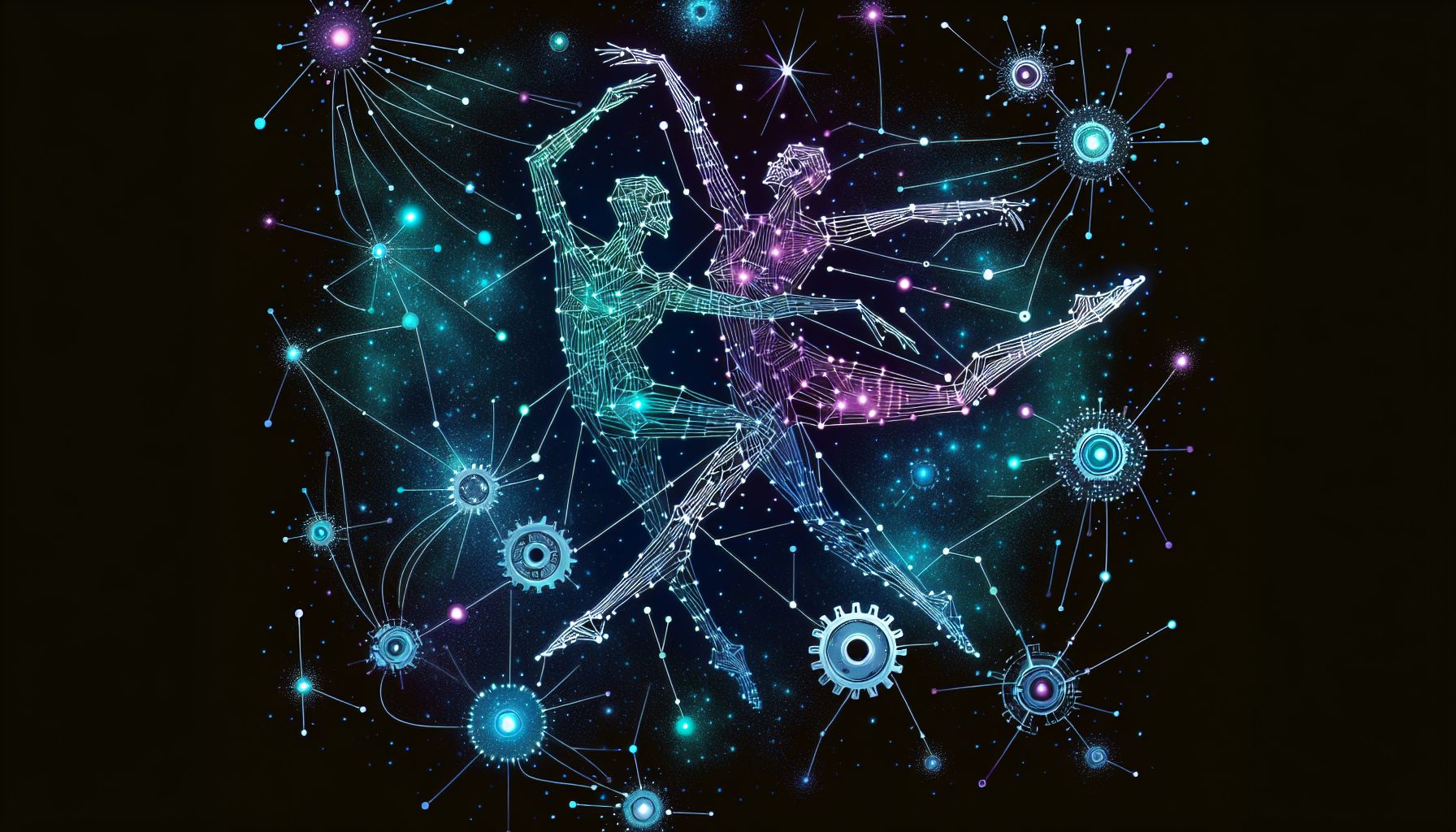
Unlocking the Cosmic Dance: AI Fusing Art and Innovation
Hey there, fellow tech enthusiasts! Today, I’ve got something that might just blur the line between art and science for you. It’s all about the growing world of Artificial Intelligence in the creative arts. Yep, you heard me right. It’s AI stepping into the realm of brushstrokes, melodies, and storytelling. It’s a place where bits and bytes meet paints and papers, creating a dance that’s both surprising and, dare I say, weirdly human.
The AI Brushes Its First Strokes
Let’s rewind to when AI was still something out of a sci-fi movie. Fast forward to today where algorithms can paint Van Gogh-like landscapes or write symphonies reminiscent of Mozart. The fusion of AI with artistic expression isn’t just a novelty. It’s opening doors that we never knew existed.
The other day, while sipping my morning coffee, I decided to let an AI compose a melody for me. I was skeptical, as anyone would be. But, guess what? The resulting tune wasn’t half bad. Okay, it wasn’t going to top the Billboard charts anytime soon, but there was something captivating about how an emotionless machine could whip up a tune that resonated with a human heart. It’s like finding out your cat can do calculus. Mind-blowing, right?
A Tool, Not a Replacement
Now, let’s address the elephant in the digital room: Is AI going to replace artists? In my view, not anytime soon. Sure, AI can produce art, but it’s still up to us humans to apply a touch of creativity and a pinch of that indescribable human flair. Think of AI as a really powerful tool rather than a replacement.
There are artists out there who use AI to enhance their creative processes. It’s like having a tireless assistant who never sleeps and has access to every art technique ever developed. Imagine an artist pondering over a blank canvas. Now imagine that artist swapping ideas with an AI. It offers suggestions, brushes techniques, and even color palettes. What a time-saver, right?
The Matrix of Music
Music is another realm where AI is breaking barriers. And honestly, it’s a jazz solo for the ages. AI-driven composition platforms are already helping musicians draft songs, compose harmonies, and even predict what audiences will love. The algorithms examine past hits, trends, and musical theories to predict the next smash song.
Of course, sometimes those predictions can be as off-track as a dog playing the piano, but that’s part of the fun. It’s like having a jam session with a mathematically minded bandmate who tosses out wild suggestions. You never know, it might just lead to the next musical revolution.
To Infinity and Beyond: The Implications
When it comes to AI in the creative arts, we’re scratching the surface of what’s possible. There’s more to this than just pretty pictures or catchy tunes. AI could democratize art, knocking down barriers and allowing everyone, yes, everyone, access to incredible creative tools.
For budding artists, this means experimenting without the fear of failing. For seasoned pros, it offers a fresh perspective. For the rest of us spectators, it means experiencing art in ways previously unimaginable. It’s a win all around. Like getting free pizza with an extra side of happiness.
Challenges in the Tech-Creative World
Of course, it wouldn’t be an adventure without some hurdles. AI faces critiques over authenticity. After all, can something that doesn’t feel create art that does? And there’s the legal mess concerning intellectual property. Who owns the art? The programmer, the algorithm, or the artist who refined it?
There’s also the ever-present fear of AI bias sneaking into the creative process. Bias in art can manifest in subtler ways, quietly nudging directions based on ‘learned’ preferences. We’re building tools today for the artists of tomorrow, so getting this right matters.
Gearing Up for the Future
So, what’s next for this wild progression? I personally think we’re on the brink of a Renaissance 2.0, fueled by Artificial Intelligence. As we refine algorithms and embrace collaboration between human creativity and machine intelligence, the horizons will stretch further than Da Vinci himself could’ve ever seen.
And for those of you out there bemoaning an AI that creates art as the plot of another dystopian science fiction novel, take a moment to think. If AI can help nurture emerging creatives, uncover hidden talents, and craft beauty beyond our wildest dreams, isn’t that worth a little optimism?
Keep your eyes peeled, folks. The next masterpiece might just be a collab between human and machine. And that’s a gallery exhibition I don’t want to miss.
So, go forth and create, my artistically-inclined techies! Who knows, your next big project might just involve an AI as your creative sidekick. Until next time, keep dancing on that cosmic interface of art and innovation.