Posts in Category: Uncategorized
Orujo Is Having Its Moment—And It’s Weirder Than You Think
The Spirit Nobody Asked For Is Suddenly Everywhere
Look, I’m going to be straight with you. Orujo shouldn’t be trending right now. This is a spirit that tastes like your grandfather’s garage smells—funky, assertive, maybe a little dangerous if you’re not careful. It’s what Galician farmers drank after pressing grapes, a utilitarian firewater that existed specifically because waste is waste and alcohol is alcohol. Yet here we are in 2025, and this stuff is getting shelf space at serious cocktail bars, craft distilleries are opening specifically to make it, and export numbers are climbing faster than a Barcelona tourist climbing Sagrada Familia.
The stats tell the story. Between 2023 and 2025, orujo exports jumped 34 percent. That’s not a slow burn. That’s real market movement. In 2024 alone, twelve new craft orujo producers registered with Spanish regulatory bodies—the highest single-year increase since anyone started keeping track. This isn’t a niche revival. Something is genuinely shifting in how people think about spirits, about flavor, about what deserves attention.
But here’s where I need to get uncomfortable with you. The rush to embrace orujo says something genuine about where we are culturally, and it’s not all romantic.
The Authenticity Trap and Why We’re Falling For It
We’ve all been there. Some bar has a spirit you’ve never heard of. It’s from a place you haven’t been. It comes with a story—real farmers, real tradition, something your friends definitely don’t have at home. It feels like discovering something. It feels like taste. It feels like you’re in on a secret.
Orujo is hitting that exact button. Galicia is having a moment in food culture generally, and spirits are no exception. The romance of a region, the specificity of tradition, the ability to say you know about something most people don’t—that’s catnip for people who care about drinks. And honestly? That’s not entirely fake. The Consello Regulador do Augardente de Galicia established protected designations back in 1989, and there are real distinctions between blanco, herbal, and aged styles that matter. The tradition is real. The quality control is real.
But let’s acknowledge what’s also happening. We’re in a cultural moment where “forgotten,” “underrated,” and “authentically artisanal” are basically marketing slogans. Orujo fits that template perfectly. It’s obscure enough to feel special but accessible enough that bars can actually source it and train their staff on it. Someone smart in the spirits world noticed this gap and decided to fill it. New York’s Existing Conditions added an entire orujo-forward cocktail menu section in late 2024 because customers demanded it. That demand didn’t come from nowhere—it was seeded by exactly this kind of narrative.
It’s Part of Something Bigger (and That’s Actually Interesting)
Orujo doesn’t exist in a vacuum. The whole pomace spirit category is having a major moment. Grappa, marc, all these spirits made from grape waste that used to feel a little rough around the edges—they’re growing. The broader European pomace category grew 18 percent globally in the last fiscal year alone, according to IWSR Drinks Market Analysis 2025.
What’s happening underneath is a genuine shift in how bartenders and drinkers think about flavor intensity. Everyone got tired of drinking the same smooth, approachable spirits. The bartending world is hungry for something with an edge, something that demands attention, that tastes like what it actually is instead of what marketers think it should taste like. Orujo delivers that. It’s not apologetic. It’s not trying to be gentle.
That’s worth respecting. In a spirits world often dominated by massive brands with billion-dollar marketing budgets, there’s something honest about a regional firewater getting rediscovered because it’s actually good at what it does.
The Question You Should Actually Be Asking
Here’s what I keep wondering, though. Is orujo actually having a moment, or is orujo having a moment in the exact same bubble where everything else is having a moment? The Brooklyn cocktail bar knows about it. The food writer knows about it. The person spending forty dollars on a bottle at the boutique spirits shop knows about it. But does the broader drinking world? Does your cousin in Columbus know orujo exists? Does anyone outside the food media attention economy actually care yet?
Probably not. And that’s fine. That’s actually the most honest version of what’s happening here. There’s a real discovery happening within a specific cultural stratum. Orujo is genuinely interesting. The producers making it with intention and care are doing something worth supporting. The flavors are legitimately complex and unusual in a way that makes them interesting to work with.
But let’s not pretend this is a grassroots revival. This is a curated discovery by people whose job is literally to find things before other people do. That’s not a criticism exactly—it’s just accuracy. The people in the know are getting in early and enjoying the genuine thrill of encountering something that’s real and still relatively undiscovered outside their circles.
What Actually Matters About Orujo Right Now
If you’re thinking about trying orujo, do it. The herbal versions are genuinely complex. The aged versions have a rough elegance that’s becoming rare. The blanco stuff is uncompromising and bracing in a way that feels important. These are spirits made with real intention by people who know what they’re doing.
Just go in with eyes open about what this moment actually is. You’re not discovering something nobody else knows about anymore. You’re joining a discovery that’s already underway, which is different. But that’s still valid. Being part of the group that appreciates something before it goes fully mainstream is a real thing, and the pleasure isn’t diminished just because other people are having the same realization.
The broader story—about how markets work, about how taste gets formed, about the role of authenticity in consumer culture—that’s the interesting part. Orujo is just the vehicle. What do you think is driving this? Are there other spirits you’ve noticed suddenly appearing that felt like a moment? Drop a line and let me know what you’re thinking.
The 4AM Club: What Happens When Food Market Vendors Build Their Own World
Before the City Wakes
At 4:47 AM last Thursday, I watched Maria Gonzalez arrange thirty-seven different types of peppers into a perfect rainbow arc across her market stall. She moved with the precision of someone who’s done this exact same dance for twelve years, each poblano and habanero finding its designated spot before the sun even thought about rising. “The display tells people who you are before you say a word,” she told me, adjusting a particularly stubborn bell pepper. “This is my gallery.”
The Grand Central Market vendors don’t just sell food. They’ve created their own ecosystem with unwritten rules, shared resources, and a communication network that would make tech startups jealous. By the time most of us grab our first coffee, they’ve already negotiated who’s covering lunch breaks, shared ice when someone’s cooler died, and updated each other on which customer is trying to haggle today.
The Barter Economy Nobody Talks About
Miguel at the tamale stand hasn’t paid for lunch in three years. Not because he’s broke, but because he’s plugged into a complex trading system that operates entirely on trust and memory. Tuesday’s leftover masa becomes Wednesday’s bread from Rosa’s bakery stall. Thursday’s extra carnitas turn into Friday’s vegetables from the produce vendors. “We keep each other fed,” Rosa explains, sliding me a still-warm concha while Miguel wraps up her usual order of two chicken tamales.
This isn’t just convenient cost-cutting. It’s how twenty-three vendors from eight different countries have built something that looks like mutual aid but feels like family. When Jin’s Korean BBQ stall ran short on banchan last month, four different vendors showed up with ingredients before he even finished explaining the problem. The debt gets paid forward, not back, and everyone keeps mental tabs that somehow always balance out.
The Information Network
Forget social media algorithms. The market vendors have perfected the art of human information filtering. Carmen knows which customers tip well because she watches them interact with Omar at the juice stand. Ahmed shares which food bloggers are worth the extra attention because Fatima tipped him off about their Instagram followings. “She takes pictures of everything but never buys,” Carmen says about one particular influencer, while Omar nods knowingly.
This intelligence network extends beyond customer service. When the city announced new health department regulations last spring, the information traveled from vendor to vendor faster than the official email reached their inboxes. By the time the inspector showed up for surprise visits, everyone had already adjusted their setups and coached each other through the new requirements.
Territory and Respect
Space is everything in a market, and the vendors have developed an elaborate system of territorial boundaries that would make urban planners weep with envy. Lucia’s pupusa station gets the prime corner spot because she’s been there longest, but she also acts as unofficial mediation for disputes. When two new vendors started selling similar items too close together last summer, Lucia brokered a solution that had one switching to breakfast items and the other focusing on lunch.
The newest vendor, David, who started his empanada stand six months ago, still asks permission before expanding his display beyond his assigned two tables. “You earn your space,” he says, carefully arranging beef and chicken empanadas in separate warmers. “Everyone here helped someone else get started. Eventually someone new will need my help too.” He’s already learned the unspoken rule about not undercutting neighbors’ prices and the importance of maintaining consistent quality even when ingredients get expensive.
After Hours Culture
The real magic happens when the customers leave. Every few weeks, the vendors throw impromptu gatherings in the market after closing time. Lucia brings homemade pupusas, Jin fires up the grill for kalbi, and Maria makes her grandmother’s pozole recipe that she never sells during regular hours. These aren’t networking events or business meetings. They’re celebrations of what happens when twenty-three small business owners decide they’d rather succeed together than struggle alone.
Last month’s gathering turned into an impromptu celebration when Omar’s daughter got accepted to UC Berkeley. The vendors pooled money for a congratulations cake and spent the evening sharing stories about their own kids’ achievements. “We see each other more than we see our families some weeks,” Maria says. “Of course we celebrate together.”
Next time you’re buying lunch from a market vendor, pay attention to the glances exchanged between stalls, the way information flows in both directions, and how your simple food purchase plugs into a complex web of relationships that extend far beyond the transaction. These aren’t just people selling food. They’re maintaining one of the most sophisticated small-scale economies in the city, built entirely on handshake agreements and shared humanity.
Why Everyone’s Suddenly Walking Like They Live Here
The Death of the Destination Walk
Three months ago, Sarah Chen was power-walking the reservoir loop with her AirPods in, checking her step counter every quarter mile. Last Tuesday I watched her stop mid-stride outside Meridian Books to read the entire handwritten staff pick display, then spend twenty minutes talking to owner Marcus about his upcoming poetry night. She bought two books she’d never heard of and forgot to check her watch.
The performative fitness walk died somewhere between 2022 and now, replaced by something that looks more like actual curiosity about where you live. The shift happened gradually, then all at once. People who used to treat their neighborhoods like treadmills are now stopping to read cornerstone dates on buildings and asking bodega owners about the weird art installation that appeared overnight on Bleecker.
When Wandering Became Intentional
The change started showing up in my Instagram feed around March. Instead of sweaty post-workout selfies, people were posting photos of discovery. Maya from the wine bar found a community garden tucked between two brownstones that’s been there for fifteen years. James discovered that the guy who runs the hardware store on Amsterdam also teaches violin lessons in the back room on Sundays.
This isn’t about wellness or mindfulness or any other packaged trend. It’s about people finally having time to notice things that were always there. The pandemic forced us inside, then remote work kept us local, and now we’re realizing our own neighborhoods were more interesting than whatever we were commuting toward.
Local walking groups started forming organically. Not the fitness meetups from 2019, but loose collections of people who wanted to explore together. The Sunset District crew in San Francisco meets every other Saturday to investigate rumors of hidden staircases. Brooklyn’s Crown Heights collective focuses on tracking down the stories behind storefront murals that keep appearing and disappearing.
The New Rules of Neighborhood Intelligence
Real neighborhood knowledge used to mean knowing which subway entrance was closer or where to find parking. Now it’s about understanding the ecosystem. Who opens first in the morning, which shop owner will tell you the best stories, what that construction project on the corner is actually becoming.
Emma Rodriguez runs a tiny ceramics studio on a residential block in Pilsen. Six months ago, her foot traffic was mostly people who found her through Instagram. Now she gets daily visitors who discovered her during neighborhood walks. “People knock on the door just to ask what I’m making,” she says. “Half of them end up signing up for classes.” The studio’s evening workshops are booked through December.
The intelligence is getting more specific. People are learning the difference between a building that’s being renovated and one that’s being flipped. They’re tracking which storefronts stay empty longest and which ones turn over fast. They know that the coffee cart outside the Metro station only appears on Thursdays because that’s when Rico’s regular job gives him the day off.
Beyond the Algorithm
Apps tried to capitalize on this shift, promising to gamify neighborhood exploration. Most of them are already dead. Turns out people don’t want points for checking in at the corner bodega they’ve been shopping at for three years. They want to understand the place they live, not perform their relationship with it.
The real discoveries happen in conversation. Maria finds out that the house with the elaborate garden invites neighbors to take cuttings every spring. David learns that the barista at Grind Coffee used to run sound for indie venues before the pandemic, which explains why the playlist is always perfect. These connections don’t translate to content. They just make the neighborhood feel more like a place where things happen instead of a place you sleep between other places.
Local Facebook groups and neighborhood forums are buzzing with questions that would have seemed too mundane two years ago. What’s the story behind that weird sculpture in the park? Does anyone know why there are always fresh flowers on that particular doorstep? Who painted the mural on the side of the laundromat and why did they choose those specific birds?
What Comes After Walking
The people who started walking their neighborhoods with genuine curiosity aren’t stopping at observation. They’re becoming participants. Former commuters are showing up to community board meetings, joining tenant associations, volunteering for local campaigns they actually understand because they’ve seen the issues up close.
This matters more than it seems. When you know that Rosa has been running the corner store for twenty-two years and her daughter just started college, zoning changes aren’t abstract policy. When you’ve watched the mural project develop over six weeks and met the artists, arts funding isn’t just a budget line item.
The economic impact is already visible. Businesses that survived the pandemic by serving their immediate neighbors are thriving as those neighbors become more invested. The flower shop that almost closed in 2021 now has a waiting list for their arrangement classes. The vintage store that pivoted to online-only is reopening their physical location because foot traffic from local walkers tripled their discovery rate.
Think about how you moved through your neighborhood this week versus how you moved through it two years ago. Were you rushing between destinations, or were you paying attention? The difference might seem small, but it’s changing how cities work from the ground up.
The Last Stand: How Exurban Coffee Shops Became the New Front Lines of American Culture
The Tide Turns Back
The great suburban exodus is officially over. After fifteen years of Americans fleeing strip malls and cul-de-sacs for city centers, the Census Bureau’s 2025 Urban Migration Report confirms what those of us tracking cultural shifts have been sensing: cities added 1.8 million residents last year while suburban growth flatlined. But here’s the twist nobody saw coming. The real action isn’t happening in Brooklyn lofts or downtown Austin condos.
It’s happening in the places people left behind. Specifically, in the coffee shops that sprouted up in their wake.
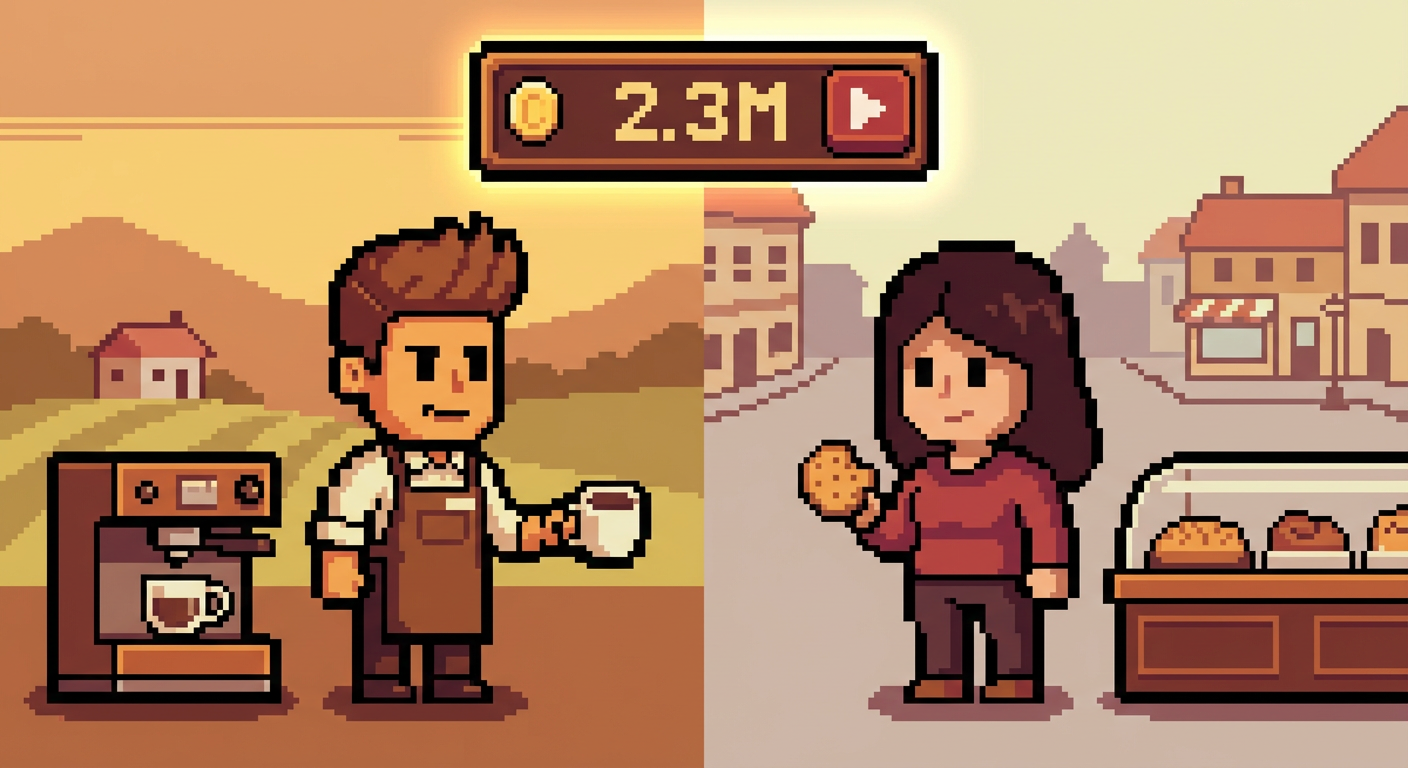
Drive through Alpharetta, Georgia or Plano, Texas today and you’ll find something unexpected. Where Starbucks once dominated every corner plaza, independent roasters now pull shots with the precision of downtown baristas. These aren’t your typical suburban coffee chains. We’re talking about third-wave coffee culture dropping into communities that still debate whether pineapple belongs on pizza.
The Numbers Don’t Lie
The Specialty Coffee Association’s Exurban Expansion Study tracked 847 independent coffee shops opening in previously chain-dominated exurban locations throughout 2025. That’s more than two new specialty coffee shops every day in places where “specialty” used to mean adding an extra pump of vanilla syrup.
Meanwhile, Starbucks shuttered 340 suburban locations in the final quarter alone. The surviving independent shops in those same areas saw revenue spike by an average of 234%. This isn’t just market correction. It’s cultural revolution brewing at 195 degrees Fahrenheit.
The documentary ‘Baristas vs. Biscuits’ captured this tension perfectly. Following coffee culture clashes across Georgia’s outer suburbs, it racked up 2.3 million YouTube views in its first month. Viewers came for the drama but stayed for something deeper: the recognition that coffee shops have become proxy battlegrounds for competing visions of American community.
When Worlds Collide Over Single Origins
Local news outlets documented 156 incidents of “coffee shop cultural conflict” across 23 states between October and February. These aren’t riots. They’re something more subtle and potentially more telling: quiet standoffs between longtime residents and the coffee shops that suddenly appeared in their neighborhoods.
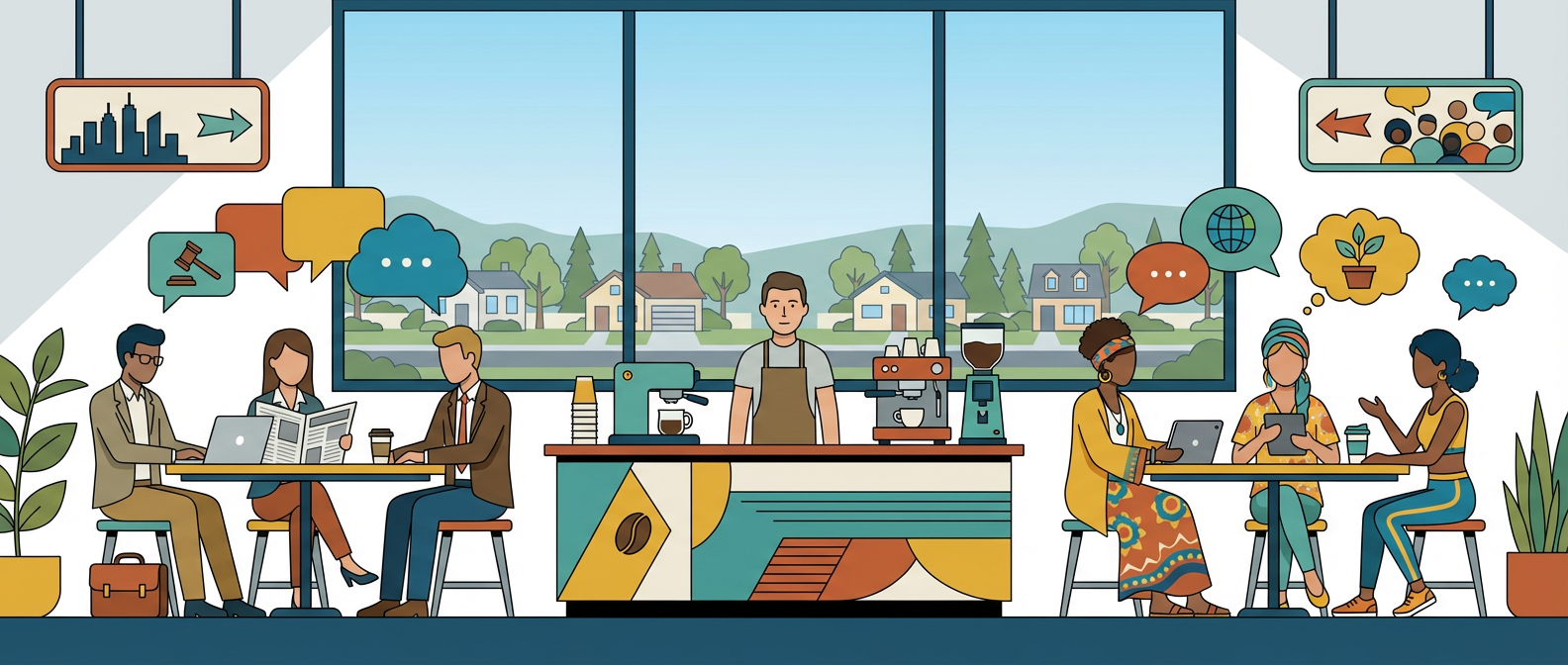
Take Meridian Coffee Collective in suburban Atlanta. Owner Sarah Chen sources beans from single-origin farms and posts tasting notes that read like wine reviews. Her regulars discuss extraction ratios and grind consistency with religious fervor. But every morning at 7 AM, Jerry Martinez orders “regular coffee, black” and pays with exact change. He’s been coming since they opened, not because he loves the coffee, but because it’s walking distance from his house.
This isn’t gentrification in the traditional sense. It’s something newer and stranger. The coffee shops appeared because chain rents dropped and foot traffic disappeared. The baristas moved here because they could afford it. The longtime residents stayed because they always lived here. Nobody planned this collision of coffee cultures.
What’s fascinating is how both sides are adapting. Meridian now has “house blend” alongside their rotating single origins. Jerry learned to pronounce “cortado” correctly. It’s messy and imperfect, but it’s also genuinely American in a way that feels both nostalgic and forward-looking.
The New Geography of Taste
These coffee shops succeed because they’re solving a problem nobody expected: exurban areas suddenly needed third places again. When people fled for cities, they left behind communities that had been held together by weak ties. The coffee shop fills that gap, but with a level of intentionality that suburban chain stores never provided.
The baristas working these shops aren’t just making drinks. They’re cultural ambassadors translating between worlds. They know Mrs. Patterson takes her latte extra hot and that teenage Emma only comes in when her parents fight. They remember names, orders, and the small details that make a place feel like home.
But they’re also introducing concepts that would have seemed absurd in these locations five years ago. Fair trade sourcing. Seasonal menu rotations. Coffee cupping sessions. Latte art that actually matters to the people drinking it.
The result is a hybrid culture that couldn’t exist anywhere else. It’s too sophisticated for old-school suburban tastes but too rooted in community for urban coffee snobs. It’s creating something genuinely new.
What Happens Next
The coffee shop cultural conflicts aren’t really about coffee. They’re about who gets to define community in spaces caught between urban sophistication and suburban familiarity. The answer emerging from these 847 new shops suggests it might be both.
These aren’t destination coffee shops. You won’t drive across town to try their latest Ethiopian roast. But if you live within walking distance, you’ll probably end up there eventually. And once you do, you’ll discover something unusual: a place that’s both deeply local and genuinely cosmopolitan.
The suburban exodus may be over, but the cultural remixing it set in motion is just beginning. In exurban coffee shops across America, the future of American community is being negotiated one cup at a time.
What coffee shop culture clashes have you witnessed in your area? The conversations happening over espresso and house blend might be shaping more than just morning routines.


The Collapse of Suicide Squad: Kill the Justice League and What It Reveals About Live Service Fatigue in 2026
The short version: this matters more than the headline suggests.
The Spectacular Fall of a Superhero Game
I watched one of gaming’s most dramatic collapses unfold in real-time when Suicide Squad: Kill the Justice League lost players faster than you could say “live service.” What started as a promising venture from Rocksteady Studios turned into a masterclass in how not to chase the live service dragon. The game’s crash from launch to near-abandonment shows us exactly why this business model is hitting a wall.
Here’s what I keep coming back to on this. The conventional take on this is incomplete — and the gap matters.
The numbers are brutal. In just eight months, the game lost 96% of its player base, dropping from 278,000 daily players to a pathetic 11,000 according to Steam player count analytics. This happened despite Rocksteady’s rock-solid reputation from the Batman Arkham series and Warner Bros. throwing marketing money at the problem.
The financial bloodbath was even worse. Warner Bros. took a $200 million write-down on the title in their Q4 2025 earnings report. Executives blamed “market oversaturation” for the commercial disaster. That’s one of the biggest single-title losses in gaming history, proving just how expensive these live service gambles can be when they go wrong.

A Market Reaching Saturation Point
Suicide Squad’s failure isn’t happening in a vacuum. The live service gold rush is officially over. Newzoo’s latest market analysis shows concurrent live service launches dropped 43% in 2025 compared to 2024. Publishers are finally waking up to reality.
Player retention has completely tanked. The average live service game now keeps only 8% of its launch-week players after six months. That’s down from 15% in 2023. Players are getting picky about where they spend their time, and honestly, who can blame them?
The competition is fierce. Back in the day, a decent live service game could find its audience and make money. Now you’re competing against established giants like Fortnite and Apex Legends that have spent years perfecting their hooks. Breaking into this market requires something truly special, not just another hero shooter with a DC skin.
The Human Cost of Live Service Failures
Here’s what really gets me angry about these failures. Rocksteady laid off 120 people in January 2026 after Suicide Squad flopped. That’s a quarter of their workforce gone. Real people with families and mortgages, sacrificed because executives chased impossible live service dreams.
These layoffs destroyed years of accumulated knowledge and expertise. The remaining developers face an uncertain future at a studio that’s lost credibility within Warner Bros. The people who got cut? They’re job hunting in a market where “live service experience” might actually hurt their chances.
This boom-and-bust cycle has become the industry standard. Studios pour everything into these massive projects, then slash and burn when they don’t hit unrealistic targets. It’s created an environment where playing it safe gets rewarded while taking creative risks gets you fired.
Player Fatigue and Evolving Expectations
Players have gotten smarter about recognizing cash grabs. We can spot manipulative monetization from a mile away, and we’re tired of shallow gameplay loops designed to extract money rather than provide fun. Suicide Squad failed because it treated players like walking wallets instead of people looking for entertainment.
Today’s gamers expect respect for their time and money. We want meaningful progression, substantial content updates, and fair monetization. Suicide Squad delivered none of this, instead offering repetitive missions wrapped in increasingly desperate attempts to squeeze revenue from whoever was still playing.
Most people can only actively play two or three live service games at once. The successful ones have built such strong loyalty that breaking in requires something revolutionary. Players don’t have time for mediocre when excellent options already exist.
Lessons for an Industry in Transition
Suicide Squad’s crash teaches us that brand names and big budgets can’t save a fundamentally flawed game. DC characters and Rocksteady’s reputation weren’t enough to overcome basic design problems and tone-deaf monetization.
Publishers need to stop chasing quick monetization wins and start building sustainable player communities. The most successful live service games put long-term player satisfaction first. Revenue follows naturally when people actually enjoy playing your game.
The industry desperately needs realistic expectations about live service success. The development costs are astronomical, the market is saturated, and failure rates are climbing. Maybe it’s time to make fewer, better games instead of throwing everything at the wall and hoping something sticks. The studios that figure this out first will survive what’s coming next.
For more on mobile gaming, gacha culture, and where the industry is heading, metatrend.app covers this space with the depth it deserves.
The best cultural moments reward close attention. This is one of them. Come find us — we’ll be the ones arguing about the opener.
The Last Hour Before They Turn the Lights Out
It’s 9:47 PM and Marcus is still hand-selling novels to a couple debating between two debut authors while the espresso machine hisses one final time behind the poetry section. This is how independent bookstores actually close — not with corporate efficiency, but with someone who knows that the right book recommendation can change a Tuesday night into something memorable. Three blocks away, the chain store locked up at nine sharp, leaving fluorescent silence. Here at Dog Eared Books, the real magic happens in these stolen minutes after official closing time.
Independent bookstore culture isn’t dying. It’s changing into something more essential than it’s been in decades, and the numbers back this up. After bottoming out at 1,651 stores in 2009, the American Booksellers Association counts 2,433 indie bookstores operating today. But the real story isn’t in the recovery statistics. It’s in how these spaces have become cultural nerve centers in ways their founders never imagined.
The Evening Reading That Started Everything
Three years ago, Mira Gonzalez was reading from her poetry collection to maybe fifteen people in the back corner of Skylight Books. The author event was supposed to end at eight, but someone asked about her writing process, then another person shared how one particular poem had helped them through a breakup. Suddenly it was nine-thirty and nobody wanted to leave. Store manager Jenny Chen made a decision that night: keep the lights on and see what happens.
That spontaneous extension became a monthly series called “After Hours,” where readings turn into genuine conversations about craft, life, and the weird intersection of literature and living. Last month, a debut novelist ended up workshopping a problematic chapter with twelve strangers who had originally come just to browse. The series now has a waiting list, but more importantly, it created a template that independent bookstores across the country have borrowed for their own communities.
The Inventory That Tells Stories
Walk into Housing Works Bookstore in SoHo and you’ll find three different books about gentrification in the front window display — not because they’re bestsellers, but because the neighborhood is wrestling with displacement in real time. Owner Rebecca Martinez curates her front tables like a DJ reading the room, responding to what her regulars are actually discussing over coffee.
This hyper-local curation is what separates indie bookstores from algorithm-driven recommendations. When the Supreme Court overturned Roe v. Wade, Martinez didn’t just stock reproductive rights books. She created an entire section on bodily autonomy that included everything from disability studies to trans healthcare, because she knew her customers were thinking about the broader implications. Sales of those titles increased 340% over six months, but the real impact was watching customers discover connections between issues they hadn’t considered before.
The curation extends beyond current events. Pegasus Books in Berkeley tracks which local authors are teaching at UC Berkeley each semester and stocks their backlists accordingly. When a professor assigns a novel, students discover the author’s entire catalog, often buying books that won’t be discussed in class. It’s retail anthropology disguised as business strategy.
The People Who Make It Work
Kenji Nakamura has been working at Green Apple Books for seven years, and he can tell you not just what’s selling, but why specific customers buy what they buy. The woman who comes in every Friday for literary fiction set in Japan because she lived in Kyoto for two years and misses it. The teenager who’s systematically reading through the science fiction section in alphabetical order by author. The elderly man who buys poetry chapbooks for his granddaughter who lives across the country.
This isn’t customer service. It’s community archaeology. Nakamura maintains relationships with forty-seven local authors, tracks which book clubs meet in the neighborhood, and knows that Tuesday afternoons are when the homeschooling parents browse for educational materials. He’s become a cultural connector, introducing customers to each other when he realizes they’re reading the same obscure biography or wrestling with similar questions about urban planning.
Independent bookstore staff have become something like cultural concierges. They’re part librarian, part therapist, part critic, and part neighbor. When Portland’s Powell’s Books started training their staff in “literary hospitality,” they were acknowledging what successful indie bookstores already knew: the human element isn’t just customer service, it’s the entire value proposition.
The Ecosystem Beyond Books
Word Up Community Bookshop in Washington Heights doesn’t just sell books. They run a bilingual story time that’s become essential childcare for working parents, host immigration lawyers for free consultations, and partner with the local food pantry to distribute groceries during their Saturday morning events. Owner Veronica Liu realized early that helping her predominantly Latino community meant understanding that literacy support and economic justice were connected.
This holistic approach gets replicated differently at each independent bookstore, but the pattern holds: these spaces have become civic infrastructure. Brookline Booksmith runs financial literacy workshops for local artists. Book Culture in New York hosts voter registration drives. E.R. Hamilton Booksellers in Tarboro, North Carolina, became an informal community center during Hurricane Florence, staying open to provide phone charging and WiFi when other businesses closed.
The bookstores that thrive understand they’re not just selling literature. They’re providing cultural continuity in neighborhoods where chain stores and online retail have eroded gathering spaces. They’re accidentally becoming what urban planners call “third places,” neither home nor work, where social life happens organically.
Why This Moment Matters
Independent bookstore culture hit its stride precisely because it learned to be something Amazon couldn’t replicate: genuinely local, impossibly specific, and relentlessly human. The stores that survived the digital transition were the ones that doubled down on what made them irreplaceable. Not convenience or price, but cultural intimacy.
This renaissance isn’t accidental. It’s happening because people are hungry for spaces where browsing is encouraged, where conversation happens naturally, where you might discover something you didn’t know you were looking for. These bookstores succeeded by becoming more themselves, not by trying to compete with online retail on its own terms.
Next time you’re near an independent bookstore, go in fifteen minutes before closing. Watch how the space transforms when the pressure of commerce relaxes and the real purpose emerges. That’s when you’ll understand what we’re actually trying to preserve.