Posts By wpadmin

The White Cube’s Dirty Edges: How Berlin’s Gallery System Silences Queer Dissent

Berlin sells itself as a city of radical openness. The tourism board’s copy practically sweats with promises of hedonism, artistic freedom, and a nightlife where every identity can find its pulse. But walk through the door of a major gallery on Potsdamer Straße, or step into the sterile white of a Mitte art space during Gallery Weekend, and a different story unfolds. The queer voices that supposedly define this city’s creative soul are present, but only after they have been scrubbed, packaged, and rendered safe for international collectors whose politics extend only as far as their portfolio diversification. The Berlin gallery system does not exclude queer artists outright—that would be too obvious, too easy to protest. Instead, it performs a quieter, more insidious operation: it absorbs, neutralizes, and resells queerness as a depoliticized aesthetic product.

The Architecture of Selective Visibility

To understand how marginalization functions in Berlin’s art market, you have to ditch the naive idea that exclusion happens through locked doors. The doors are open. The vernissage wine is free. The problem is structural, baked into the very logic of what a gallery deems sellable, serious, or worthy of its program. A queer artist exploring the erotics of public space might find a warm reception—provided their work translates into large-scale photographs that look striking above a collector’s sofa. But the same artist, working with performance, community workshops, or explicitly anti-capitalist content, will be gently redirected toward “project spaces” and “alternative venues,” the art world’s euphemisms for economic irrelevance.

This bifurcation creates a two-tier system. The commercial gallery circuit, with its international fair presence and museum pipelines, remains overwhelmingly straight in its sensibilities, even when it exhibits queer bodies. The project spaces, meanwhile, are where actual queer discourse happens—but they operate on shoestring budgets, rarely pay artist fees, and are treated by the establishment as research-and-development labs whose innovations can be poached without credit. The gallery system benefits from the cultural capital of Berlin’s queer underground while ensuring that capital never translates into institutional power for the artists who generate it.

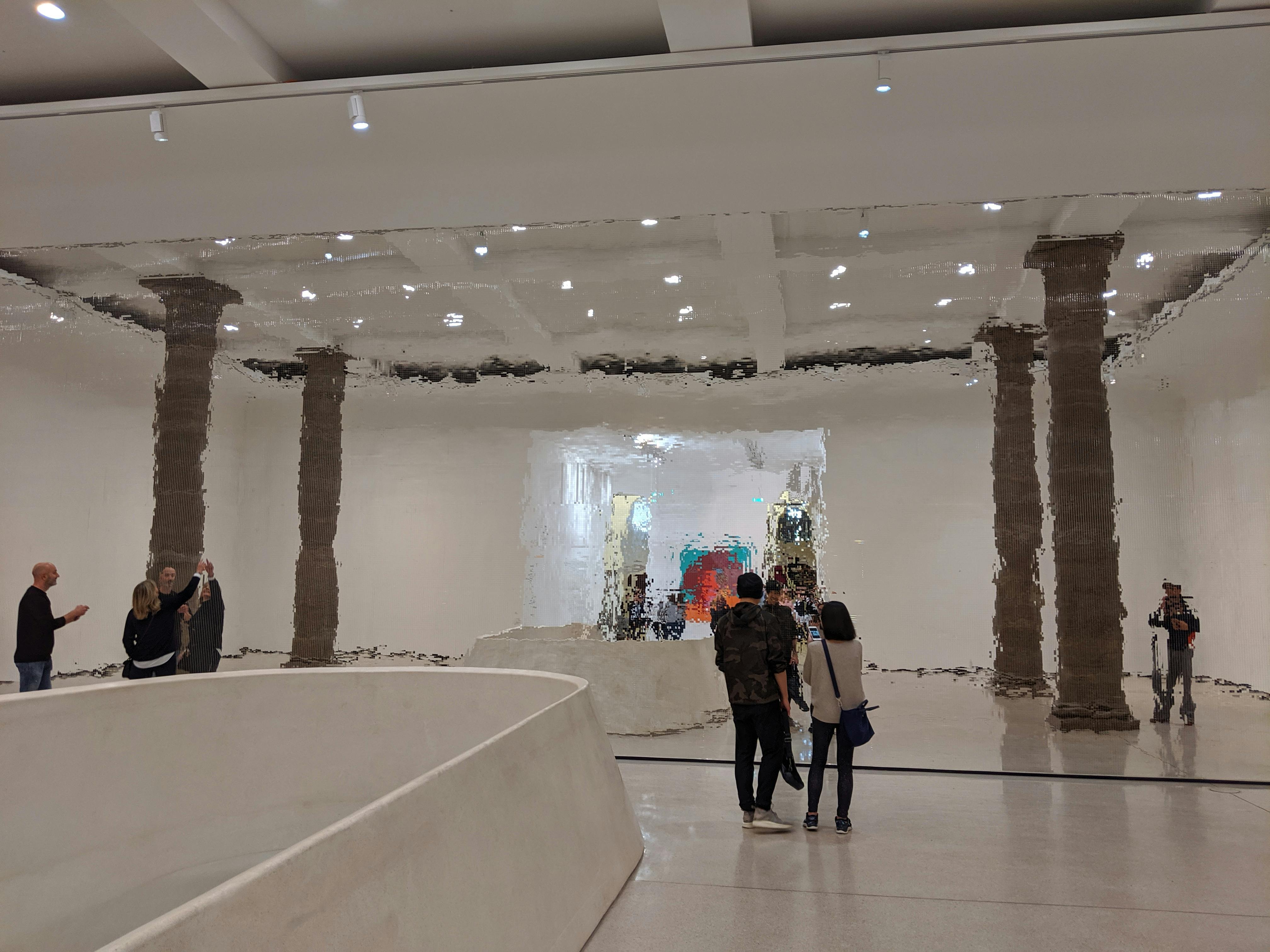
Empty white gallery space with polished concrete floor and track lighting, representing the sterile commercial art environment

The Gentrification of Dissent

Berlin’s art market has perfected what might be called the gentrification of dissent. Radical queer aesthetics—born in squats, sex clubs, and street protests—are extracted from their contexts, sanitized, and sold back to audiences as luxury goods. A performance piece about police violence against trans sex workers becomes a limited-edition print series. A zine about HIV activism gets framed behind museum glass. The gallery system does not reject queer political content; it metabolizes it, stripping away the urgency and leaving only the formal qualities that can be priced per square centimeter.

This process relies on a network of gatekeepers who understand the codes well enough to identify what is “hot” but remain sufficiently detached from queer communities to feel no obligation toward them. Curators, dealers, and collectors circulate through openings in Schöneberg and Neukölln, Instagramming the most photogenic moments, then return to their Charlottenburg apartments having experienced “edgy Berlin” without ever having to confront the precarity that produces such work. The gallery system depends on this distance. Too much proximity to actual queer life would force uncomfortable questions about who profits from these images and objects.

The Economics of Invisibility

Money tells the story that press releases obscure. Berlin’s commercial galleries, particularly those with secondary-market muscle, operate on a model that rewards artists who can produce consistently, professionally, and in formats that travel easily to Art Basel or Frieze. Queer artists whose practices are rooted in ephemeral, relational, or community-based work find themselves structurally incompatible with this model. The result is not overt discrimination but a quieter form of economic violence: the systematic underpayment and deprofessionalization of queer practitioners.

Consider the numbers. A mid-career painter represented by a Mitte gallery might command five figures per canvas and receive a monthly stipend. A queer performance artist of comparable reputation, working in a project space, is lucky to receive a production budget and a one-time honorarium of a few hundred euros. The disparity is not a reflection of talent or cultural impact—Berlin’s queer performance scene is globally influential—but of a market logic that values objects over experiences, property over process. The gallery system, by privileging the saleable object, inherently marginalizes forms of queer expression that resist commodification.

A person in a gallery looking at abstract art, symbolizing the detached consumption of queer aesthetics

The Performance of Inclusion

Berlin’s galleries have become adept at performing inclusion without enacting structural change. Pride month brings a flurry of queer-themed exhibitions, often curated by straight gallerists who suddenly discover the marketability of rainbow palettes. These shows feature a predictable roster: a few safely deceased queer icons (Basquiat, Haring, Wojnarowicz), a couple of emerging painters whose work hints at queer desire without being too explicit, and perhaps a token trans artist whose practice is sufficiently abstract to avoid making cisgender collectors uncomfortable. The exhibitions generate press, signal progressive values, and sell work. Then July arrives, and the queer artists are sent back to the project spaces.

This cyclical tokenism serves a dual function. It allows galleries to claim queer inclusivity without altering their core programming, and it disciplines queer artists into producing work that fits within these narrow windows of visibility. Artists learn that certain themes—celebration, beauty, abstract desire—are marketable, while others—systemic violence, poverty, the banality of homophobia—are not. The gallery system does not need to issue explicit prohibitions; the market’s silent rejections are discipline enough.

The Straight Gaze as Curatorial Default

Even when queer artists are exhibited, the framing often betrays a curatorial perspective that assumes a straight viewer. Wall texts explain queer references as if translating a foreign language. Press releases emphasize formal innovation over political content. The work is positioned to be “challenging” but never threatening, “provocative” but never accusatory. This is the straight gaze made institutional: a mode of looking that acknowledges difference only to neutralize it, that consumes otherness as a spice rather than a substance.

Queer artists who refuse this framing find themselves without institutional support. Those who insist on naming systems of oppression, who center queer audiences rather than straight collectors, who make work that cannot be easily photographed and circulated on Instagram, are relegated to the margins. The gallery system does not need to ban them; it simply has no use for them. Their work does not fit the business model. And in Berlin’s hyper-commercialized art scene, fitting the business model is the only form of belonging that counts.

The Project Space Trap

Berlin’s project spaces are often celebrated as sites of authentic queer artistic production, free from the constraints of the commercial market. This celebration, however, obscures a more troubling reality: project spaces function as a containment strategy. By channeling queer art into these precarious, underfunded venues, the gallery system ensures that radical work never achieves the visibility or economic sustainability that would allow it to challenge the status quo. Project spaces are the art world’s equivalent of a designated protest zone—a place where dissent is permitted precisely because it is contained.

The artists who run these spaces are caught in a double bind. They are celebrated for their “authenticity” and “community engagement” while being systematically denied the resources that would allow their work to reach broader audiences. They are praised for their “independence” while being structurally dependent on the very system they critique—a system that occasionally tosses them grants or exhibition opportunities as proof of its own openness, but never cedes actual power. The project space becomes a ghetto, and the ghetto is presented as a choice.

A small, cluttered alternative art space with exposed brick walls and DIY lighting, representing the precarious conditions of project spaces

The International Circuit and Its Local Costs

Berlin’s gallery scene does not exist in isolation. It is part of a global art market that rewards certain forms of queer representation while punishing others. International collectors, particularly from the United States and Asia, have demonstrated an appetite for queer art that is legible within their own cultural frameworks—work that references a shared canon of Western queer history, that deploys recognizable signifiers of LGBTQ identity, that does not demand too much contextual knowledge. Berlin galleries, dependent on these collectors, shape their programs accordingly.

This international orientation has local consequences. Queer artists whose work engages specifically with German queer history, with the politics of migration in contemporary Berlin, or with the intersections of queerness and class in the city’s rapidly gentrifying neighborhoods, find that their work does not travel well. It is too specific, too embedded in local struggles, too demanding of contextual knowledge that international buyers do not possess and are not interested in acquiring. The gallery system, by privileging the exportable, effectively erases the local. Berlin’s queer art becomes a product for export, stripped of the particularities that give it meaning.

The Gentrification Feedback Loop

There is a bitter irony in the fact that Berlin’s galleries often occupy spaces made available by the very gentrification that displaces queer communities. As rents rise in Schöneberg, the historic heart of Berlin’s gay scene, galleries move into former bars, clubs, and community centers, repurposing them as white cubes. The queer history of these spaces becomes a marketing point, a patina of authenticity that adds value to the art within. Meanwhile, the queer people who created that history are pushed further to the city’s margins, their presence no longer required now that their culture has been successfully mined.

This spatial violence is not incidental to the gallery system; it is foundational. The same economic forces that make Berlin attractive to collectors—relatively cheap real estate, a reputation for creative ferment—are the forces that displace the communities producing that ferment. Galleries are not merely passive beneficiaries of gentrification; they are active participants, their presence driving up rents and attracting the kind of development that transforms neighborhoods from lived spaces into investment opportunities. Queer artists, many of whom are renters with precarious incomes, are among the first to be pushed out.

The Myth of the Neutral Wall

Art discourse loves to talk about the “neutral” gallery space—the white cube that supposedly allows art to speak for itself, free from distracting context. This neutrality is a fiction, and a pernicious one. The white cube is not neutral; it is a technology of power that strips objects of their social relations and presents them as autonomous aesthetic entities. For queer art, this decontextualization is a form of violence. A work that emerged from a specific community, a specific struggle, a specific moment of resistance, becomes, in the white cube, simply “art”—its politics safely contained within the frame.

The gallery’s architecture reinforces this containment. The clean lines, the polished floors, the carefully controlled lighting—all signal that what happens here is separate from the messiness of life. Queer art, which often draws its power from its embeddedness in lived experience, is thus neutralized the moment it enters the gallery. The space itself performs an act of depoliticization, transforming collective struggle into individual expression, turning demands for justice into objects of contemplation. The white cube is not a neutral container; it is an ideological machine, and it works tirelessly to render queer art safe for consumption.

Toward a Queer Institutional Critique

What would it mean for Berlin’s galleries to genuinely support queer voices? It would require more than diversity statements and pride-month programming. It would demand a fundamental rethinking of the gallery’s economic model, its relationship to community, and its understanding of what art can be. Galleries would need to support practices that do not produce sellable objects—performance, social practice, community organizing—not as occasional programming novelties but as central to their mission. They would need to pay artists fairly, not just in exposure. They would need to cede curatorial control to queer communities, allowing those communities to determine how their stories are told and to whom.

This is not a call for reform. Reform implies that the existing system can be adjusted, tweaked, made more inclusive. But the marginalization of queer voices is not a bug in Berlin’s gallery system; it is a feature. The system runs on the extraction of value from queer creativity while containing queer politics. Inclusion, on the system’s own terms, would mean absorption—another round of gentrification, this time of queer radicalism itself. What is needed instead is a refusal: a refusal to separate aesthetics from politics, a refusal to make work that fits the market’s demands, a refusal to accept the project space as the horizon of queer possibility.

Berlin’s queer artists have long known that survival requires building outside the system. The city’s history of queer nightlife, activism, and mutual aid offers models for what an alternative art infrastructure might look like—one based on solidarity rather than speculation, on collective care rather than individual careerism. The gallery system will not save us. It was never designed to. The task is to stop asking for a seat at a table that was built on our displacement and to start building our own tables, in our own spaces, on our own terms.

Frequently Asked Questions

Why do Berlin galleries seem to feature queer artists if the system is so exclusionary?

Visibility is not the same as inclusion. Galleries feature queer artists when their work aligns with market demands—typically, when it is object-based, aesthetically legible to international collectors, and politically non-threatening. This selective visibility creates an illusion of openness while maintaining the structural conditions that exclude radical, community-based, or non-commercial queer practices. The presence of a few queer artists in commercial galleries does not indicate systemic change; it indicates the market’s ability to absorb and neutralize difference.

What makes Berlin’s art market different from other cities in its treatment of queer artists?

Berlin’s art market is uniquely dependent on the city’s reputation for queer radicalism while being uniquely disconnected from the material realities of queer life here. Unlike New York or London, where the art market is more explicitly tied to wealth concentration, Berlin markets itself as a space of creative freedom and experimentation. This branding attracts collectors seeking “edge” and “authenticity,” but the economic structures of the city’s galleries—low local sales, dependence on international fairs, a sharp divide between commercial and non-commercial spaces—mean that the queer artists producing this cultural value rarely benefit from it financially or institutionally.

What can queer artists do to resist marginalization in the Berlin gallery scene?

Individual solutions are insufficient for a structural problem, but collective strategies can shift power. Artists can form cooperatives that share resources and negotiate collectively with institutions. They can refuse to participate in exhibitions that tokenize queer identity without providing equitable compensation or curatorial control. They can redirect their energy toward community-based platforms, independent publishing, and alternative economies that do not depend on gallery validation. The goal is not to be included in a system that extracts value from queer culture; the goal is to build systems that queer culture controls.

Are there any Berlin galleries that do support queer artists ethically?

Some smaller, artist-run spaces operate with genuine accountability to queer communities, but they remain economically marginal within Berlin’s art ecosystem. The structural problem is not about individual bad actors but about a market logic that rewards depoliticization and punishes radical specificity. Even well-intentioned galleries face pressure to program work that sells, and the collectors who buy in Berlin tend to favor work that does not challenge their own positions. Ethical support for queer art requires changing the economic conditions under which art is produced and circulated—a project far larger than any single gallery can undertake.

The White Cube’s Glass Ceiling: How Berlin’s Galleries Silence Queer Dissent

Berlin loves to tell you it’s the queerest city on earth. The tourism brochures, the club lineups, the grant applications—all of them hum with the promise that here, finally, you can be whatever you want. But walk out of a dim, sweat-soaked basement at noon on Sunday and into a gallery opening on Potsdamer Straße, and the story flips. The art world borrows queerness like a leather jacket, wears it for the crowd, then hangs it back in the closet when the real decisions get made. It’s not that queer artists are banned from the room. It’s that their work is only welcome if it behaves.

Abstract geometric shapes in muted tones, symbolizing the rigid structures of the art market

Walk through a gallery weekend in Kreuzberg or Charlottenburg and you’ll see plenty of queer bodies on the walls. Photographs of drag performers. Paintings of non-normative desire. Installations that borrow the visual language of ballroom culture. But read the press release. Check the price list. Ask who’s buying. A painting of a trans sex worker gets reframed as a study in color-field abstraction. A video piece about HIV stigma is praised for its “raw emotionality” while its demand for policy change is politely ignored. The market takes the surface, leaves the politics, and calls it a win.

The Gentrification of Dissent

Berlin’s gallery system runs on a logic of spatial and symbolic gentrification. Queer aesthetics are mined for their edge, their ability to make a sterile white cube feel a little dangerous. This isn’t new—the art world has always fed on the margins—but Berlin’s history gives it a particular bitterness. The city’s post-Wall mythology was built on empty spaces: squats, techno clubs, artist-run project rooms. Many of those spaces were queer, carved out of the ruins of state socialism and the neglect of capitalist redevelopment. Now they’ve been polished into commercial galleries. The collective becomes a brand. The radical gesture becomes a selling point.

Imagine a young queer artist arriving in Berlin today. They find a cheap studio in Wedding, show work in a friend’s apartment, get noticed by a small gallery in Mitte. The gallerist is well-meaning, fluent in the language of inclusion. But the contract comes with quiet nudges: make the work more universal, less angry, less specific. The artist learns to code-switch between the community that raised them and the market that sustains them. Slowly, the work loses its bite. It becomes a product that signals queerness without demanding anything from the viewer. A collector buys a piece of the artist’s identity, frames it, hangs it above a mid-century credenza. Nothing changes.

A blurred figure behind frosted glass, representing the obscured visibility of queer artists

The Economics of Invisibility

Follow the money and the picture gets uglier. Berlin’s gallery scene is a tiered system. At the top, the blue-chip spaces—Sprüth Magers, neugerriemschneider, Esther Schipper—trade in museum validation and art-fair prestige. Their rosters are overwhelmingly white and male in market positioning, even when individual artists don’t fit that mold. The queer artists they do represent are safe: canonized figures whose politics are historical, not urgent. A Wolfgang Tillmans photograph from the ’90s sells for six figures. A contemporary queer artist documenting police violence in Neukölln? Nowhere near those walls.

The mid-tier galleries, often run by younger dealers with genuine commitments to diversity, face structural pressures that neuter their ambitions. Rents in central locations are punishing. Collector bases are conservative—not necessarily in their personal politics, but in their investment logic. A gallery that shows too much confrontational queer work risks alienating buyers who want their art apolitical and their returns predictable. The result is a self-censorship dressed up as curatorial judgment. Off the record, gallerists will tell you they love an artist’s work but can’t sell it. The market, they sigh, isn’t ready. The market is never ready.

At the bottom, the project spaces and artist-run initiatives that actually sustain queer production scrape by on shoestring budgets, funded by the artists themselves or precarious grants from the Berlin Senate. They create a vital counterpublic—a place where work can be shown without compromise. But they’re structurally ephemeral. Gentrification pushes them further toward the city’s edges. Burnout is endemic. The artists who run them are expected to perform emotional labor, community organizing, and institutional critique for free, while the commercial sector harvests the cultural capital they generate.

The Curatorial Gaze and Its Blind Spots

The sidelining of queer voices isn’t just economic. It’s epistemological. The curatorial frameworks that dominate Berlin’s institutions are rooted in a particular German critical tradition—one that prizes abstraction, ambiguity, and a certain Teutonic heaviness. Queer art that operates in a different register—camp, didactic, emotionally direct, collectively made—gets dismissed as unsophisticated or merely activist. The curator becomes a gatekeeper of taste, deciding which queer expressions belong in the gallery and which belong in the street, the club, or the zine fair.

This hierarchy of form is a hierarchy of power. It rewards artists who can translate their experience into the language of the academy, who can frame their work within recognizable art-historical lineages. It sidelines artists whose knowledge comes from lived experience rather than the Universität der Künste, who work in collaborative or fleeting modes that resist commodification. The gallery system doesn’t just exclude certain artists; it excludes certain ways of knowing, certain modes of queer world-making that can’t be hung on a wall or shipped to a fair.

Consider a performance series by a collective of queer artists of color in Berlin. The work tackles the intersections of racism, transphobia, and housing precarity. It happens in a soon-to-be-demolished building in Lichtenberg. The audience is small, mostly community members. The work is powerful, but it leaves no object behind. It can’t be collected. It can’t be resold. For the commercial gallery system, it doesn’t exist. And when the building is finally torn down for luxury condos, the work’s site-specific critique is literally erased from the city’s memory.

Empty gallery space with harsh lighting, evoking the exclusionary atmosphere of commercial art venues

The Myth of Berlin Exceptionalism

Berlin’s self-portrait as a queer utopia is ideological camouflage. It lets the art world pat itself on the back for tolerance while keeping its exclusionary machinery well-oiled. The city’s legendary nightlife becomes an alibi: how can the galleries be homophobic when Berghain exists? This is a category error. The club is a temporary autonomous zone; the gallery is a permanent node in a global network of capital accumulation. They run on different logics, serve different functions, benefit different people.

The myth of Berlin exceptionalism also hides the city’s creeping conservatism. As property values soar and the tech industry swells, the political center of gravity shifts rightward. The AfD has a strong foothold in the eastern districts. Queer artists, especially those who are also migrants or people of color, face growing hostility in their daily lives. The gallery system, with its international clientele and insulation from local politics, can pretend this hostility doesn’t exist. It can keep celebrating queer aesthetics while the conditions for queer life rot.

Toward a Counter-Institutional Practice

What would it take to build a gallery system that doesn’t shove queer voices to the margins? The answer can’t be just more representation inside the existing structures. The structures are the problem. A genuinely queer art world would demand a fundamental rethinking of property relations, curatorial authority, and the definition of artistic value. It would mean decommodifying art spaces, funding them through collective ownership or public money with no strings attached. It would mean handing curatorial power to communities, letting them decide what gets shown and how. It would mean valuing process over product, relationships over objects, political impact over market performance.

Some of this is already happening. Spaces like SAVVY Contemporary in Wedding operate on a model of radical hospitality and political engagement, though they too live under constant funding precarity. Collectives like the Berlin-based Queer Art Lab carve out temporary zones for experimentation and mutual support outside the commercial circuit. These initiatives aren’t perfect, and they’re not immune to market pressures, but they gesture toward a different possibility: an art world that serves queer communities instead of extracting from them.

The task for critics, curators, and audiences is to stop mistaking visibility for power. A queer photograph in a white cube isn’t a victory; it’s a negotiation. The question is who sets the terms. Until queer artists control the means of production, distribution, and interpretation of their work, the gallery system will keep pushing them to the edges, no matter how many rainbow flags it flies. The glass ceiling of the white cube isn’t glass at all. It’s made of contracts, property deeds, and the unspoken rules of a market that knows exactly how much dissent it can absorb before it becomes a threat.

Frequently Asked Questions

Why does Berlin’s art scene claim to be inclusive while excluding queer voices?

Berlin’s art scene often mistakes aesthetic representation for structural inclusion. Galleries may show queer-themed work to signal progressive values, but the economic and curatorial systems—collector demands, pricing strategies, institutional validation—still favor artists who sand down their politics. The result is a surface-level inclusivity that masks deeper exclusion.

How does gentrification affect queer artists in Berlin?

Gentrification pushes out the cheap studios and living spaces that historically fed Berlin’s queer art communities. As neighborhoods like Kreuzberg and Neukölln get pricier, artist-run project spaces close or move to the periphery, fracturing the informal networks of support and collaboration that radical queer work depends on.

What can audiences do to support marginalized queer artists?

Audiences can shift their attention and money away from commercial galleries and toward community-based spaces, collectives, and independent publications. Showing up to events, donating to artist-run initiatives, and engaging with the politics of the work—not just its surface—helps build an alternative ecosystem that values queer art on its own terms.

The White Cube’s Dirty Secret: How Berlin’s Gallery Scene Bleaches Queer Rage

Berlin wears its queerness like a badge of honor. Rainbow flags snap in the wind over Kreuzberg, the bass at Berghain still throbs with a kind of pagan sexual promise, and the annual CSD parade paints the city as a liberated utopia. But walk into the cool, silent white cubes of the commercial galleries—the ones lining Potsdamer Straße or tucked into the old courtyards of Auguststraße—and that promise curdles. Here, queerness is permitted only if it’s been scrubbed clean, abstracted into something a collector can hang above a designer sofa without flinching. The Berlin gallery scene, for all its radical posturing, runs a quiet machine of erasure. It rewards the palatable and punishes the political, turning dissent into decoration.

I’ve watched this machinery grind for years, as an artist and a critic. The pattern is so consistent it feels choreographed. Galleries don’t ban queer artists outright—that would be too legible, too easy to protest. Instead, they embrace queer form while gutting queer content. A series of gauzy photographs of androgynous bodies? Beautiful, sign here. A performance piece about the eviction of a queer housing collective from a building owned by one of your gallery’s patrons? That’s suddenly “not the right fit.” A sculpture that abstracts trans desire into polished marble? We’ll take three. A text piece that names the developers turning Schöneberg into a straight playground? Let’s not get “strident.” The line is drawn not at queerness, but at accountability.

Empty white gallery space with polished concrete floors and track lighting

The Gentrification Feedback Loop

Follow the money and the map overlaps perfectly. The galleries that now dominate Berlin’s art market sit in neighborhoods that were once affordable, radical, and deeply queer—Mitte before the luxury lofts, Kreuzberg before the stroller mafia, Neukölln before the tech bros. These spaces didn’t just arrive after gentrification; they helped fuel it. A gallery opens, a neighborhood gets branded as “creative,” rents climb, and the queer kids who built the scene get pushed further out to Lichtenberg or Marzahn. The gallery then programs a show about queer displacement, pats itself on the back, and sells the work to the very people who own the buildings doing the displacing. It’s a closed loop, and it runs on irony.

I’ve talked to artists who tried to break that loop and got burned. One painter I know proposed a series about the queer bars that had closed in his lifetime—places like Ficken 3000 and Zum Schmutzigen Hobby—and the real estate deals that killed them. His gallery, which had shown him for years, suddenly went cold. The official line was that the work was “too local,” that international buyers wouldn’t connect. The unofficial line, shared over drinks by an assistant, was that the gallery’s biggest collector had a stake in one of the development companies responsible. The artist was dropped from the roster six months later. He’s now showing in a basement in Wedding, to audiences of thirty, and he’s never been happier. But he’s also never been broker.

The Violence of “Neutral” Curation

Curators in Berlin love to talk about “openness” and “fluidity,” words that sound progressive but often mean nothing. When a gallery hangs a show of queer artists without any framing—no text, no context, just a list of names and prices—it’s not being neutral. It’s actively erasing the conditions that produced the work. Queer art doesn’t emerge from a vacuum; it comes from struggle, from joy, from grief, from the specific textures of queer life under capitalism. To strip that away and present the work as pure aesthetic is a form of violence. It tells the viewer that queerness is just a style, like minimalism or baroque, available for consumption without consequence.

This “neutral” curation also serves a disciplinary function. Artists learn quickly that if they want wall space, they need to play along. The work can hint at politics, but it can’t name names. It can evoke pain, but it can’t point fingers. I’ve heard curators dismiss explicitly political work as “adolescent” or “unsophisticated”—as if sophistication means learning to speak in code so the people writing the checks don’t get uncomfortable. The result is a gallery landscape full of queer art that says nothing, that gestures at resistance while reinforcing the status quo. It’s a masterclass in controlled opposition.

Abstract art installation with fragmented mirrors and neon lights

The Token and the Trap

Every gallery needs its “good” queer artist—the one who plays nice, who doesn’t ask too many questions, who’s grateful for the opportunity. I’ve seen this figure take shape in real time, often young, often broke, often desperate for a break. The gallery system grooms them, offering solo shows and studio visits, building a sense of indebtedness. In return, the artist learns to self-censor, to anticipate what will sell, to trim their vision until it fits the frame. The tragedy is that many of these artists know exactly what’s happening. They’re not naive. They’re just trapped in a city where rent eats 70% of their income and the alternative to gallery representation is total obscurity.

A non-binary artist I know was invited to a group show on “identity.” They proposed a piece that mapped the gender demographics of the gallery’s own roster—overwhelmingly cis, overwhelmingly male. The invitation vanished. The curator explained they were looking for something “more universal.” Universal, in this lexicon, means safe for a straight audience. It means work that doesn’t implicate the institution. The artist learned the lesson: critique the world all you want, but never critique the hand that feeds you. They’re now showing elsewhere, in a space that pays nothing but lets them speak freely. The work is sharper, angrier, better. But the audience is smaller, and the rent is still due.

The Non-Profit Alibi

Defenders of the Berlin scene will point to the non-profits—Schwules Museum, the Queer B-Cademy, the scrappy project spaces run on volunteer labor and cheap beer. And yes, these spaces matter. They do the work that commercial galleries won’t, preserving queer history and platforming artists who’d never get past the gatekeepers. But they’re also chronically underfunded, perpetually on the verge of closure, and forced to operate in the cracks left by the big institutions. Meanwhile, the Berlinische Galerie and the Hamburger Bahnhof mount their queer-themed blockbusters, backed by corporate sponsors who are actively gentrifying the city. The non-profits become an alibi: “Look, we support queer art!” while the real money and power stay firmly in straight hands.

The Berlin Biennale is a case study in this dynamic. The 2022 edition included queer artists, sure, but it framed their work as spectacle—something for art tourists to consume between espresso and dinner. The communities depicted saw no material benefit. Meanwhile, the Biennale’s sponsors included companies whose business models depend on displacing those same communities. This isn’t inclusion. It’s extraction dressed up as allyship. The artists get a line on their CV; the sponsors get a halo of progressive cool. The queer neighborhoods get nothing but higher rents.

Protest art installation in a gallery with political posters and red lighting

Refusal as a Practice

So what do you do when the system is rigged? Some artists are walking away entirely, organizing shows in squats, community kitchens, and Telegram channels. Others are forming collectives that share resources and cut out the middleman. There’s a growing effort to build an archive of queer art outside institutional walls—not as a nostalgic project, but as a living record of resistance. These moves aren’t perfect. They don’t pay the bills. But they create spaces where art can actually do its work: tell the truth, name the enemy, imagine otherwise.

Resistance also means making demands of the institutions that claim to love us. It means publicly calling out galleries that profit from queer aesthetics while funding anti-queer politics. It means refusing to be the token, the alibi, the decorative queer. It means insisting that queer art is not a trend to be strip-mined but a practice of survival, of world-building, of saying what’s not supposed to be said. The Berlin art world loves to congratulate itself on its radicalism. But until it confronts its own role in silencing queer dissent, that radicalism is just a well-designed lie—a white cube with nothing inside.

Frequently Asked Questions

Why does Berlin’s gallery scene seem so queer-friendly on the surface?

Berlin’s global brand depends on its image as a queer paradise, and galleries exploit this by showcasing queer aesthetics that are visually striking but politically toothless. This lets them attract progressive audiences and buyers without challenging the power structures that marginalize queer people. The city’s history of sexual liberation gets repackaged as a lifestyle product, completely severed from the ongoing fights against gentrification, discrimination, and violence that queer Berliners actually face.

What can queer artists do to navigate or resist this marginalization?

Many queer artists are building alternative networks outside the commercial gallery system—artist-run spaces, digital platforms, community-based exhibitions. Others are forming collectives to share resources and advocate for fair representation. Direct action, like publicly calling out galleries for hypocritical practices or refusing to show in spaces that don’t align with their values, is also a powerful tool. The key is prioritizing solidarity over individual career moves within a system that exploits queer identity.

How does the Berlin gallery scene’s treatment of queer artists compare to other cities?

While Berlin markets itself as exceptionally queer-friendly, its gallery scene mirrors patterns seen in other global art capitals like New York and London. The difference is the gap between Berlin’s radical self-image and the reality of its commercial art world, which makes the marginalization feel more hypocritical. In cities without Berlin’s queer branding, the exclusion is often more overt; here, it’s masked by a veneer of inclusivity that makes it harder to critique without being dismissed as ungrateful or divisive.

The White Cube’s Queer Shadow: How Berlin’s Gallery Scene Mutes the Voices It Pretends to Champion

Berlin wears its queerness like a vintage leather jacket—cool, worn-in, and carefully curated. Rainbow flags snap in the wind above Kreuzberg cafés, techno temples still promise liberation through bass, and every June the CSD parade paints the streets in corporate pink. Step off the curb and into the commercial galleries, though, and the picture fractures. Behind those pristine white walls, a quiet, systematic marginalization is at work. Queer artists—especially those whose work refuses to be pretty, palatable, or easily flipped—find themselves pushed to the edges of a scene that swears it loves them.

This isn’t a story of overt exclusion. Berlin’s gallerists are far too worldly for that. It’s a story of structural neglect, of curatorial tokenism, of a market logic that has learned to extract the aesthetic of queerness while discarding the bodies and histories that created it. The city’s art world has perfected the trick of celebrating queer culture without actually supporting queer artists.

Abstract art installation in a contemporary gallery space
The sterile gallery environment often strips queer art of its radical context.

The Gentrification of Queer Space

To understand the current predicament, you have to trace Berlin’s transformation. The city that once drew artists and outcasts with cheap rents and legal voids has become a global brand. The same forces that turned dilapidated altbau apartments into luxury condos have reshaped the gallery landscape. In the 1990s and early 2000s, queer art here emerged from squats, underground clubs, and makeshift project spaces. It was messy, confrontational, and inseparable from the lives of those who made it. Today, those same gestures—leather, latex, genderfuck, bodily abjection—have been sanitized and repackaged for an international collector class that wants the thrill without the threat.

Walk through the gallery districts of Mitte or Charlottenburg, and a pattern emerges. The rosters are overwhelmingly cisgender, white, and male. When a queer artist does appear, they’re often the lone representative of an entire community—a single trans painter in a stable of thirty, a lesbian photographer whose work is framed as “universal” rather than specific. The message is subtle but unmistakable: queerness is welcome as a seasoning, not as the main course.

The Economics of Invisibility

This marginalization isn’t just a cultural problem; it’s an economic one. The art market runs on scarcity and prestige, and galleries are the gatekeepers. By limiting queer representation to a handful of marketable figures, the system ensures that most queer artists remain trapped in precarious funding loops—residencies, grants, part-time teaching gigs—while their straight counterparts ascend to stable representation and six-figure sales. This isn’t a meritocracy. It’s a filtration system designed to reward conformity and punish work that makes people uncomfortable.

Consider the Berlin Art Prize, an institution that claims to champion emerging talent. A look at its winners and shortlists over the past decade reveals a glaring absence of openly queer artists whose work engages with queer themes. When queer artists do appear, their work is often praised for formal innovation rather than political urgency, as if the content of their lives were an embarrassment to be smoothed over. The prize’s jury, composed largely of established gallerists and critics, reproduces the same biases that structure the commercial sector. The result is a closed loop: the same people making the same decisions, year after year.

Person standing alone in a vast, empty gallery room
Isolation and tokenism: the reality for many queer artists in Berlin’s commercial spaces.

The Tokenism Trap

Tokenism is the velvet glove on the iron fist of exclusion. A gallery that represents one queer artist can point to that relationship as proof of its progressive values, while the structural conditions remain untouched. This dynamic serves multiple functions: it deflects criticism, it attracts a niche audience without alienating mainstream buyers, and it allows the gallery to bask in the cultural capital of queerness without risking its financial capital. The token queer artist becomes a human shield.

This phenomenon is particularly acute in Berlin because of the city’s self-mythology. Berlin imagines itself as a haven of tolerance and experimentation, a place where “anything goes.” But this mythology obscures a harder truth: the art market is a conservative institution, driven by investment and speculation. Queer art that challenges heteronormativity too directly, that refuses to be beautiful or uplifting, that insists on the messiness of queer life—this work is deemed unmarketable. It’s relegated to off-spaces, to one-night performances, to the informal networks that exist outside the commercial mainstream. And while these alternative spaces are vital, they don’t pay rent.

The Performance of Inclusion

Berlin’s galleries have become adept at performing inclusion. During Pride month, windows are decked with rainbow flags, and special exhibitions are mounted that celebrate “queer art.” But these gestures are seasonal, ephemeral, and ultimately hollow. They function as a kind of pinkwashing, allowing the art world to bask in the glow of queer creativity without making any lasting commitment to queer artists. Come July, the flags come down, and the gallery roster remains as homogeneous as ever.

This performance extends to the language used in press releases and curatorial statements. Words like “subversive,” “transgressive,” and “radical” are thrown around with abandon, but they’ve been emptied of meaning. When a gallery describes a cisgender male artist’s abstract paintings as “queering the canvas,” it appropriates the language of queer theory while erasing the actual queer bodies that produced that theory. The result is a discourse that flatters the institution while exploiting the marginalized.

Historical Amnesia and the Erasure of AIDS

One of the most glaring omissions in Berlin’s gallery scene is the near-total absence of work that engages with the history of the AIDS crisis. This is not a coincidence. The AIDS epidemic decimated a generation of queer artists, and its legacy continues to shape queer aesthetics and politics. Yet in Berlin, a city with a rich history of AIDS activism—from the Deutsche AIDS-Hilfe to the ACT UP demonstrations of the 1990s—this history is largely invisible in commercial spaces. When it does appear, it’s often filtered through a nostalgic, depoliticized lens that strips it of its urgency.

The erasure of AIDS from the gallery narrative serves a dual purpose. It severs contemporary queer art from its own lineage, making it easier to market as a depoliticized commodity. And it absolves the art world of its complicity in the silence and stigma that allowed the crisis to unfold. By refusing to engage with this history, Berlin’s galleries perpetuate a form of structural violence against queer memory.

Abstract painting with fragmented human forms and muted colors
Queer narratives are often abstracted into market-friendly forms, losing their political edge.

The Alternative Scene: Resistance or Resignation?

In response to the commercial sector’s failures, Berlin has developed a parallel network of queer-run project spaces, collectives, and DIY venues. Spaces like Schwules Museum, despite its institutionalization, continue to provide a platform for queer histories and contemporary practices. Smaller initiatives—artist-run galleries in Neukölln basements, performance series in forgotten industrial spaces—keep the radical spirit alive. But these spaces operate on shoestring budgets, and their existence is precarious. They are constantly threatened by rising rents, bureaucratic harassment, and the exhaustion of their organizers.

The relationship between the alternative scene and the commercial sector is complex. Some artists move between the two, using the visibility gained in off-spaces to secure gallery representation. But this trajectory is rare, and it often requires a softening of the artist’s edge. The alternative scene can function as a kind of research and development lab for the mainstream, which plucks the most marketable ideas and leaves the rest behind. In this sense, even the resistance is co-opted.

Who Gets to Be a “Queer Artist”?

The label “queer artist” is itself a site of contestation. In Berlin’s gallery scene, the term is often applied to any artist who engages with gender or sexuality in their work, regardless of their own identity. This has led to a situation where straight, cisgender artists are celebrated for their “queer” work, while actual queer artists are told their work is “too niche” or “too political.” The double standard is glaring: a straight man painting drag queens is seen as bold and transgressive; a trans woman painting her own experience is seen as self-indulgent.

This dynamic reflects a deeper anxiety about authorship and authenticity. The art market is uncomfortable with work that emerges from lived queer experience because it cannot be easily universalized or detached from its creator. It is far easier to sell a straight artist’s fantasy of queerness than a queer artist’s reality. The result is a system that rewards ventriloquism over voice.

Toward a Queer Curatorial Practice

What would it mean for Berlin’s galleries to genuinely support queer voices? It would require more than token representation or seasonal exhibitions. It would demand a fundamental rethinking of curatorial practice, one that centers queer artists not as exceptions but as the rule. This means actively seeking out and nurturing queer talent, paying fair fees for exhibitions and performances, and creating structures of accountability that go beyond market trends.

It would also mean embracing the discomfort that real queer art provokes. Queerness is not a lifestyle brand; it is a site of struggle, of loss, of desire that exceeds the boundaries of the acceptable. A gallery that truly supports queer art must be willing to alienate some of its audience, to risk its reputation, to prioritize politics over profit. This is a tall order in a market-driven system, but anything less is complicity.

FAQ

Why does Berlin’s gallery scene claim to support queer art but fail to represent queer artists?

Berlin’s galleries benefit from the cultural capital of queerness—its association with creativity, transgression, and cool—without wanting to disrupt the economic structures that sustain them. Representing queer artists in significant numbers would require a commitment to work that may not appeal to conservative collectors, and it would challenge the gender and sexual norms that underpin the art market’s hierarchy. Tokenism allows galleries to have it both ways: they can appear progressive while maintaining a roster that is overwhelmingly straight and cisgender.

How does the history of AIDS relate to the current marginalization of queer artists in Berlin?

The AIDS crisis decimated a generation of queer artists and activists, and its legacy is one of loss, stigma, and political urgency. By ignoring this history, Berlin’s galleries sever contemporary queer art from its roots, making it easier to market as a depoliticized commodity. This erasure also perpetuates the structural neglect of queer health and memory, reinforcing the idea that queer lives are disposable. Engaging with AIDS history would force the art world to confront its own complicity in these injustices.

What can visitors and collectors do to support queer artists in Berlin?

Visitors and collectors can start by looking beyond the major commercial galleries in Mitte and Charlottenburg. Seek out queer-run project spaces, attend performances and readings in alternative venues, and buy work directly from artists when possible. When engaging with commercial galleries, ask pointed questions about their representation of queer artists and the fees they pay. Support institutions like the Schwules Museum that prioritize queer histories. Most importantly, value the work for its content and context, not just its market potential.

Is there a difference between queer art and art by queer artists?

Yes, and the distinction matters. Art by queer artists emerges from lived experience and often engages with the complexities of queer identity, history, and politics. Queer art, as a category, can be made by anyone and is often defined by its themes or aesthetics. The problem arises when straight artists are celebrated for making “queer art” while queer artists are marginalized for making work that is too specific or political. The art world must learn to value the voices of queer artists themselves, not just the aesthetic they have popularized.

The Name as Refusal: How Queer Artists Use Pseudonyms to Escape Institutional Capture

In 1997, a Berlin sex worker art collective called Hydra put out a zine. The contributors didn’t sign their names. They signed glyphs, numbers, inside jokes. One entry was marked with nothing but a lipstick kiss. The zine, Körper als Ware (Body as Commodity), documented the aesthetic strategies of women and trans people who sold sex and made art about it—often in the same hour, in the same room. The pseudonyms weren’t whimsy. They were armor. A name on a page could become a name on a police report. A name on a lease termination. A name a client could Google. So the artists refused to give one.

I found a copy in a cardboard box at the Schwules Museum in 2019, before the archive room was dismantled. The box was labeled “Misc. 1990s—Uncatalogued.” The names inside had been preserved by neglect. No archivist had yet decided what to call the people who made the work, because no archivist had yet decided the work was worth calling anything at all. The disappearance of those names—first by the artists’ own hands, then by institutional indifference—isn’t a failure of documentation. It’s a record of a specific kind of refusal, one the art world has spent three decades trying to undo.

This essay is about what happens when queer artists refuse to be named. Not as anonymity, but as a tactical practice of self-invention that resists the institutional demand for legible, marketable, biographically coherent identity. The pseudonym, the alias, the invented name—these aren’t hiding. They’re building. And the art world, for all its talk of “inclusion” and “visibility,” has never known what to do with a name it cannot file.

The Archive’s Hunger for Proper Nouns

The Schwules Museum’s original archive room was a narrow, overstuffed space on the second floor of the Mehringdamm building. When I visited, the archivist—a volunteer in her sixties—told me they had “a problem with the early material.” The problem was that the artists hadn’t used their real names. “We can’t cross-reference them,” she said. “We can’t establish provenance. We can’t confirm if someone is still alive to ask permission.” The archive’s hunger for proper nouns isn’t neutral. It’s a machinery of verification that demands artists present themselves as stable, singular, legally identifiable subjects. The artists who made Körper als Ware had no interest in being any of those things.

This is the first violence of the name: the archive wants to pin you to a biography. It wants a birth date, a death date, a legal name, a nationality. But what if what you made was precisely a refusal to be known in that way? The Schwules Museum’s solution, in the years after my visit, was to close the archive room entirely and move the materials into professional storage. The “problem” was solved by making the work inaccessible. The names that couldn’t be verified became names that couldn’t be seen.

This isn’t an isolated case. Across queer art archives—from the Lesbian Herstory Archives in Brooklyn to the June L. Mazer Collection in Los Angeles—the tension between self-naming and institutional cataloguing is a constant, low-grade war. Archivists trained in library science want controlled vocabularies. Artists trained in survival want controlled exposure. The two desires are incompatible, and the archive usually wins.

The Face, the Name, and the Year 2016

Something shifted in 2016. I began noticing a pattern among queer artists in Berlin: they stopped showing their faces. Not in a coy, “identity concealed” way, but as a structural decision about what kind of presence they would have in the work. A photographer I’ll call L.—because that’s the name they use now, a single letter—had spent five years making lush, confrontational self-portraits that explored gender transition through the language of Catholic iconography. In 2016, they deleted their website. They removed their face from Instagram. They began exhibiting under a new name, one that had no connection to their legal identity, and they refused to be photographed at openings. When I asked why, they said: “I realized my face was doing the gallery’s work for them. They didn’t need to understand the images. They just needed to point at me and say, ‘This is the trans artist.’ My face was the wall text.”

L.’s decision belongs to a broader turn among queer artists who came of age during the first wave of social media visibility and then watched that visibility become a trap. Instagram’s nudity policies, which algorithmically flag trans and gender-nonconforming bodies as “sexual content” at higher rates than cis bodies, trained a generation of artists in preemptive self-censorship. The platform demanded a consistent, recognizable identity—a handle, a face, a biography—in exchange for reach. Many artists complied. Then they watched their work get flattened into identifiable visual tropes: the shirtless trans masc torso, the glitter-bearded drag queen, the androgynous figure in soft focus. The algorithm rewarded legibility. The market followed.

By 2018, a counter-movement had emerged. Artists began using pseudonyms not as stage names but as structural interventions. They created Instagram handles that were deliberately unsearchable—strings of numbers, misspelled words, references to closed group chats. They made work that couldn’t be attributed to a single, stable author. They treated the character name—whether for a zine persona, a performance alter ego, or an online presence—as a site of creative refusal, not a branding exercise. This isn’t the same as anonymity. Anonymity is the absence of a name. The pseudonym is the presence of a chosen one. It’s a creative act, a first work of art that precedes all others.

This practice has deep roots. The 1990s zine culture that produced Körper als Ware was built on pseudonyms. Queer punks, riot grrrls, and AIDS activists used fake names to say things they couldn’t say under their own. The name was a mask, but it was also a megaphone. It allowed a person to speak in a voice that was both theirs and not theirs—a voice that could say “I am a slut” or “I am a faggot” or “I am dying” without those words attaching permanently to a legal identity that might need to rent an apartment or cross a border. The pseudonym was a technology of survival, and it produced some of the most radical art of the late twentieth century.

The Grant Application as Confessional

If the pseudonym is a technology of survival, the grant application is a technology of extraction. I’ve read dozens of them—as a juror, as a colleague, as a friend asked to “look over” someone’s application before they submit. The genre demands a specific kind of performance: the artist must present themselves as authentically, vulnerably, coherently themselves. They must tell a story about who they are and why they make work, and that story must be legible to a committee that may include no one who shares their identity. The application asks: “Describe your artistic practice and how it relates to your lived experience.” It does not ask: “Describe the name you have chosen and why you chose it.” The name is assumed to be a given, not a made thing.

This is where the institutional demand for authenticity becomes a trap. The artist who has spent years cultivating a pseudonymous practice—who has built a body of work under a name that is itself a work of art—is asked to step out from behind that name and present their “real” self. The grant application doesn’t recognize the pseudonym as a legitimate artistic strategy. It recognizes it as an obstacle to verification. The artist must produce a legal name, a tax ID, a bank account. The pseudonym is tolerated as a “professional name” or an “artist name,” but the institution’s relationship is with the person behind it. The name that was chosen becomes a footnote to the name that was assigned.

This dynamic intensified after 2020, when arts funding bodies across Europe and North America rushed to create “equity” grants for marginalized artists. The intentions weren’t entirely cynical—some of the money was real, and some of it reached people who needed it. But the application process often replicated the very structures of surveillance it claimed to oppose. Artists were asked to self-identify in increasingly granular categories: race, gender, sexuality, disability status, class background. Each category demanded a name for an experience. Each name became a data point. The grant application became a confessional, and the confession was the price of entry.

The Authors Guild, in its AI Best Practices for Authors, articulates a related tension: the pressure on writers to maintain a consistent, authentic voice in the face of AI-generated content and market forces. The document insists on the value of “human voices and the thinking that goes into writing,” but it also reveals how the industry’s demand for a stable authorial identity can become a straightjacket. For queer artists, the demand is doubled: be authentic, but be authentic in a way the institution can recognize. The pseudonym refuses both demands. It says: my authenticity is not for you to verify.

The Name as First Work

Let me be precise about what I mean by “the name as a creative act.” I’m not talking about branding. I’m talking about the name as a formal element of the work itself—as constitutive as the paint, the pixels, the performance.

Consider the artist who calls herself “M.”—another single letter, another Berliner, another refusal. M. makes textile works that explore the erotics of medical transition. Her pieces are small, intimate, often stitched directly onto hospital gowns or hormone packaging. She exhibits under “M.” because, she told me, “the work is about the body’s relationship to institutions. If I put my full name on it, the institution can claim me. The letter is a hole they can’t fill.” The name “M.” isn’t a placeholder. It’s a formal decision, as deliberate as the choice of thread. It shapes how the work is encountered. A viewer who doesn’t know M.’s legal name can’t Google her biography. They can’t read an interview where she explains her “journey.” They must sit with the work itself, in the absence of the authorizing biographical narrative that usually accompanies it.

This is what the institutional art world cannot tolerate: a work that refuses to be explained by the life of its maker. The entire machinery of the artist statement, the wall text, the catalog essay, the studio visit, the Instagram bio—all of it exists to attach a story to an object. The story makes the object legible. The story makes the object sellable. The pseudonym interrupts that machinery. It says: the story is not for you.

The character name—whether for a zine persona, a performance alter ego, or an online presence—is a site of creative refusal, not a branding exercise. This isn’t a new idea, but it’s one the art world has worked hard to forget. The 1970s feminist art movement understood it. The Guerrilla Girls built an entire practice on it. The AIDS activist collective Gran Fury named itself after the model of car the New York Police Department used, a name that was also a joke and also a threat. These names weren’t marketing. They were tactics.

Today, the practice survives in the margins. It survives in the zine fairs where artists sell work under names they invented that morning. It survives in the club performances where a drag king’s name is a three-word poem. It survives in the Instagram accounts that aren’t personal brands but ongoing fictions. And it survives in the work of artists like L. and M., who have decided that the name isn’t a container for the self but a tool for its remaking.

Naming is a tactical practice that resists institutional demands for legibility, marketability, and biographical coherence. When a queer artist chooses a pseudonym, they aren’t hiding. They’re asserting that the self isn’t a fixed thing to be documented but a material to be worked. The name is the first work. Everything else follows from it.

The Generator and the Given

There’s a strange resonance between the queer pseudonym and the character name generator. Tools like the one offered by Reedsy—a free, infinite bank of good names that lets writers filter by archetype, genre, and cultural origin—treat naming as a creative act rather than a bureaucratic one. The generator doesn’t ask for your legal name. It doesn’t care about your biography. It offers possibilities: a name for a hero, a name for a trickster, a name for someone who doesn’t yet exist. This is, in a defanged form, the same logic that drives the queer pseudonym. The difference is that the generator is a tool for fiction, while the queer artist’s pseudonym is a tool for life—a life that is also, in some sense, a fiction, but a fiction with material consequences.

The Reedsy generator’s emphasis on meaning—each name comes with an explanation of its origins—mirrors the care with which queer artists choose their names. A drag name isn’t random. A zine alias isn’t arbitrary. These names are chosen for their sound, their history, their capacity to evoke a world. They’re acts of world-building, just as a novelist’s character names are. The difference is that the queer artist must then live in the world they’ve built, and the institutions that surround them will do everything they can to tear it down.

Writers have long turned to tools like Unsloppy AI’s character name generator to formalize this process, but the queer artist’s practice has always been a kind of generator—a machine for producing selves that exceed the categories on offer. The grant application wants one name. The passport wants another. The gallery wants a third. The artist, if they’re lucky, has a fourth, a fifth, a sixth—a name for each context, a name for each self, a name that isn’t a lie but a choice.

The Cost of the Chosen Name

I don’t want to romanticize this. The pseudonym has costs. Artists who work under chosen names face practical obstacles: contracts that require legal signatures, payment systems that demand legal names, residencies that require passport copies, travel that requires visas. The pseudonym can make it harder to build a career, harder to get paid, harder to be remembered. Some artists I know have abandoned their chosen names after years of fighting with gallerists who “needed” a real name for the press release. Others have compromised, using a legal name for contracts and a chosen name for everything else, a split that produces its own kind of exhaustion.

There’s also the risk of appropriation. The art market has learned to commodify the aesthetics of refusal. A pseudonym can become a brand. A refusal to be photographed can become a marketing hook. I’ve seen galleries promote shows by “mysterious” queer artists whose “enigmatic” identities were the entire selling point. The work itself was secondary. The refusal was repackaged as allure. This is the art world’s most elegant trick: it takes the strategies artists develop to resist capture and turns them into the mechanism of capture itself.

And yet. And yet the pseudonym persists. It persists because the conditions that made it necessary haven’t changed. The grant application still demands a confession. The archive still demands a proper noun. The market still demands a story. The pseudonym isn’t a solution to these demands. It’s a refusal to meet them on their terms. It’s a way of saying: I will give you a name, but it will be my name, and it will not be the name you wanted.

The Name That Outlives the Institution

In 2022, the Schwules Museum opened a new exhibition on Berlin’s queer subcultures of the 1990s. The show was well-funded, well-researched, well-intentioned. It included a vitrine with materials from Körper als Ware. The wall text identified the contributors as “anonymous sex worker artists.” The lipstick kiss was reproduced in the catalog, credited to “Unknown.” The names that had been chosen—the glyphs, the numbers, the inside jokes—weren’t mentioned. The museum had solved its cataloguing problem by erasing the very act of naming that the artists had performed.

But the zine is still in the box. The names are still on the pages. The artists, some of them, are still alive, still making work, still using names the museum doesn’t know how to file. The archive’s hunger for proper nouns isn’t the end of the story. It’s a condition the work was made to survive. The pseudonym is a technology of survival, and survival, in the end, is what queer art has always been about. Not visibility. Not inclusion. Not a seat at the table. Just the stubborn, ongoing fact of continuing to exist, under a name the institution cannot pronounce.

The name as refusal isn’t a new strategy. It’s an old one, as old as the first queer person who gave a false name to a police officer, as old as the first drag queen who stepped on stage as someone else, as old as the first zine maker who signed their work with a symbol instead of a signature. What’s new is the intensity of the institutional demand for the real name, the legal name, the name that can be verified, archived, monetized. The pseudonym is a refusal of that demand. It’s a creative act. It’s the first work, and sometimes the only work that matters.

The White Cube’s Quiet Violence: How Berlin’s Galleries Keep Queer Bodies Out

The Invitation You Never Got

Berlin sells itself as a city of radical openness. The techno beats promise liberation, the crumbling facades whisper that anything goes. But step into the commercial gallery circuit—those pristine white rooms clustered around Potsdamer Strasse and Auguststrasse—and the air changes. The walls contract. The bodies on display become strangely uniform. Queerness, when it appears at all, arrives pre-sanitized, safely abstracted into geometric pastels or academic text pieces that wouldn’t startle a collector’s dachshund. The city that mythologizes its sexual underground has perfected a gallery system that quietly, methodically, pushes queer artists to the margins.

I’ve watched this machinery operate for over a decade. Not through dramatic rejections or overt bigotry—Berlin galleries are far too sophisticated for that—but through a thousand small exclusions. The studio visit that never gets scheduled. The group show where your work hangs next to the fire exit. The curator who loves your “energy” but can’t quite place you in their program. This isn’t censorship; it’s something more insidious. It’s a filtration system designed to let certain bodies pass while trapping others in a permanent state of almost-visible.

The Architecture of Exclusion

Walk into any mid-tier Berlin gallery during Gallery Weekend. Observe the bodies that occupy the center of the room—the ones standing confidently beside their large-scale installations, shaking hands with collectors in Rimowa sneakers. Now observe the periphery. That’s where you’ll find the queer artists, if they’re present at all. The spatial politics of the white cube have always been about power, but in Berlin they’ve evolved into something uniquely pernicious: a system that performs inclusivity while maintaining rigid hierarchies of value.

The gallery floor plan itself becomes a diagram of marginalization. Center spaces go to work that can be described as “rigorous,” “intellectually demanding,” “formally innovative”—code words that almost always attach to artists who move through the world with a certain unmarked ease. Queer work, particularly when it engages the body explicitly, gets shunted to project rooms, back offices, the video screening corner with two folding chairs. The message is clear: your desires are welcome here, but only as a sideshow.

The Abstraction Alibi

Berlin galleries have mastered a particular rhetorical move I’ve come to call the abstraction alibi. When queer content does make it into a primary exhibition space, it must arrive disguised. A trans artist’s exploration of embodiment becomes “a meditation on form and transformation.” A lesbian photographer’s intimate domestic scenes get reframed as “investigations of private versus public space.” The specific, messy, desiring body is translated into universal themes that won’t make anyone’s spouse uncomfortable at the opening dinner.

This translation work is exhausting. It demands that queer artists become fluent in a language that was designed to erase them—the neutered dialect of the press release, the wall text that mentions “identity” exactly once and then pivots quickly to “materiality.” I’ve sat in meetings where gallerists literally edited the word “queer” out of an artist statement, replacing it with “non-normative.” The violence here isn’t physical, but it lands in the body all the same. It teaches you that your lived experience is unprofessional, that your anger is unmarketable, that your joy is too specific to sell.

Empty white gallery space with polished concrete floors and track lighting, embodying the sterile environment that often excludes queer narratives
The white cube’s promise of neutrality often masks a quiet hostility toward bodies that refuse to abstract themselves.

The Collector’s Comfort Zone

Follow the money and the picture sharpens. Berlin’s gallery scene runs on a collector class that skews heavily toward straight, white, male, and German—or international buyers who share those coordinates. These collectors didn’t build their fortunes by challenging power structures; they built them by fitting neatly inside them. When they purchase art, they’re purchasing a reflection of their own sophistication. Queer art that refuses to perform its trauma in acceptable ways, that insists on desire as something unruly and specific rather than theoretical, makes these buyers uncomfortable. Not in the productive way that good art should unsettle, but in a way that threatens the transaction itself.

Galleries respond accordingly. They become gatekeepers who pre-filter what reaches the collector’s eye. An artist friend of mine—a brilliant painter whose work grapples with cruising culture and public sex—was told by a prominent Berlin gallerist that her paintings were “too narrative” for their program. Translation: too explicitly gay. The same gallery represents multiple male painters whose abstract grids are praised for their “queer sensibility,” a phrase that means nothing and everything. It means the artist is safely gay, the kind of gay that enhances a dinner party rather than complicating it.

The Performance of Inclusion

Berlin galleries have learned to perform inclusion with alarming skill. Pride month brings a flurry of group shows featuring queer artists—often the same handful of acceptable names, rotated through spaces like a traveling circus. These exhibitions are heavy on text, light on risk. They feature work that explains queerness rather than enacting it, that translates difference into something digestible for a straight audience. The wall texts do the heavy lifting, assuring viewers that they are participating in something important while the art itself remains safely within the bounds of good taste.

This performative inclusion serves multiple functions. It lets galleries claim progressive credentials without altering their core roster. It provides a pressure valve for queer artists who might otherwise organize or agitate. And it creates a secondary market tier where queer work circulates at lower price points, never quite breaking into the primary market that determines career-making value. The system absorbs dissent by offering just enough visibility to maintain hope, while structurally ensuring that hope rarely materializes into sustained institutional support.

The Body Problem

At the root of this marginalization is a profound discomfort with the queer body itself—not the idea of the queer body, which Berlin galleries love to theorize, but the actual flesh, the actual desires, the actual mess of living outside heteronormative structures. Galleries are comfortable with queer abstraction because abstraction doesn’t sweat, doesn’t fuck, doesn’t bleed. It doesn’t remind collectors that their world is built on the exclusion of certain bodies. But let a queer artist present work that is too embodied, too specific, too angry or too joyful, and the machinery of taste suddenly discovers it has other priorities.

Consider the fate of artists working with explicit queer sexuality. They are routinely shunted toward project spaces, off-spaces, temporary venues that exist outside the market proper. These spaces are vital—they keep queer art alive in Berlin—but they also function as a containment strategy. The commercial gallery system can point to them and say, “Look, queer art is thriving!” while ensuring it never contaminates the primary market. The project space becomes a reservation, a place where queer artists are free to be as radical as they like, so long as they don’t expect to sell work or build sustainable careers.

A person standing alone in a vast, empty gallery room with white walls and minimal lighting, symbolizing isolation within institutional art spaces
The gallery’s emptiness mirrors the isolation queer artists often feel within spaces that claim to welcome them.

The Economics of Invisibility

Let’s talk numbers, because the art world hates when you do. Berlin’s commercial gallery sector is dominated by a handful of mid-to-large galleries that control access to major fairs, institutional partnerships, and serious collector networks. A review of artist rosters across these spaces reveals a pattern: queer artists are present, but almost exclusively in supporting roles. They appear in group shows, they participate in curated programs, they occasionally get a project room. But when it comes to solo exhibitions in main spaces, representation on international fair booths, or placement in museum collections through gallery advocacy, the numbers drop precipitously.

This isn’t a pipeline problem. Berlin has one of the largest concentrations of queer artists in Europe. The city’s reputation for sexual freedom, combined with relatively affordable studio rents, has drawn generations of LGBTQ+ creators. The raw material is here. The talent is here. What’s missing is the institutional will to convert that presence into power. Galleries that pride themselves on discovering “emerging” artists somehow never discover the ones who are too visibly queer. The discovery narrative itself is a myth that obscures how carefully galleries curate not just their exhibitions but their entire artist stables to reflect collector comfort.

The Gentrification of Queer Space

Berlin’s queer nightlife and underground culture have been systematically mined for aesthetic content while the actual communities that produced them are pushed out. Galleries host openings with drag performers, then represent zero drag artists. They mount exhibitions about club culture, then refuse to show work that critiques the clubs’ increasing hostility toward trans bodies. They celebrate the “energy” of queer Berlin while contributing to the economic pressures that make it impossible for queer artists to remain in the city.

This extraction logic is familiar from other contexts—the way white institutions mine Black culture while excluding Black people, the way galleries in historically immigrant neighborhoods accelerate displacement. But it has a specific texture in Berlin’s queer context. The city’s self-mythology depends on the idea of sexual freedom as a birthright, a natural resource that bubbles up from the streets. Galleries can tap that resource without ever acknowledging the labor that produces it, the bodies that sustain it, the artists who make it visible. They take the aura and leave the people.

Institutional Complicity

The problem extends beyond commercial galleries to the institutions that validate them. Berlin’s major museums and kunsthalles draw heavily from the same artist pool, reinforcing the same hierarchies. When a queer artist does break through to institutional recognition, it’s often through a lens of trauma or tragedy—the AIDS retrospective, the archive of loss, the memorial. Queer joy, queer thriving, queer futures remain suspiciously absent from institutional programming. The message is that queer lives are worthy of attention only when they are suffering or dead.

This isn’t accidental. It reflects a deep institutional anxiety about what it would mean to truly center queer perspectives—not as a special topic, not as a marginalized voice to be amplified, but as a fundamental way of seeing and making that challenges the very premises these institutions are built on. Queer art at its best doesn’t ask for a seat at the table; it asks why the table exists, who built it, and what bodies had to be excluded for it to stand. Those are questions that no museum board or gallery owner wants to answer publicly.

A dimly lit gallery corner with a single artwork partially visible, representing the marginal placement of queer art in mainstream spaces
Queer work is often relegated to the periphery—both spatially and conceptually—within Berlin’s gallery ecosystem.

Resistance Outside the White Cube

If the gallery system is structurally hostile to queer voices, then the response cannot be simply to demand better representation within it. Representation without structural change is just decoration. The queer artists I know who are doing the most vital work in Berlin have largely stopped waiting for gallery validation. They’re building alternative networks—artist-run spaces, underground exhibitions in former squats, publishing projects that bypass the gatekeepers entirely. These initiatives don’t ask permission. They don’t translate themselves for collector comfort. They create their own contexts, their own audiences, their own economies of attention and care.

This isn’t a retreat; it’s a strategic refusal. By opting out of the gallery system’s promise of legitimacy, these artists are exposing that promise as hollow. They’re demonstrating that queer art can thrive without the white cube’s benediction, that audiences exist who want the real thing rather than the sanitized version. The gallery system’s power depends on the belief that it’s the only path to a sustainable career. When artists build viable alternatives, that belief crumbles.

The Future Is Not in the Gallery

I’m not optimistic about reform. The structures I’ve described are not bugs in the system; they are the system. Berlin’s commercial galleries exist to commodify art, and commodification requires standardization. Queerness, in its deepest sense, resists standardization. It’s not a fixed identity category but a continuous practice of unsettling norms, of refusing to be made into a stable product. The gallery system can only handle queerness by converting it into something else—a style, a theme, a market niche. That conversion is a form of death.

The future of queer art in Berlin lies elsewhere. It lies in the spaces that don’t show up on Gallery Weekend maps, the gatherings that aren’t listed in art magazines, the practices that refuse to separate art from life. It lies with artists who understand that visibility within a hostile system is not liberation—it’s assimilation. The task now is not to make queer art more palatable to galleries, but to make galleries irrelevant to queer art. That’s a long project, but it’s already underway. The white cube’s walls are cracking, and what’s seeping through is far more alive than anything hanging inside.

Frequently Asked Questions

Why does Berlin have a reputation for queer-friendliness if its galleries are so exclusionary?

Berlin’s queer reputation is built on its nightlife, its activist history, and its general culture of tolerance—not on its art market. The city genuinely offers more freedom for queer individuals in daily life than many other places. But the commercial gallery system operates by different rules, driven by collector preferences and market logic rather than by the city’s street-level culture. The two Berlins coexist without really touching. Tourists and newcomers often confuse the city’s social permissiveness with institutional support, but they’re not the same thing.

Are there any Berlin galleries that genuinely support queer artists?

A few smaller galleries and project spaces do meaningful work, but they operate at the margins of the market with limited resources. The structural problem remains: galleries that can actually build careers—those with fair access, institutional connections, and serious collector bases—overwhelmingly favor artists whose queerness is either abstracted or invisible. Individual exceptions don’t disprove the pattern; they often serve to legitimize it by allowing the system to point to token successes.

What can queer artists do to navigate this system?

The most strategic response is to stop treating gallery representation as the ultimate goal. Build alternative networks, develop audiences outside the collector class, and create work that doesn’t depend on institutional validation. Some artists successfully play the gallery game by strategically modulating their visibility, but that comes at a psychological cost and often requires diluting the very queerness that makes the work urgent. The healthier long-term strategy is collective: building infrastructure that doesn’t replicate the exclusions of the existing system.

Isn’t this just how the art world works for everyone who isn’t a straight white man?

There are overlaps with other forms of marginalization—artists of color, disabled artists, and working-class artists face similar barriers. But queer marginalization has specific mechanisms, particularly around the body and desire. Galleries can more easily incorporate abstract identity categories than explicit sexuality or gender nonconformity that disturbs the viewing experience. The art world’s discomfort with actual queer bodies, as opposed to queer theory, is a distinct phenomenon worth naming and analyzing on its own terms.