Posts By wpadmin
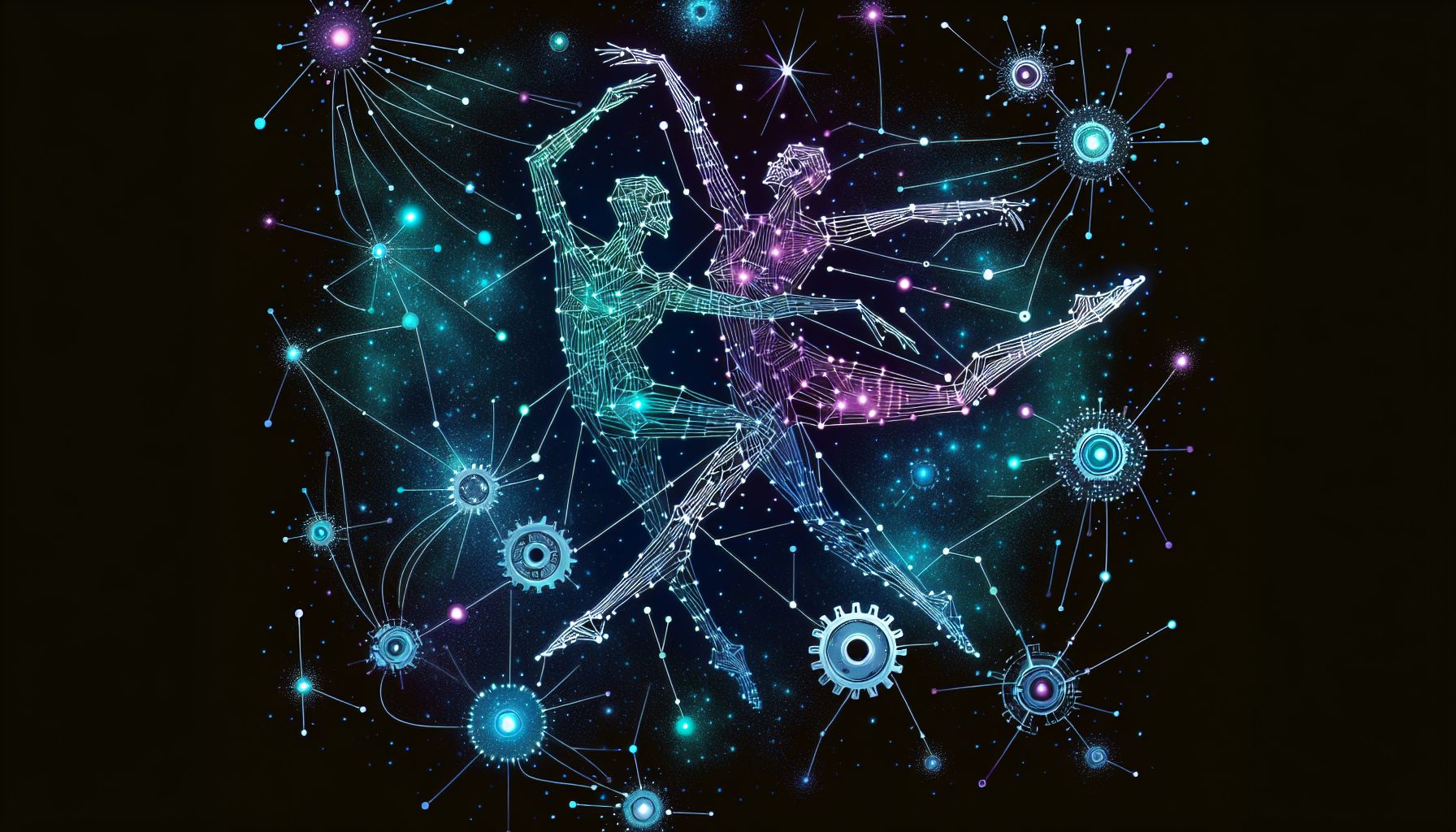
Unlocking the Cosmic Dance: AI Fusing Art and Innovation
Hey there, fellow tech enthusiasts! Today, I’ve got something that might just blur the line between art and science for you. It’s all about the growing world of Artificial Intelligence in the creative arts. Yep, you heard me right. It’s AI stepping into the realm of brushstrokes, melodies, and storytelling. It’s a place where bits and bytes meet paints and papers, creating a dance that’s both surprising and, dare I say, weirdly human.
The AI Brushes Its First Strokes
Let’s rewind to when AI was still something out of a sci-fi movie. Fast forward to today where algorithms can paint Van Gogh-like landscapes or write symphonies reminiscent of Mozart. The fusion of AI with artistic expression isn’t just a novelty. It’s opening doors that we never knew existed.
The other day, while sipping my morning coffee, I decided to let an AI compose a melody for me. I was skeptical, as anyone would be. But, guess what? The resulting tune wasn’t half bad. Okay, it wasn’t going to top the Billboard charts anytime soon, but there was something captivating about how an emotionless machine could whip up a tune that resonated with a human heart. It’s like finding out your cat can do calculus. Mind-blowing, right?
A Tool, Not a Replacement
Now, let’s address the elephant in the digital room: Is AI going to replace artists? In my view, not anytime soon. Sure, AI can produce art, but it’s still up to us humans to apply a touch of creativity and a pinch of that indescribable human flair. Think of AI as a really powerful tool rather than a replacement.
There are artists out there who use AI to enhance their creative processes. It’s like having a tireless assistant who never sleeps and has access to every art technique ever developed. Imagine an artist pondering over a blank canvas. Now imagine that artist swapping ideas with an AI. It offers suggestions, brushes techniques, and even color palettes. What a time-saver, right?
The Matrix of Music
Music is another realm where AI is breaking barriers. And honestly, it’s a jazz solo for the ages. AI-driven composition platforms are already helping musicians draft songs, compose harmonies, and even predict what audiences will love. The algorithms examine past hits, trends, and musical theories to predict the next smash song.
Of course, sometimes those predictions can be as off-track as a dog playing the piano, but that’s part of the fun. It’s like having a jam session with a mathematically minded bandmate who tosses out wild suggestions. You never know, it might just lead to the next musical revolution.
To Infinity and Beyond: The Implications
When it comes to AI in the creative arts, we’re scratching the surface of what’s possible. There’s more to this than just pretty pictures or catchy tunes. AI could democratize art, knocking down barriers and allowing everyone, yes, everyone, access to incredible creative tools.
For budding artists, this means experimenting without the fear of failing. For seasoned pros, it offers a fresh perspective. For the rest of us spectators, it means experiencing art in ways previously unimaginable. It’s a win all around. Like getting free pizza with an extra side of happiness.
Challenges in the Tech-Creative World
Of course, it wouldn’t be an adventure without some hurdles. AI faces critiques over authenticity. After all, can something that doesn’t feel create art that does? And there’s the legal mess concerning intellectual property. Who owns the art? The programmer, the algorithm, or the artist who refined it?
There’s also the ever-present fear of AI bias sneaking into the creative process. Bias in art can manifest in subtler ways, quietly nudging directions based on ‘learned’ preferences. We’re building tools today for the artists of tomorrow, so getting this right matters.
Gearing Up for the Future
So, what’s next for this wild progression? I personally think we’re on the brink of a Renaissance 2.0, fueled by Artificial Intelligence. As we refine algorithms and embrace collaboration between human creativity and machine intelligence, the horizons will stretch further than Da Vinci himself could’ve ever seen.
And for those of you out there bemoaning an AI that creates art as the plot of another dystopian science fiction novel, take a moment to think. If AI can help nurture emerging creatives, uncover hidden talents, and craft beauty beyond our wildest dreams, isn’t that worth a little optimism?
Keep your eyes peeled, folks. The next masterpiece might just be a collab between human and machine. And that’s a gallery exhibition I don’t want to miss.
So, go forth and create, my artistically-inclined techies! Who knows, your next big project might just involve an AI as your creative sidekick. Until next time, keep dancing on that cosmic interface of art and innovation.
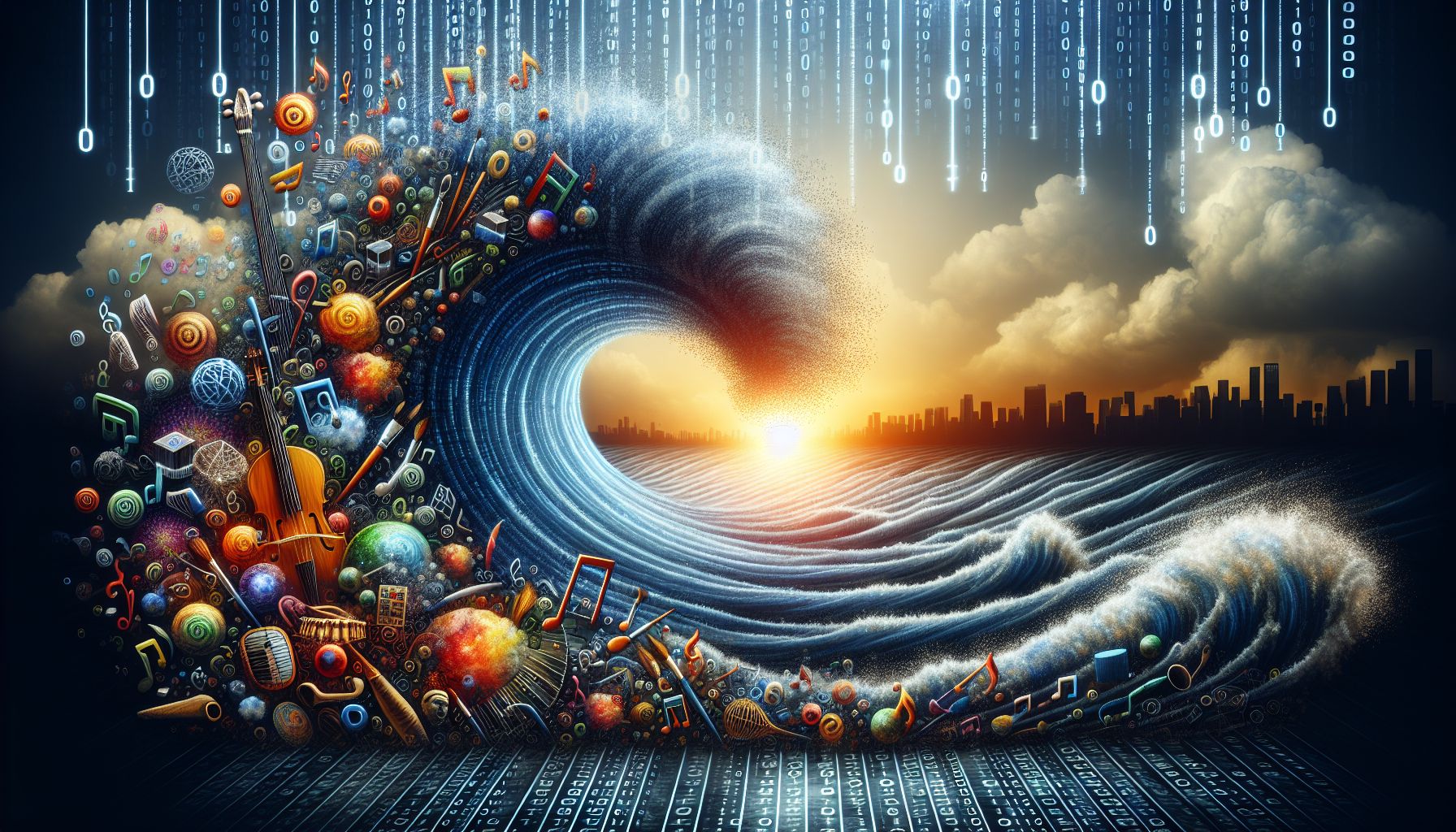
Riding the Wave: AI in Creative Arts is Here to Stay
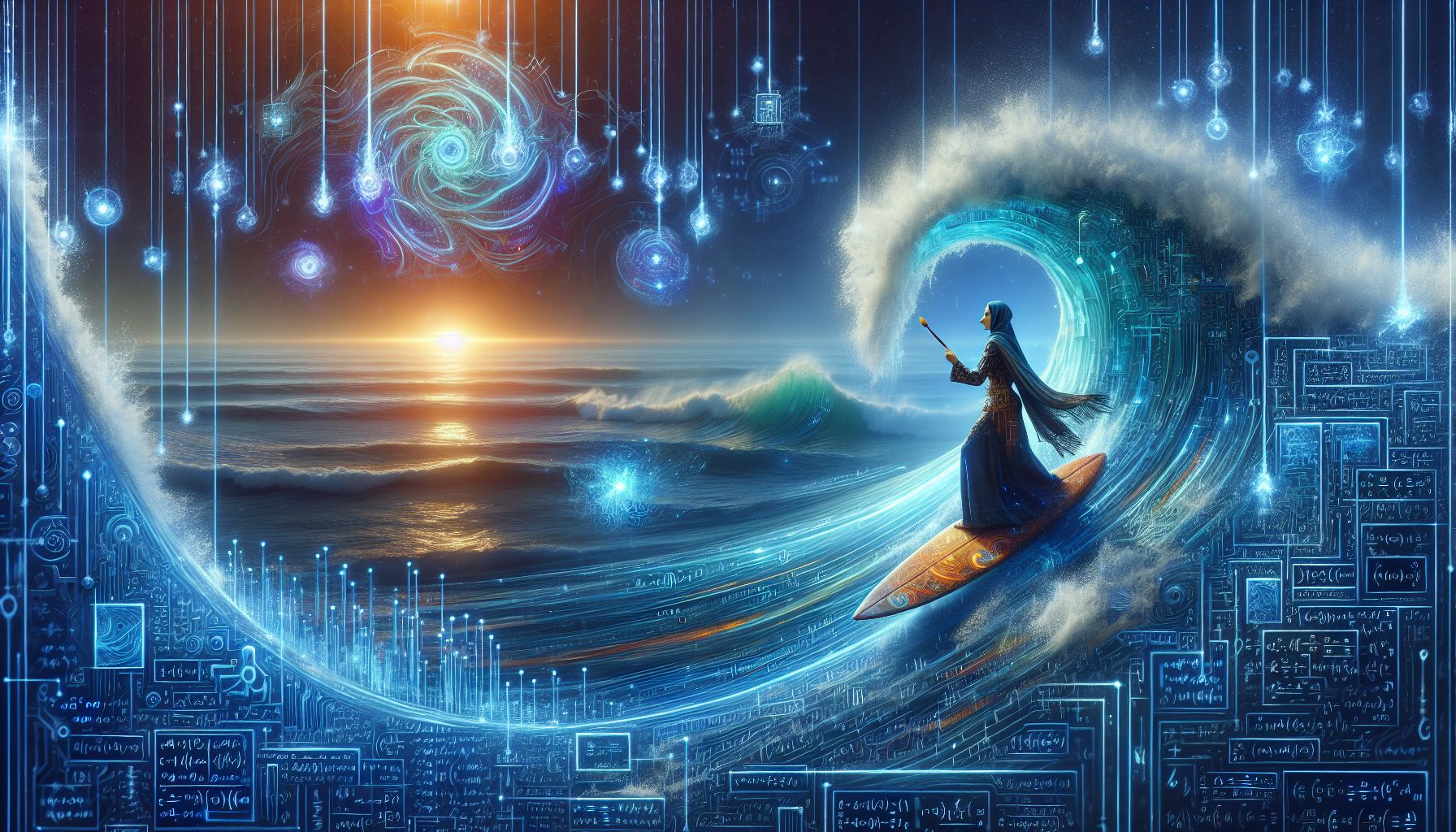
Hey, tech enthusiasts! Gather ’round because we’ve got something seriously fascinating to talk about today. If you thought artificial intelligence was all about crunching numbers and making your life easier with Siri or your robot vacuum, think again. AI is now making waves in the creative arts, and trust me, it’s not just a passing fad. No longer the realm of science fiction, AI is getting into painting, music, writing, and even filmmaking. All with a flair that would make Picasso and Shakespeare do a double take.
AI and Visual Arts: The New Picassos?
Let’s kick off with AI’s creativity in visual arts. I mean, did you catch wind of the AI-generated art auctioned for crazy sums? Yes, AI tools like DALL-E and Midjourney are producing artworks that people are willing to go gaga for. Just the other day, I was playing around with an AI art generator, and it threw a bunch of squiggles onto a canvas that somehow looked like an abstract landscape. Not gonna lie, I was half tempted to print it and redecorate my living room.
AI in visual arts is fascinating because it challenges the traditional notions of creativity. You’d think machines lack the emotional and subjective perspective that humans bring to art, but some of these neural networks are proving us wrong by creating deeply evocative works. The artistic debate now swings between “Is this art?” and “Who owns this art?” Imagine a world where you commission an AI to create a custom masterpiece. Wild, right?
Music to Your Ears: AI Rockstars
Music is another playground where AI is cutting some killer tracks. We’re looking at you, OpenAI, with your incredible DALL-E for music. AI-generated music is starting to sound less like elevator tunes and more like top 40 hits. The potential here is enormous, with AI helping musicians compose complex melodies and harmonies that might’ve taken weeks otherwise.
I’ve got a friend in the indie scene, let’s call him Dave, who tried out an AI music composer for his latest track. He was initially skeptical, half expecting the AI to spit out a dubstep version of “Twinkle, Twinkle, Little Star.” Instead, the AI came up with a riff that fit perfectly into his composition. Dave was beside himself, questioning if years of music school had been preparing him for this moment. He had truly seen the future.
Words and Stories: A New Chapter
Now onto writing, my personal favorite! As a blogger, I’m entirely biased, of course. Yet, can you imagine AI co-authoring the next bestseller? Platforms like ChatGPT are doing just that. They’re not just tools for grammatical edits or spitting out generic copy. These AIs are weaving narratives, creating characters, and even experimenting with novel structures. It’s an editor’s dream and possibly an author’s dream, or nightmare, depending on who you ask.
People often ask me, “Aren’t you scared AI will replace you?” Honestly, I like to think of it as a partnership. Besides, who’s better at bringing the dry topics to life with a dose of sarcasm? Machines? I think not. Still, for aspiring writers struggling with the infamous blank page, AI can fire up your imagination, spitting out ideas when the well runs dry. Just don’t ask it for relationship advice. Trust me on this.
Behind the Lens: AI in Film
Last but certainly not least, let’s chat a bit about AI in filmmaking. We’ve got AI assisting in scriptwriting, helping directors frame shots, and even generating special effects. The graphics and effects you loved in recent blockbusters might have had some AI wizardry involved. Innovators are using AI to predict which scripts are likely to succeed, too. It’s as though Hollywood and Silicon Valley had a secret love child.
Picture a future where an AI tips off directors about underrated indie scripts lurking in the shadows, granting deserving underdogs a shot at fame. Or virtual actors born from code sharing screen space with Hollywood’s finest. It’s a time of boundless possibilities. But, hey, don’t shed a tear for traditional cinema just yet. Storytelling at its heart remains human.
Embracing the AI Revolution
Here’s the bottom line: AI in creative arts isn’t here to steal the show but to elevate it. It is a companion, a tool that sparks creativity, pushes boundaries, and challenges what we perceive as possible. Sure, the road isn’t without its bumps. Ethical considerations and artistic authenticity remain critical points of discussion.
As we navigate these revolutions, and yes, you’ll be getting updates from me every step of the way, it’s important to bask in the excitement rather than wallow in the uncertainties. New tools shape us and we, in turn, reshape them. A dance as old as man and machine.
So whether you’re a techie marveling at lines of code transforming into art or an artist curious about tinkering with something bleeding-edge, jump in! This wave is too exhilarating to sit out. Let’s surf it together!
Alright, I better stop before I wax poetic about robots writing sonnets. Catch you on the flip side, tech fam!
Riding the AI Creative Wave: A Glimpse into the Future of Art
Hey readers, fellow wanderers of the digital realm! Today, I’ve got something I’m genuinely psyched to talk about: the growing role of Artificial Intelligence (AI) in the creative arts. If you’re even a little bit into tech—or art—this is where the magic really happens. AI’s been popping up in headlines everywhere, riding the fine line between a technological muse and a chaotic disruptor. So, pour yourself a cup of coffee (or whatever gets your creativity flowing) and let’s dive into this wild ride.
The Canvas Meets the Code
Picture this: it’s the year 2025, and you stumble into a swanky art gallery. Except, instead of artists, it’s neural networks that are being praised. There’s a piece swirling with colors that seem to morph into different scenes each time you blink, a reflection of its AI creator’s ever-learning process. This isn’t just fantasy—it’s already happening.
DeepArt & Generative Adversarial Networks (GANs): At the heart of AI in art, you’ll find amazing tech like GANs. These things are a comedic duo of neural networks, where one plays the critic and the other the artist, pushing each other to new levels of creativity. They’re responsible for producing shocking digital masterpieces that have even been auctioned for ridiculous sums.
But what does this all mean for us mere mortals? Will AI dethrone the artist or become the ultimate co-creator? I think it’s the latter. We’re seeing a fusion, where human creativity isn’t overshadowed but amplified, painting with the pixels of possibility rather than pigment alone.
AI as the Unsung Collaborator
Let’s not forget, this tech didn’t spontaneously pop out of Silicon Valley. It’s here because artists saw a chance to blend their intuition with innovation. Creatives like Refik Anadol have transformed data into immersive experiences, pushing the boundaries of how we interact with art. He’s turned the raw, chaotic beauty of data into almost living sculptures.
Sketching New Horizons: Picture drafting up an idea and having AI refine your rough sketches into something more polished—or wild. Thanks to AI tools, we now have capabilities like real-time style transfer, where AI helps mix color palettes and concepts before the artist even picks up their brush.
Whether it’s AI helping us harmonize unexpected color combinations or whip up the perfect beat mix, it’s like having an assistant as visionary as the human themselves. It’s kind of like having your cake and eating it too, but in this case, the cake writes its own recipe.
Making Creativity Accessible
Here’s where it gets really interesting: AI is making creativity accessible to everyone. Don’t have a background in art? Who cares! With platforms emerging to harness the AI-for-all mentality, suddenly everyone’s a potential Picasso. Now, before purists pitch a fit, hear me out.
Tools for the People: Tech companies are rolling out AI-driven platforms that lower the barriers to entry in artistic fields. Tools like DALL-E and Runway ML empower users with little to no traditional art skills to create everything from visual art to short films, producing pieces that could easily make it in today’s bustling digital galleries. Even generations that might not have otherwise explored art are dipping their toes into these newfound possibilities.
Sure, while there’s a treasure trove of potential, the flood of new content spurred by AI creativity will challenge how we determine what’s innovative versus good ol’ algorithm-produced filler. As always, it’s innovation and chaos walking side by side.
The Creative Controversy
Here’s where it might get a bit contentious: does an AI-produced piece hold the same value as one painstakingly crafted by human hands? Can AI truly comprehend emotion, or is it just crunching numbers in ways we’ll never quite fathom?
The Great Debate: Artists and critics are split. Some fear the devaluation of human creativity, as anyone with access to these tools becomes an artist overnight. Others see it as a new medium that invites a dialogue between human intention and artificial execution.
Think about it like this: AI, with its non-human thinking, often produces something entirely different, be it whimsical or bizarre. This weirdness sometimes leads to surprisingly profound ideas—for both artists and audiences.
What’s Next
In the end, AI’s foray into the arts doesn’t have to be a showdown between man and machine. Rather, it’s a shared journey—a partnership aimed at pushing the envelope. We’re witnessing a renaissance of creativity fueled by bytes and brains alike.
As someone who geeks out on both fiber optics and paintbrushes, I can’t wait to see where this takes us. There’s an undeniable thrill in watching the boundaries blur and the canvas expand. This is just the beginning of our artistic collaboration with algorithms, and like any pioneering space, it’s bound to be a wild ride. So let’s embrace the paradox, celebrate the innovation, and maybe—just maybe—a masterpiece or two might emerge from the synergy.
Thanks for sticking with me! Got thoughts, theories, or a favorite AI-generated artwork? I’d love to hear all about it. Until then, happy creating!

Quantum Computing: The New Frontier in Tech Revolution
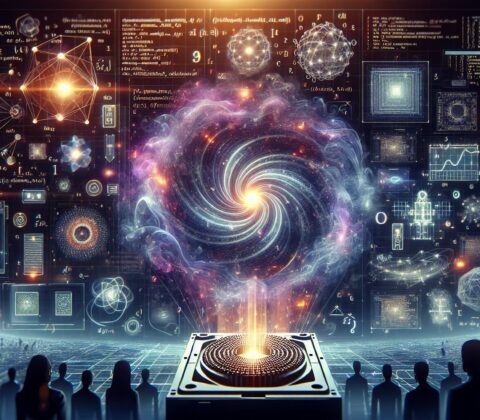
Hey, tech lovers! Ever felt the thrill of discovering a brand-new gadget that blows your mind? You know, like the first time you held a smartphone or a virtual reality headset. Well, brace yourselves because today’s topic is guaranteed to stir some serious excitement in your neurons. I’m diving into the wild and wonderful world of quantum computing. If you thought classical computing was already mind-bending, wait till you get a load of this quantum stuff! Let’s explore what this means for our tech-infused lives, why you should care, and what the future might hold.
What the Heck is Quantum Computing?
I know what you’re thinking, quantum computing sounds like something straight out of a sci-fi novel, and you’d be right! In essence, it’s computing taken to an entirely new dimension.
Let’s start with the basics. Traditional computers use bits as the smallest unit of data, representing either a 0 or a 1. It’s pretty straightforward, right? Quantum computers, however, use qubits, which can represent both 0 and 1 simultaneously thanks to this magical property called superposition. It’s like they’re in two places at once! Imagine trying to flip a coin and having it land on both heads and tails at the same time. That’s qubits for you.
But wait, there’s more! These qubits are entangled, meaning the state of one qubit is linked to the state of another, no matter the distance apart (cue the “spooky action at a distance” from Einstein himself). This entanglement, along with superposition, allows quantum computers to process information at an exponentially faster rate than classical computers.
Recent Developments: Moving Beyond Theoretical Dreams
Quantum computing isn’t just a dream cooked up by sci-fi writers anymore. We’re beginning to see tangible progress, and it’s unbelievably exciting.
One of the major players in this field is Google, which made headlines when it claimed to achieve “quantum supremacy” in 2019. Translated from tech lingo, that meant solving a problem in 200 seconds that would take the fastest supercomputer 10,000 years to crack! Not to be left in the dust, IBM, Microsoft, and other tech giants are racing to advance this technology, pouring millions into their quantum research divisions.
And let’s not forget about those incredible startups nipping at the heels of the big guys. D-Wave Systems, Rigetti Computing, and IonQ are a few of the brave pioneers putting qubits through their paces. Their efforts mean that we’re not just sitting around watching the big players anymore. The competition is fierce, and I love it!
Why Should You Care?
Alright, so quantum computing is really cool. But what does it mean for us, everyday folks? Well, the implications are as massive as they are thrilling.
Imagine a world where drug discovery becomes near-instantaneous. Currently, scientists can spend years testing combinations and permutations of molecules to find effective treatments. With quantum computing’s ability to handle vast amounts of data in parallel, what takes years could be expedited to months, weeks, or even days. Diseases like cancer or Alzheimer’s might finally meet their match.
Beyond healthcare, think about optimization problems. Factories, traffic systems, financial markets. Quantum computers can solve these faster and can identify solutions we haven’t even considered yet. The global logistics alone that could be performed is mind-blowing!
Challenges in Quantum Paradise
Hold up. Before we dive headlong into a whirlwind of quantum-processed dreams, remember, it’s not all rainbows and double rainbows. There are some knotty problems to untangle before we quantum leap into the future.
To start, quantum computers are notoriously sensitive. Environmental noise, like heat or electromagnetic waves, can disrupt qubits, leading to computational errors. It’s like trying to have a conversation at a rock concert. Good luck with that.
Plus, there’s the issue of scalability. We’re still figuring out how to build and manage large-scale quantum systems. As it stands, these experimental quantum computers operate under delicately controlled conditions, often in rooms that look straight out of “Mad Scientist Monthly.”
And let’s not even get started on the ethical considerations. The immense power of quantum computing could potentially lead to breakthroughs in encryption-breaking, posing a threat to data privacy as we know it. Your encrypted files might turn into open books. Yikes!
Gazing Into the Quantum Crystal Ball
Alright, time to whip out the future-telling gizmo. Quantum computing is still in its infancy compared to classical computing’s decades-long run. The hurdles we face are real, but so is the promise of tomorrow.
Quantum computers might become as common as cell phones one day, part of our personal and professional lives. If you’re in tech, it’s high time to get yourself some quantum literacy. Understand the fundamentals and keep a keen eye on developments. Who knows? You might just become the quantum unicorn who leads humanity into this brave new world.
In the meantime, as these innovations evolve, let’s continue geeking out about the newest discoveries, the unfolding mysteries, and the endless possibilities. After all, isn’t the fun of looking to the future imagining what might just pop out of its glittering box next?
Until next time, stay curious, stay excited, and stay quantum-computing-enthusiastic!
The Creative Frontier: AI in the Arts
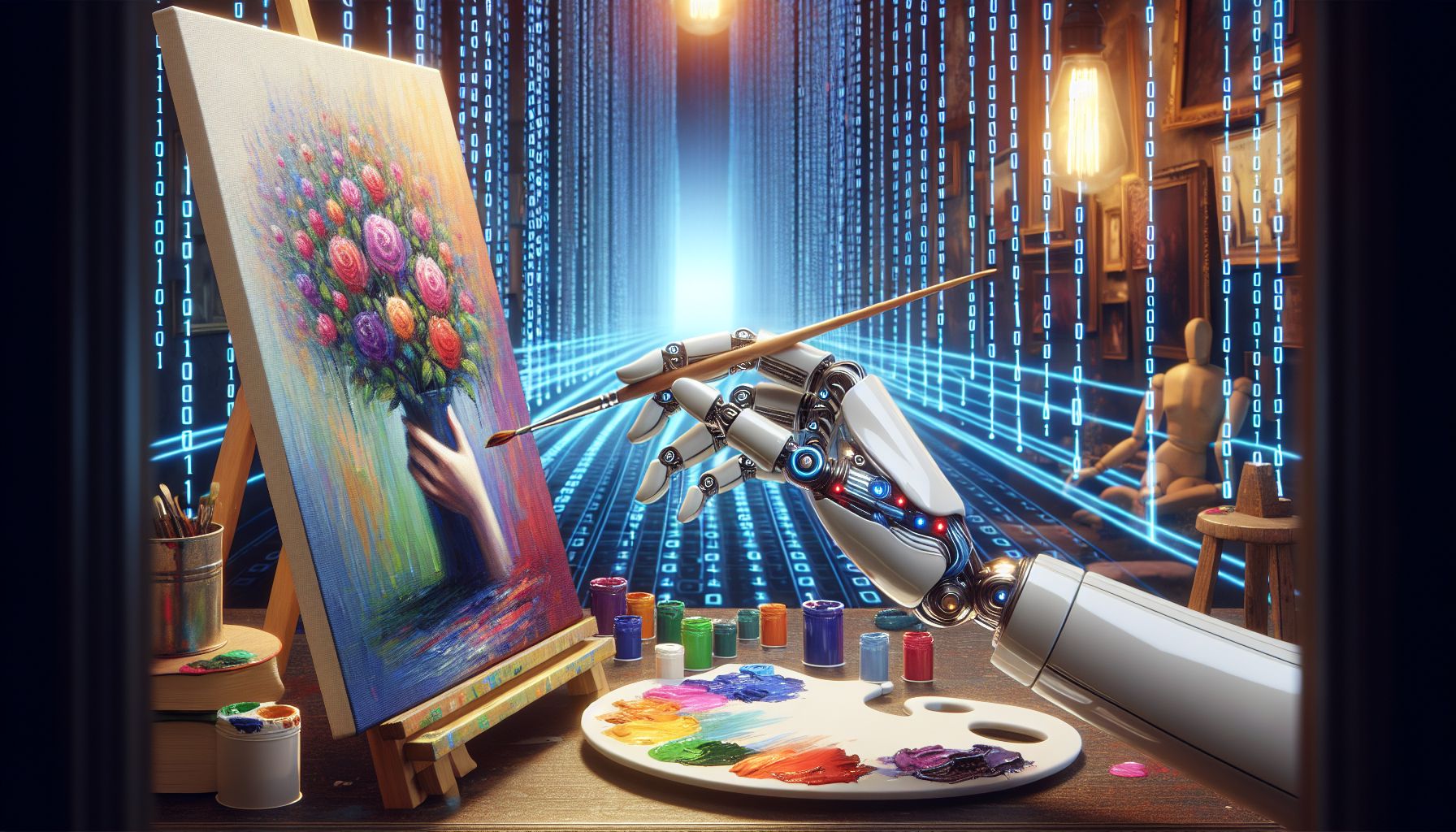
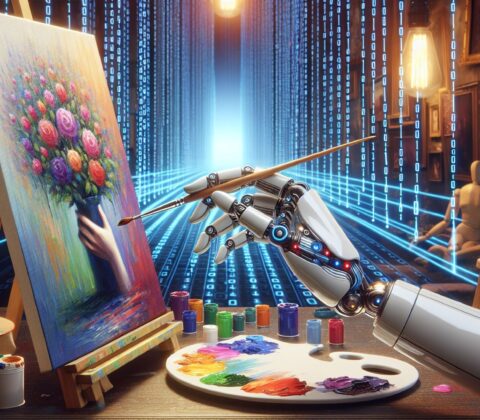
Hey tech enthusiasts! Today, let’s put our nerd hats on and take a look at what’s happening with Artificial Intelligence in the arts. I know, I know—when we think of AI, our minds often leap to robotic assembly lines or algorithms crunching numbers. But here’s what’s actually happening: AI is stepping onto center stage, brushing up (pun fully intended) its skills, and changing how we think about creativity. And honestly, it’s pretty amazing to watch.
Why AI in the Arts Actually Matters
You might be wondering, “Why all this buzz about machines dabbling in art?” Well, here’s what I’ve noticed. Artists, musicians, and other creatives are using AI as a collaborator, not as a competitor. This combination is breaking down the walls between classical artistry and digital innovation. Picture this: traditional artists working with algorithms, musicians remixing tunes with machine precision, and authors weaving narratives with AI-crafted plot twists. It’s like watching human imagination meet machine intelligence in real time.
Let me show you what I mean!
A Canvas of Codes: Visual Arts
Let’s start with visual arts, where things get really interesting. Algorithms aren’t just recognizing patterns anymore—they’re creating them. This isn’t sci-fi, this is happening right now. Take DeepArt, where AI creates artworks by copying the styles of masters like Van Gogh or Picasso. Artists like Mario Klingemann have been creating incredible pieces using neural networks, and it makes you question what “real” art even means anymore.
But it goes beyond oil paints and canvas. NVIDIA has developed AI that converts basic sketches into photorealistic images. So even if you draw like a toddler (like me), your imagination can now come to life in 4K.
Tunes from Terabytes: Music Composition
Remember when music was all about soul and strings? Now AI-driven compositions are everywhere. OpenAI’s MuseNet and Google’s Magenta are leading the charge, composing symphonies and jazzy tracks with just a little human input.
What gets me excited isn’t that AI can throw together some catchy beats—it’s the collaboration potential. I went to an indie concert recently where the band had co-written several tracks with an AI. It was weird in the best way. While the performers jammed on stage, the AI was like their silent, data-driven bandmate, influencing harmonies and rhythms in ways humans might never have thought of.
Storytelling with Silicon: Literature and Writing
If I had a nickel for every time someone said, “Machines can’t create meaningful stories,” I’d probably have enough to buy a mansion in the metaverse. But AI-driven storytelling isn’t just possible, it’s genuinely impressive. GPT-3 has helped generate engaging plots and dialogues that make you wonder if robots will write the next Harry Potter.
Writers are using AI for brainstorming, building characters, and even crafting complex narratives. The technology offers a different perspective, challenging conventional thought patterns and creating fresh storytelling approaches. Who knew writers’ block could be fought off with ones and zeros?
Bridging the Gap: Human and AI Collaboration
So where does this leave us carbon-based life forms? It’s natural to worry that as machines get more creative, our jobs and passions might feel threatened. But here’s the thing—we’re talking about ‘augmented’ creativity, not ‘replaced’ creativity.
AI is great at handling data, processing tons of variables, and opening pathways we haven’t explored yet. Meanwhile, the human touch—our emotions, subjective tastes, and deeper insights—remains irreplaceable. When you combine these strengths, creatives now have a much richer toolkit for their masterpieces.
The Challenges and the Road Ahead
As exciting as AI in arts sounds, it’s not all smooth sailing. The intersection of tech and creativity raises tough questions about authenticity, copyright, and ownership. Can we really say a piece of music belongs to an artist if it was heavily AI-assisted? Who gets the credit when AI comes up with a bestseller plot? These questions stick around as a reminder that tech evolution comes with ethical complications.
Going forward, I think things will get clearer. We need better conversations around responsible AI usage, transparent collaborations, and intellectual property rights to keep up with these technological leaps. There’s a huge opportunity here to redefine what art, creativity, and originality mean in an AI-influenced world.
Conclusion: Embracing the AI Renaissance
So there you have it, fellow tech lovers. We’re sitting on the edge of an AI Renaissance where creativity has no limits. As digital paints mix with traditional oils, and as complex rhythms blend with code-driven beats, we’re watching a renaissance built from silicon and human emotion.
To all the aspiring artists, musicians, poets, and writers out there—don’t fear the bots. Work with them. Let AI be not just a tool, but a creative partner. Because somewhere between lines of code and strokes of genius lies the future of art. And honestly, I can’t wait to see what happens next.
AI in Creative Arts: The Brushstrokes of Tomorrow
So, here we are, living in an era where computers not only beat us at chess but are also starting to give Picasso a run for his money. As someone who’s been immersed in the tech scene longer than I care to admit, I’ve seen my fair share of jaw-dropping innovations. But let me tell you, nothing quite compares to the way artificial intelligence is shaking up the creative arts. Whether you’re a tech enthusiast or an artist at heart, there’s something magical about watching a machine come alive with creativity.
The Rise of Robo-Rembrandts
Artificial intelligence, for the uninitiated, isn’t just about algorithms running stock trades or recommending what you should binge-watch next. It’s making inroads into the art world, creating paintings, composing music, even writing poetry. Remember when computers started doing things we couldn’t possibly imagine them doing? Well, this is that moment for the arts. And no, it’s not just about copying human creativity, it’s about enhancing it, maybe even redefining what we think creativity is.
I’m talking about AI algorithms that can analyze a million paintings and then create something genuinely original, something that feels both new and familiar. Take, for instance, the work by AI artists like the collective Obvious who made headlines when their piece “Portrait of Edmond de Belamy” sold for a whopping $432,500 at auction. Who knew code could draw such a crowd?
Algorithmic Symphonies: The New Composers
Let’s shift gears for a moment and talk about music. Because if you thought AI was impressively pulling off visual art, wait until you hear what it’s doing with sound. Picture this: AI as an orchestral composer, creating symphonies that evoke emotion and tell stories. Companies like AIVA Technologies are at the forefront of this musical revolution. Their AI, named AIVA, has already composed scores for films and video game soundtracks. Isn’t that wild?
And it’s not just confined to classical music either. AI is collaborating with pop musicians, DJs, and even jazz ensembles. There’s Amper Music, a cloud-based platform that lets artists compose and produce music with the help of AI. As much as we romanticize the lone genius at a piano or mixing console, AI is proving to be an invaluable partner for artists looking to push the boundaries of their sound.
Wordsmithing AI: Breaking the Ink Barrier
Alright, I’ll admit, as a writer, I greeted AI poetry with a healthy dose of skepticism. How could a machine appreciate the subtlety of human emotion, the nuance of language, heck, even the rhythm of a good haiku? But here we are. AI is now crafting poems, blog posts, and even novels. GPT-3 from OpenAI, anyone? This AI model can generate human-like text, and although it’s not going to snag a Pulitzer just yet, its abilities are pretty darn impressive.
From generating dialogue for video games to helping authors brainstorm plot ideas, AI is proving itself a versatile tool in a writer’s arsenal. Imagine sitting down to write your next masterpiece and having an AI assist you with research or even generate plot twists. It’s the ultimate writer’s block antidote!
Facing the Artistic Abyss: Challenges and Controversies
Of course, not all that glitters is gold. With any major new technology, there are challenges and ethical dilemmas. One major concern is the question of authorship. When an AI creates, who owns the rights to that work, the developer, the AI, or perhaps, no one at all? It’s a tricky legal labyrinth that we’re only just beginning to navigate.
Moreover, there’s the debate around what this means for human artists. Is AI here to steal jobs, or can it coexist with human creativity? My two cents: AI isn’t trying to replace artists. It’s a tool, an extraordinarily sophisticated brush, that artists can use to experiment and explore new frontiers. Just as photography didn’t spell the end for portrait painters, AI isn’t sounding a death knell for traditional artists. If anything, it’s opening doors, not closing them.
The Future Palette: What’s Next?
Looking ahead, the potential for AI in the arts is as vast as a Jackson Pollock canvas. We could see cross-disciplinary projects where AI bridges the gap between disparate art forms, creating hybrid experiences we can only dream of now. Consider an art exhibition brought to life with music generated in real-time by audience interaction, or films tailor-written by AI to evoke perfectly calibrated emotions.
And let’s not forget accessibility. AI might enable democratization of the arts, offering tools for creatives who might not have the resources to bring their vision to life. From AI brushes in digital art software to collaborative music platforms, the barriers to entry are lowering, inviting more voices to share their stories with the world.
So, as I wrap up this thought experiment swirled with silicon-based creativity, I leave you with this: Tech and art were once considered two distant planets in separate galaxies, but now they’re aligned and shining brighter than ever. Human and artificial hands will paint, compose, and write together. And I, for one, can’t wait to see what masterpieces await us.