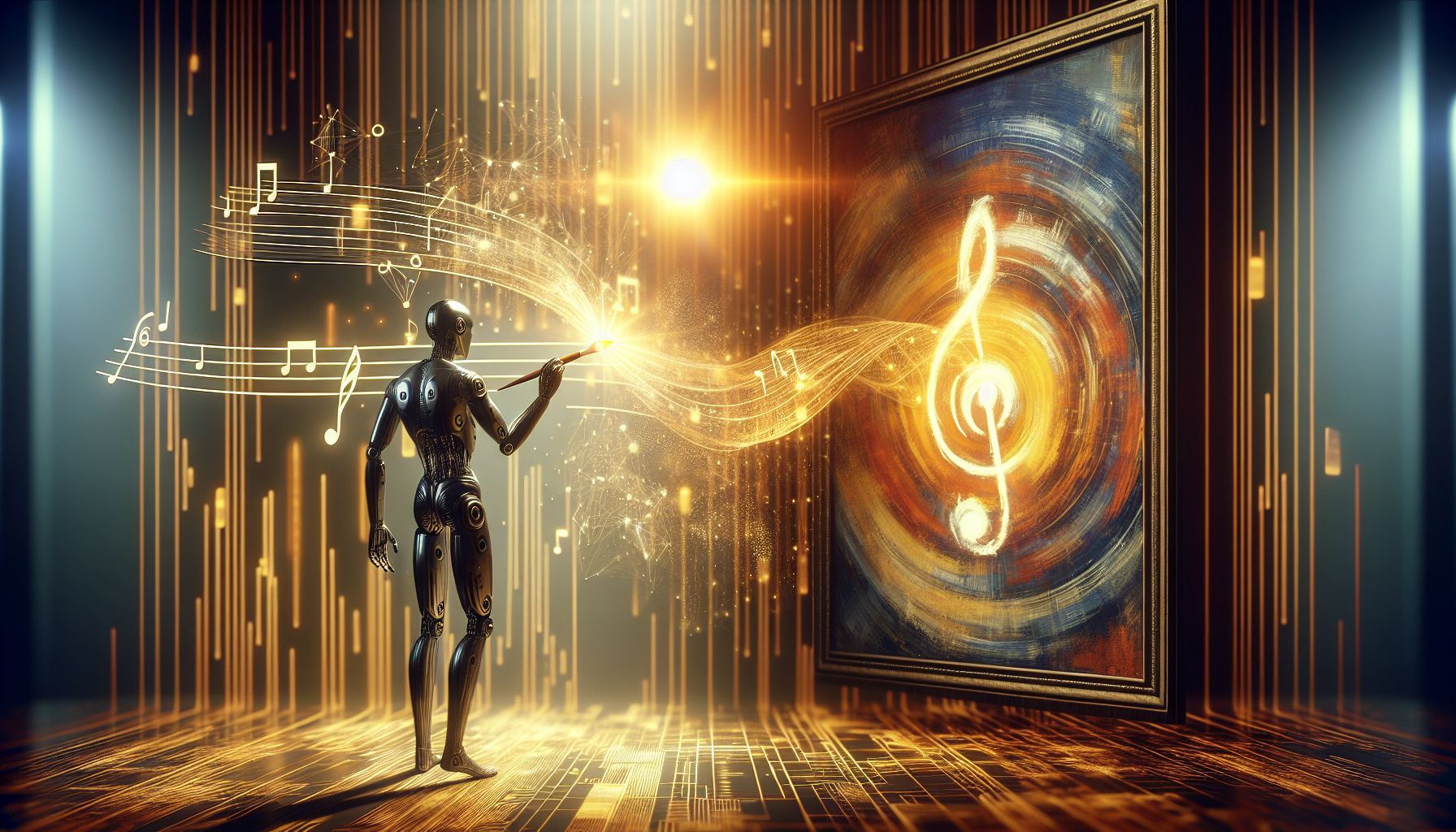
AI in Creative Arts: The Brushstrokes of Tomorrow
So, here we are, living in an era where computers not only beat us at chess but are also starting to give Picasso a run for his money. As someone who’s been immersed in the tech scene longer than I care to admit, I’ve seen my fair share of jaw-dropping innovations. But let me tell you, nothing quite compares to the way artificial intelligence is shaking up the creative arts. Whether you’re a tech enthusiast or an artist at heart, there’s something magical about watching a machine come alive with creativity.
The Rise of Robo-Rembrandts
Artificial intelligence, for the uninitiated, isn’t just about algorithms running stock trades or recommending what you should binge-watch next. It’s making inroads into the art world, creating paintings, composing music, even writing poetry. Remember when computers started doing things we couldn’t possibly imagine them doing? Well, this is that moment for the arts. And no, it’s not just about copying human creativity, it’s about enhancing it, maybe even redefining what we think creativity is.
I’m talking about AI algorithms that can analyze a million paintings and then create something genuinely original, something that feels both new and familiar. Take, for instance, the work by AI artists like the collective Obvious who made headlines when their piece “Portrait of Edmond de Belamy” sold for a whopping $432,500 at auction. Who knew code could draw such a crowd?
Algorithmic Symphonies: The New Composers
Let’s shift gears for a moment and talk about music. Because if you thought AI was impressively pulling off visual art, wait until you hear what it’s doing with sound. Picture this: AI as an orchestral composer, creating symphonies that evoke emotion and tell stories. Companies like AIVA Technologies are at the forefront of this musical revolution. Their AI, named AIVA, has already composed scores for films and video game soundtracks. Isn’t that wild?
And it’s not just confined to classical music either. AI is collaborating with pop musicians, DJs, and even jazz ensembles. There’s Amper Music, a cloud-based platform that lets artists compose and produce music with the help of AI. As much as we romanticize the lone genius at a piano or mixing console, AI is proving to be an invaluable partner for artists looking to push the boundaries of their sound.
Wordsmithing AI: Breaking the Ink Barrier
Alright, I’ll admit, as a writer, I greeted AI poetry with a healthy dose of skepticism. How could a machine appreciate the subtlety of human emotion, the nuance of language, heck, even the rhythm of a good haiku? But here we are. AI is now crafting poems, blog posts, and even novels. GPT-3 from OpenAI, anyone? This AI model can generate human-like text, and although it’s not going to snag a Pulitzer just yet, its abilities are pretty darn impressive.
From generating dialogue for video games to helping authors brainstorm plot ideas, AI is proving itself a versatile tool in a writer’s arsenal. Imagine sitting down to write your next masterpiece and having an AI assist you with research or even generate plot twists. It’s the ultimate writer’s block antidote!
Facing the Artistic Abyss: Challenges and Controversies
Of course, not all that glitters is gold. With any major new technology, there are challenges and ethical dilemmas. One major concern is the question of authorship. When an AI creates, who owns the rights to that work, the developer, the AI, or perhaps, no one at all? It’s a tricky legal labyrinth that we’re only just beginning to navigate.
Moreover, there’s the debate around what this means for human artists. Is AI here to steal jobs, or can it coexist with human creativity? My two cents: AI isn’t trying to replace artists. It’s a tool, an extraordinarily sophisticated brush, that artists can use to experiment and explore new frontiers. Just as photography didn’t spell the end for portrait painters, AI isn’t sounding a death knell for traditional artists. If anything, it’s opening doors, not closing them.
The Future Palette: What’s Next?
Looking ahead, the potential for AI in the arts is as vast as a Jackson Pollock canvas. We could see cross-disciplinary projects where AI bridges the gap between disparate art forms, creating hybrid experiences we can only dream of now. Consider an art exhibition brought to life with music generated in real-time by audience interaction, or films tailor-written by AI to evoke perfectly calibrated emotions.
And let’s not forget accessibility. AI might enable democratization of the arts, offering tools for creatives who might not have the resources to bring their vision to life. From AI brushes in digital art software to collaborative music platforms, the barriers to entry are lowering, inviting more voices to share their stories with the world.
So, as I wrap up this thought experiment swirled with silicon-based creativity, I leave you with this: Tech and art were once considered two distant planets in separate galaxies, but now they’re aligned and shining brighter than ever. Human and artificial hands will paint, compose, and write together. And I, for one, can’t wait to see what masterpieces await us.
Comments are Disabled