Inside the Underground Vinyl Swap That’s Rewiring Music Discovery
The Secret Language of Crate Diggers
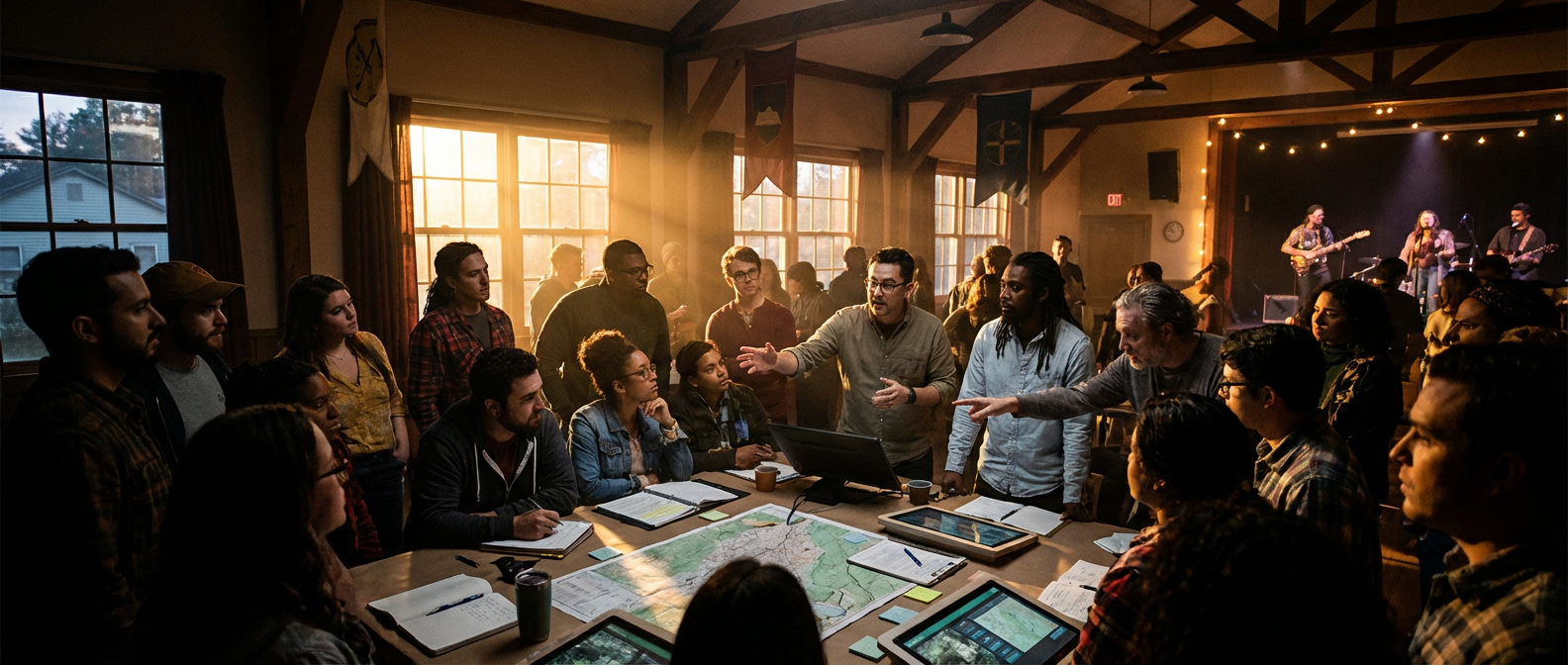
Every second Saturday at 2 PM, a dozen people gather in the back room of Meridian Coffee on Elm Street. No signs point the way. No social media announcements trumpet the event. You find out through whispered recommendations or by catching sight of someone lugging a milk crate of records through the coffee shop’s front door.
This is the Monthly Spin Exchange, and it has rules that would make the most exclusive speakeasy seem welcoming by comparison. First rule: bring something rare, something personal, something that tells a story. Second rule: no phones during the actual trading. Third rule: every record that changes hands comes with a story about how the previous owner found it.
Marcus Chen, a software engineer who started the group three years ago, explains the philosophy while sorting through a crate of Japanese pressings. “Streaming algorithms know what you’ve listened to, but they don’t know why you cried during that Radiohead track at 3 AM or how finding an original pressing of ‘Pet Sounds’ felt like discovering buried treasure.” The vinyl swap exists to preserve those why stories. It creates connections that beat the cold efficiency of digital discovery.
The group includes Sarah Martinez, a nurse who focuses on rare soul records from the 1960s, and David Kim, a retired teacher whose collection spans everything from Mongolian throat singing to experimental noise rock. What unites them isn’t genre loyalty but a shared belief that music discovery should be communal, surprising, and deeply personal.

Trading Stories, Not Just Vinyl
Watch the group in action and you’ll notice something unusual. Before any record changes hands, there’s a ritual. The current owner shares not just the album’s details but the story of how they got it. Where they found it, why they bought it, what it meant during a particular period of their life. Only then does the trading begin.
Last month, Sarah brought a scratched copy of Ann Peebles’ “I Can’t Stand the Rain” that she’d rescued from a garage sale in Memphis during her nursing school years. “The woman selling it said it belonged to her grandmother who used to sing along while cooking Sunday dinner,” Sarah told the group. “That scratch on track three? Her granddaughter made it when she was learning to use the turntable at age six.”
The album went to Jamie Rodriguez, a local musician who’d been hunting for that exact pressing for two years. In return, Jamie offered a pristine copy of Joni Mitchell’s “Blue” still in its original shrink wrap. “Found this in a storage unit I bought at auction,” Jamie explained. “Previous owner had five copies, all unopened. Felt like keeping them sealed was doing the music a disservice.”
These aren’t transactions in any traditional sense. They’re cultural exchanges where context and history matter as much as sound quality. The group has developed a detailed understanding of each member’s tastes, creating matches that often surprise even the participants themselves.
Beyond the Algorithm
The Monthly Spin Exchange is something bigger than record collecting. In an era when music discovery happens through recommendation engines and social media influence, these gatherings offer human curation at its most intimate. The suggestions come loaded with personal stakes and emotional investment.
Marcus keeps a notebook tracking not just the albums traded but the connections formed. “Danny introduced Helen to Brazilian tropicália last spring, and now she’s learning Portuguese to better understand the lyrics. Tom’s jazz recommendations helped Sarah through a difficult breakup. These ripple effects happen because real humans are making these connections.”
The group has accidentally become a testing ground for how community forms around shared passions in the digital age. Members have started bands together, attended concerts as a group, and even organized listening parties for particularly significant releases. The vinyl trades sparked something deeper: a network of people genuinely invested in each other’s musical journeys.
Emma Thompson, who joined six months ago, describes the difference between algorithm-driven discovery and human recommendation. “Spotify might suggest something based on my listening patterns, but Marcus recommended Arthur Russell because he knew I was going through a creative block and thought the experimental approach might unlock something. He was right. That’s the difference between data analysis and actual understanding.”
The Ripple Effect
What started as a dozen people trading vinyl has turned into something like a small cultural institution. The group’s influence extends beyond their monthly meetings. Local record stores now ask members for input on special orders. The nearby venue The Basement started a monthly listening series based on albums discovered through the swap.
The exchange has also become a proving ground for local musicians. Members regularly bring demos and limited releases from area artists, creating a feedback loop that supports the broader music community. Last year’s breakout local act, Velvet Machinery, first gained traction when their demo circulated through the swap network.
But perhaps most importantly, the group has started documenting their activities through oral history projects. They record the stories behind particularly meaningful trades, creating an archive that captures not just what music changed hands but why it mattered. These recordings have caught the attention of ethnomusicologists studying how musical communities form and sustain themselves.
The Monthly Spin Exchange proves that even in our hyper-connected world, there’s hunger for the unpredictable magic of human recommendation. In a back room above a coffee shop, a dozen music lovers are quietly changing how discovery happens, one story-heavy album at a time.
If you’ve got records collecting dust and stories worth sharing, Marcus says newcomers are always welcome. Just remember the rules, bring something meaningful, and prepare to leave with music that might change how you hear the world. The next meeting is this Saturday at 2 PM. Look for the milk crates.
Comments are Disabled