The Independent Bookstore Renaissance That Almost Wasn’t
The Death Spiral Years: 2007-2012
Remember when everyone said indie bookstores were dead? Like, actually dead dead. Not “struggling” or “finding their footing” but full-on funeral planning dead. The American Booksellers Association tracked it in real time: 4,000 independent bookstores in the early 2000s plummeting to just 1,651 by 2009. Borders collapsed. Barnes & Noble was hemorrhaging stores. Amazon was the villain in every think piece.
I watched three bookstores close on my block alone between 2008 and 2011. First went Cornerstone Books, then that weird little sci-fi place with the cat, then the used bookstore where you could trade paperbacks for coffee. The owners all said the same thing: rent’s too high, margins too thin, can’t compete with online prices. The writing wasn’t just on the wall. It was spray-painted in neon.
But here’s what everyone missed while they were writing obituaries. The survivors weren’t just hanging on. They were changing. Fast.

The Turning Point: 2013-2016
The turnaround started quietly. Small shifts that looked like desperation moves but were actually smart adaptations. BookCourt in Brooklyn started hosting three events per week instead of one per month. Housing Works began curating their used book selection like a boutique. The Strand doubled down on their branded merchandise and started that infamous book subscription service.
Then 2013 hit, and something clicked. The ABA membership numbers stopped falling. Actually stopped. For the first time in a decade, the decline plateaued. Not growth yet, but not the death spiral either. Store owners I talked to back then described it like this: customers were coming back, but they wanted something different. Not just books. An experience.
The smart operators figured it out first. Politics & Prose in DC transformed their event space into a proper venue. Elliott Bay Book Company in Seattle started serving wine at readings. Skylight Books in LA began selling vinyl records alongside poetry collections. They weren’t competing with Amazon anymore. They were competing with Netflix and Instagram and whatever else was keeping people home.
By 2015, the ABA reported the first membership increase in years. Tiny, but real. The indie bookstore wasn’t just surviving. It was becoming something new.
The Instagram Effect: 2017-2020
Then social media changed everything. Not because bookstores started posting on Instagram, but because reading became photogenic again. Book clubs exploded. #Bookstagram took off. Being seen with the right book became a flex. Suddenly, buying books at an indie store wasn’t just about supporting local business. It was about curating your aesthetic.
The savvy stores leaned in hard. Dog Eared Books in San Francisco redesigned their window displays for maximum shareability. Book Larder in Seattle started selling gorgeous cookbooks that looked incredible on feeds. Rizzoli Bookstore in New York basically became a tourist destination based on their Instagram presence alone.
The numbers backed up what I was seeing in real time. The ABA membership grew to over 2,500 stores by 2019. New stores were opening faster than old ones were closing. Not just surviving stores either. Ambitious new concepts like The Wild Detectives in Dallas, combining bookstore with bar, or Literati Bookstore in Ann Arbor, which literally branded their own beer.
COVID should have killed the momentum. Instead, it sped things up. While big box stores fumbled their online presence, indie bookstores pivoted to curbside pickup, virtual events, and hyper-local delivery. Customers who discovered their neighborhood bookstore during lockdown kept coming back when things reopened. The relationship stuck.
The Current Scene: What Actually Survived
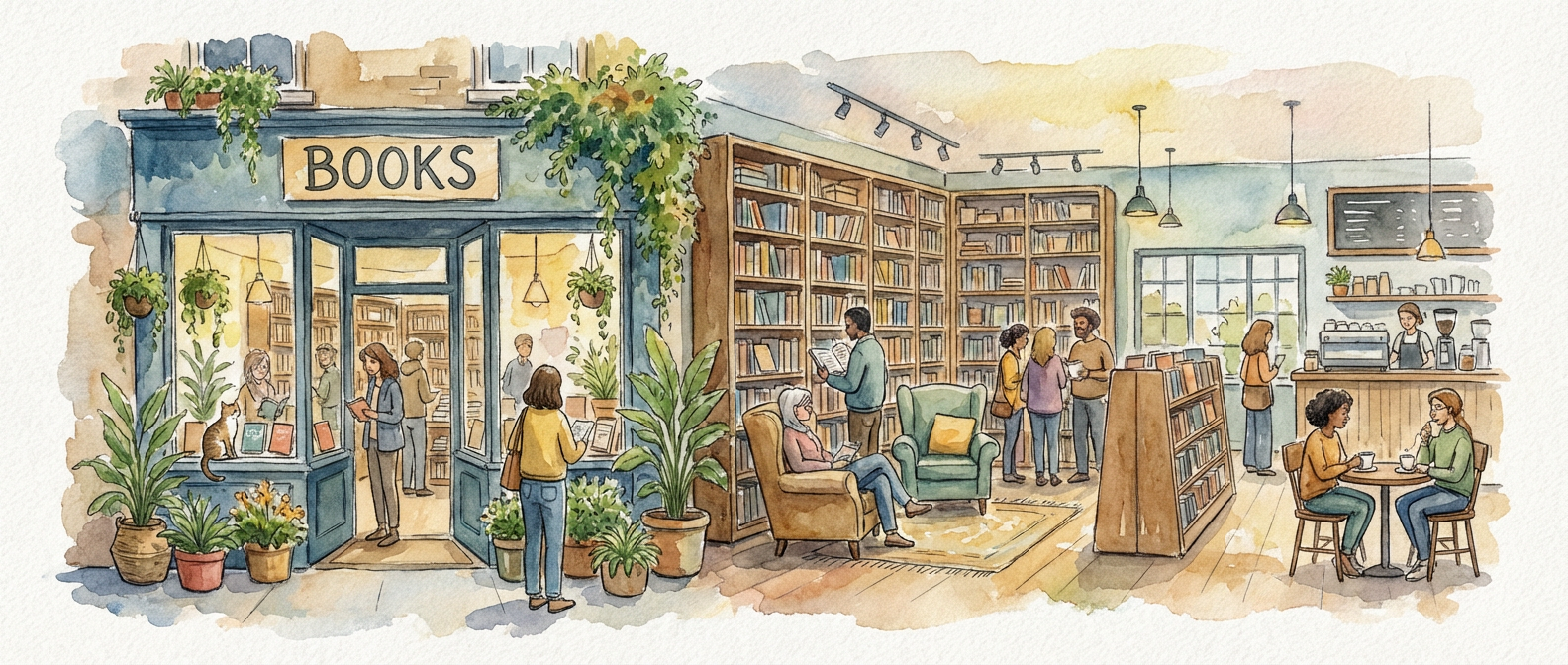
Walk into any thriving indie bookstore today and you’ll see the same formula. It’s not really about books anymore, though books are obviously central. It’s about being the third place your neighborhood didn’t know it needed. Coffee bar, event space, community bulletin board, art gallery, wine shop, gift boutique. All wrapped around a carefully curated book selection that reflects the owner’s actual taste, not some corporate algorithm.
The stores that made it through are genuinely different animals than what came before. Take Greenlight Bookstore in Brooklyn. They survived by becoming a neighborhood institution first and a bookstore second. School fundraisers, political organizing meetings, first date location, weekend hangout spot. They sell books, but they’re really selling belonging.
The economics work now in ways they didn’t fifteen years ago. Higher margins on events, merchandise, and food offset the lower margins on books. Customers pay more, but they get more. A $30 hardcover feels reasonable when it comes with a glass of wine, a conversation with the author, and a sense of being part of something.
The ABA now counts over 3,000 member stores. Still below the peak, but growing steadily. More importantly, the new stores opening aren’t desperate Hail Marys. They’re confident businesses with clear value propositions and sustainable models.
What Comes Next
The indie bookstore comeback is real, but it’s also fragile. Rising rents in gentrifying neighborhoods threaten even successful stores. The next economic downturn could easily reverse the gains. And the stores that are thriving now might struggle to maintain their edge as the novelty wears off.
But I’m betting on the bookstores that figured out how to be essential to their communities. The ones that became gathering places, not just retail spaces. The ones where the staff knows your name and your reading preferences. Where local authors come to test new material and neighbors argue about city council elections.
The bookstore of 2024 isn’t trying to be Amazon’s physical cousin. It’s trying to be the living room of its neighborhood. And honestly? That’s a much more interesting business to be in.
What’s your local bookstore doing that keeps you coming back? I’m always hunting for the next evolution in indie bookstore culture, so hit me up if you’ve spotted something worth talking about.
Comments are Disabled