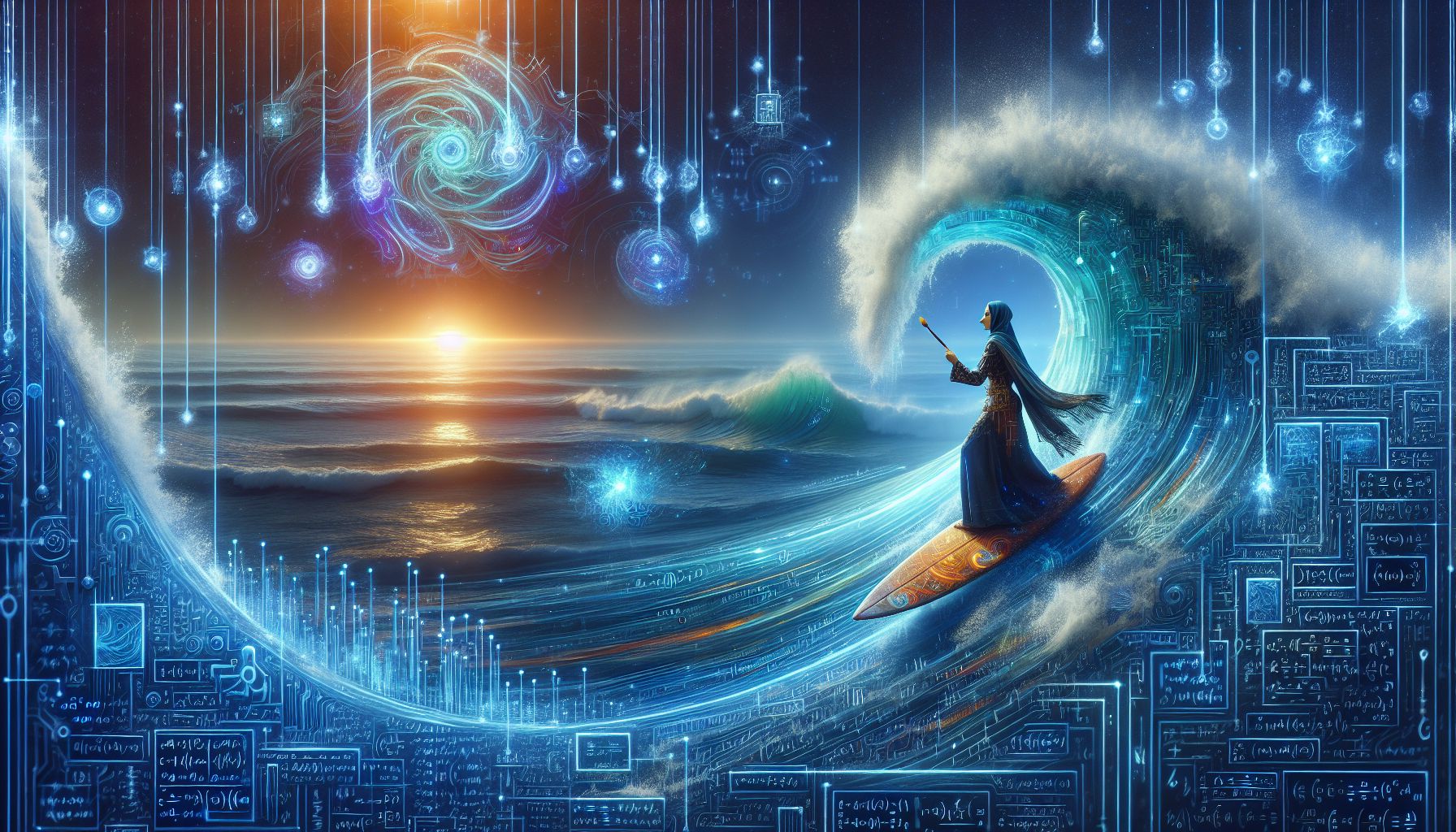
Riding the AI Creative Wave: A Glimpse into the Future of Art
Hey readers, fellow wanderers of the digital realm! Today, I’ve got something I’m genuinely psyched to talk about: the growing role of Artificial Intelligence (AI) in the creative arts. If you’re even a little bit into tech—or art—this is where the magic really happens. AI’s been popping up in headlines everywhere, riding the fine line between a technological muse and a chaotic disruptor. So, pour yourself a cup of coffee (or whatever gets your creativity flowing) and let’s dive into this wild ride.
The Canvas Meets the Code
Picture this: it’s the year 2025, and you stumble into a swanky art gallery. Except, instead of artists, it’s neural networks that are being praised. There’s a piece swirling with colors that seem to morph into different scenes each time you blink, a reflection of its AI creator’s ever-learning process. This isn’t just fantasy—it’s already happening.
DeepArt & Generative Adversarial Networks (GANs): At the heart of AI in art, you’ll find amazing tech like GANs. These things are a comedic duo of neural networks, where one plays the critic and the other the artist, pushing each other to new levels of creativity. They’re responsible for producing shocking digital masterpieces that have even been auctioned for ridiculous sums.
But what does this all mean for us mere mortals? Will AI dethrone the artist or become the ultimate co-creator? I think it’s the latter. We’re seeing a fusion, where human creativity isn’t overshadowed but amplified, painting with the pixels of possibility rather than pigment alone.
AI as the Unsung Collaborator
Let’s not forget, this tech didn’t spontaneously pop out of Silicon Valley. It’s here because artists saw a chance to blend their intuition with innovation. Creatives like Refik Anadol have transformed data into immersive experiences, pushing the boundaries of how we interact with art. He’s turned the raw, chaotic beauty of data into almost living sculptures.
Sketching New Horizons: Picture drafting up an idea and having AI refine your rough sketches into something more polished—or wild. Thanks to AI tools, we now have capabilities like real-time style transfer, where AI helps mix color palettes and concepts before the artist even picks up their brush.
Whether it’s AI helping us harmonize unexpected color combinations or whip up the perfect beat mix, it’s like having an assistant as visionary as the human themselves. It’s kind of like having your cake and eating it too, but in this case, the cake writes its own recipe.
Making Creativity Accessible
Here’s where it gets really interesting: AI is making creativity accessible to everyone. Don’t have a background in art? Who cares! With platforms emerging to harness the AI-for-all mentality, suddenly everyone’s a potential Picasso. Now, before purists pitch a fit, hear me out.
Tools for the People: Tech companies are rolling out AI-driven platforms that lower the barriers to entry in artistic fields. Tools like DALL-E and Runway ML empower users with little to no traditional art skills to create everything from visual art to short films, producing pieces that could easily make it in today’s bustling digital galleries. Even generations that might not have otherwise explored art are dipping their toes into these newfound possibilities.
Sure, while there’s a treasure trove of potential, the flood of new content spurred by AI creativity will challenge how we determine what’s innovative versus good ol’ algorithm-produced filler. As always, it’s innovation and chaos walking side by side.
The Creative Controversy
Here’s where it might get a bit contentious: does an AI-produced piece hold the same value as one painstakingly crafted by human hands? Can AI truly comprehend emotion, or is it just crunching numbers in ways we’ll never quite fathom?
The Great Debate: Artists and critics are split. Some fear the devaluation of human creativity, as anyone with access to these tools becomes an artist overnight. Others see it as a new medium that invites a dialogue between human intention and artificial execution.
Think about it like this: AI, with its non-human thinking, often produces something entirely different, be it whimsical or bizarre. This weirdness sometimes leads to surprisingly profound ideas—for both artists and audiences.
What’s Next
In the end, AI’s foray into the arts doesn’t have to be a showdown between man and machine. Rather, it’s a shared journey—a partnership aimed at pushing the envelope. We’re witnessing a renaissance of creativity fueled by bytes and brains alike.
As someone who geeks out on both fiber optics and paintbrushes, I can’t wait to see where this takes us. There’s an undeniable thrill in watching the boundaries blur and the canvas expand. This is just the beginning of our artistic collaboration with algorithms, and like any pioneering space, it’s bound to be a wild ride. So let’s embrace the paradox, celebrate the innovation, and maybe—just maybe—a masterpiece or two might emerge from the synergy.
Thanks for sticking with me! Got thoughts, theories, or a favorite AI-generated artwork? I’d love to hear all about it. Until then, happy creating!
Comments are Disabled