Monthly Archives: July 2026

The White Cube’s Dirty Secret: How Berlin’s Gallery System Still Silences Queer Art

Berlin sells itself as a queer paradise. The tourism board pushes a fantasy of endless sexual freedom, techno-fueled nights, and a history of radical subversion. But step into the commercial gallery circuit—the white cubes of Auguststraße, the polished concrete of Potsdamer Straße, the sprawling spaces on the Gallery Weekend map—and that fantasy evaporates. What’s left is a system that has learned to consume queer aesthetics while quietly pushing actual queer voices to the margins. The Berlin gallery scene doesn’t exclude queer artists outright. It curates them into something safe, something digestible, stripping away the political urgency that made the work dangerous in the first place.

I’ve watched this happen for years. Galleries will mount a Pride month group show, splash some neon and glitter across the press release, and congratulate themselves on their inclusivity. But look at who gets the solo shows, the institutional acquisitions, the long-term contracts, the Art Basel booths. The pattern is glaring. Queer artists are invited to the party, but they’re never allowed to pick the music.

The Performance of Inclusion

Berlin’s art market has mastered a particular kind of performance. It’s a performance of radicalism that never actually threatens the structures of power. A gallery in Mitte will host a show exploring queer desire, but the opening is sponsored by a luxury watch brand. The collectors sipping champagne are the same people whose tax avoidance strategies defund the community health centers that serve trans Berliners. The dissonance isn’t a glitch; it’s the entire operating system.

This isn’t about individual gallerists being malicious. Many genuinely believe in the work they show. The problem is structural. The commercial gallery system relies on a collector class that skews wealthy, older, and deeply risk-averse. Queer art that challenges property relations, that demands a restructuring of kinship, that refuses to make itself legible to a straight gaze—this work is fundamentally uncollectible in the traditional sense. So it gets softened. The edges get buffed. The rage becomes “attitude.” The grief becomes “melancholy.” The politics become wallpaper.

Abstract geometric shapes in muted tones, representing the sanitization of radical aesthetics

The Economy of the Ephemeral

Queer art in Berlin is often pushed toward the temporary. A performance here, a club night there, a one-off installation in a basement that will be gutted next month. These formats generate buzz. They make the gallery look current, adventurous, plugged in. But they don’t build careers. They don’t enter collections. They don’t create the kind of sustained economic foundation that lets an artist refuse other forms of labor and commit fully to their practice.

This isn’t a coincidence. The ephemeral is easy to consume and easier to forget. A performance happens, the audience claps, the Instagram stories fade after 24 hours, and the gallery moves on to the next spectacle. There’s no lasting object to trouble a collector’s conscience, no permanent record to complicate a future resale. The queer artist is celebrated for their “energy” and then discarded when that energy becomes too demanding, too specific, too inconveniently alive.

Meanwhile, the painters and sculptors who do break through are often those whose work translates smoothly into the language of the market. A canvas with queer-coded imagery but a formally conservative composition—something that looks good above a designer sofa—slides easily into a collection. The biography mentions the artist’s queerness, but the work itself is rendered universal, safe, collectible. The specific textures of queer experience—the particular rhythms of cruising, of found family, of gender dysphoria, of political fury—get dissolved into a vague, marketable “otherness.”

The Gentrification Feedback Loop

There’s a bitter irony in how the gallery system relates to queer space. Galleries follow cheap rent. Cheap rent often exists because queer and migrant communities have carved out livable zones in neglected corners of the city. The galleries arrive, drawn by the “vibe” and the low overhead. Then come the cafes, the concept stores, the luxury apartments. The original community gets priced out. The galleries, meanwhile, continue to show work that references the very subcultures their presence helped dismantle. It’s a feedback loop of extraction: mine the community for aesthetic material, accelerate the gentrification that displaces it, then mourn the loss in the next exhibition’s wall text.

This isn’t unique to Berlin, but Berlin’s self-mythology makes it especially nauseating. The city sells itself as a haven for freaks and outsiders, a place where alternative ways of living are still possible. That mythology is precisely what the art market exploits. It’s the branding that justifies the high prices, the international attention, the sense that buying a piece of Berlin art is buying a piece of freedom. But freedom isn’t a commodity, and the attempt to sell it inevitably destroys it.

Abstract composition with fragmented forms, evoking the disruption of community spaces

The Gatekeepers and Their Ghosts

Who decides what queer art gets seen? The question sounds simple, but the answer reveals a network of influence that operates mostly out of sight. Gallery directors, curators, collectors, critics—these are the visible gatekeepers. But behind them are the invisible ones: the funding bodies, the real estate developers, the cultural politicians who decide which neighborhoods get “revitalized” and which communities get displaced. Queer art that threatens this network doesn’t get funded. It doesn’t get space. It doesn’t get written about.

I’ve spoken with artists who were told, explicitly, that their work was “too political” for a gallery’s program. Not too political in general—the gallery was happy to show work that critiqued faraway governments or abstract systems. But too political in its analysis of the local art market, too specific in its naming of the landlords and politicians who profit from the city’s transformation. That kind of specificity is dangerous. It makes people uncomfortable. And discomfort, in the white cube, is only permitted when it’s been safely aestheticized.

The result is a kind of self-censorship that artists internalize. If you want a show, you learn to soften the edges. You learn to make work that’s “challenging” in ways that don’t actually challenge anything. You learn to perform queerness as style rather than as politics. The gatekeepers don’t need to reject you; you’ve already rejected yourself.

The Myth of the Autonomous Artist

Berlin’s art world loves the myth of the autonomous artist. The lone genius in the studio, making work purely from inner necessity, untainted by market concerns. This myth is particularly pernicious for queer artists because it obscures the material conditions that shape what work gets made and seen. No artist is autonomous. Everyone responds to incentives, to funding structures, to the tastes of curators and collectors. Pretending otherwise just makes those structures harder to see and harder to challenge.

Queer artists in Berlin are navigating a system that rewards certain kinds of visibility and punishes others. The work that gets shown in galleries is work that can be sold. The work that can be sold is work that fits into the existing categories of the art market. Those categories were not designed with queer experience in mind. They were designed to move product. If your work doesn’t fit, you have two choices: change the work or find another venue. And the alternative venues—the project spaces, the artist-run initiatives, the underground shows—are constantly under threat from the same economic forces that make the commercial galleries possible.

Layered translucent materials overlapping, suggesting hidden structures of power

Toward a Queer Institutional Critique

What would it mean to take queer art seriously? Not as a market trend, not as a diversity checkbox, but as a fundamental challenge to the way art is produced, distributed, and valued? It would mean acknowledging that the gallery system, as it currently exists, is incompatible with the radical potential of queer aesthetics. It would mean building alternative structures—cooperatives, community land trusts, non-hierarchical collectives—that don’t depend on the whims of wealthy collectors. It would mean refusing the logic of scarcity and speculation that turns art into an asset class.

Some of this work is already happening. There are spaces in Berlin that operate outside the commercial gallery model, spaces that prioritize community accountability over market viability. But they’re under constant pressure. The rent is too high. The funding is too scarce. The city’s cultural policy talks a good game about supporting “independent scenes,” but when it comes time to allocate resources, the money flows to established institutions. The same institutions that are most invested in maintaining the status quo.

Queer art, at its best, is not a style. It’s not a set of themes or a particular color palette. It’s a way of seeing the world that refuses the given, that insists on the possibility of other arrangements, other ways of living and loving and making meaning. That kind of art will always be in tension with a market that wants to stabilize, categorize, and commodify. The question is whether we’re willing to live in that tension, or whether we’ll keep pretending that a rainbow flag in the window is the same thing as liberation.

FAQ

Why does the Berlin gallery scene claim to support queer artists while marginalizing them?

The contradiction is structural, not personal. Galleries depend on a collector base that is predominantly wealthy and risk-averse. Queer art that genuinely challenges social norms—particularly around property, kinship, and legibility—is difficult to sell to this demographic. So galleries perform inclusivity through curated group shows and thematic exhibitions while reserving their serious investment for work that can circulate comfortably in the global art market. The result is a system that celebrates queer aesthetics while quietly defanging queer politics.

What makes a queer artwork “collectible” versus “uncollectible” in Berlin’s market?

Collectibility is largely determined by how easily the work can be absorbed into existing economic and social structures. A painting that uses queer-coded imagery but remains formally conservative—something that looks good above a sofa—is highly collectible. A performance piece that critiques the gentrification of queer neighborhoods, or an installation that demands institutional accountability, is not. The market favors objects that can be stored, shipped, and resold without friction. Queer art that insists on context, relationship, and political urgency resists this logic and is therefore marginalized.

What alternatives exist for queer artists who reject the commercial gallery system?

Some queer artists in Berlin have turned to self-organized spaces, cooperatives, and community-based projects that operate outside the commercial circuit. These include artist-run project spaces in neighborhoods like Neukölln and Wedding, as well as collectives that pool resources to rent and maintain studios. However, these alternatives face constant economic pressure from rising rents and precarious funding. Long-term sustainability requires structural changes—such as community land trusts, public funding models that don’t depend on market validation, and solidarity networks that connect queer artists across cities and scenes.

How does the myth of Berlin as a queer haven harm queer artists?

The myth of Berlin as an inherently queer-friendly city masks the material realities of precarity, displacement, and institutional neglect. It allows the city’s cultural establishment to claim progressive credentials without making substantive changes. Queer artists are expected to be grateful for the “freedom” Berlin offers while navigating a system that extracts their labor and creativity without providing security. The myth also attracts a constant influx of new artists willing to work for exposure, which depresses the economic power of all artists and makes collective organizing more difficult.

The White Cube’s Quiet Coup: How Berlin’s Gallery Scene Silences Queer Dissent

Berlin loves to tell you it’s the freest city on earth. The marketing copy writes itself: a playground of radical openness, where the ghosts of Weimar-era cabarets still wink from every graffiti-slicked alley. Come here, the myth whispers, and you’ll find your tribe, your voice, a stage for every self you’ve ever wanted to be. But walk into the commercial galleries—those pristine white boxes on Potsdamer Straße, the repurposed factory halls in Kreuzberg—and the promise curdles. The gatekeepers aren’t politicians or police. They’re curators, collectors, and critics who’ve turned selective inclusion into a fine art. They’ll take your queerness, sure. Just as long as you let them scrub off the parts that bite.

This isn’t clumsy bigotry. Berlin’s gallery class is far too chic for that. Instead, you get a system of aesthetic filtration, a slow sifting that lets in queer voices only after they’ve been sanded smooth. The work that makes it onto the walls is the work that conforms: universal love, sleek androgyny, a little nostalgic glamour. Anything that names the economic violence behind the canvas, that points a finger at the collector’s own complicity, gets quietly shown the door. It’s a velvet rope policy dressed in avant-garde black.

The Gentrification of Queer Memory

You can’t understand what’s happening inside the white cube without looking at the streets it sits on. The gallery boom in Berlin has shadowed the gentrification of its queer neighborhoods step for step. Schöneberg, once the pulsing heart of Magnus Hirschfeld’s early homosexual rights movement, is now a landscape of concept stores and oat-milk lattes. The galleries that colonize these areas love to curate shows about the neighborhood’s “colorful past,” while the artists they represent—overwhelmingly cis, white, and market-safe—have no connection to the communities being priced out. The history becomes wallpaper. The present gets evicted.

This is spatial violence disguised as homage. When a gallery hangs a tribute to queer resistance on a wall built with the rent money that resistance can’t afford, it’s not remembering. It’s grave-robbing. The institution becomes a mausoleum, displaying the bones of a community it helped to kill, charging admission at the door.

Empty white gallery space with polished concrete floor and track lighting, symbolizing institutional exclusion

The Curator as Censor

The curator today isn’t just a caretaker of objects; they’re a kingmaker, and their kingdom is built on a quiet, devastating power: the power to say “not now.” Not “no”—that would be too honest. Instead, it’s “this doesn’t fit our current program,” or the classic, “we’ve already done our queer show this year.” Queerness gets treated like a quota, a box to tick before returning to the serious business of selling paintings to people who own multiple homes. The “queer show” becomes a ghetto, a once-a-year nod to diversity that lets the gallery feel good about itself for the other eleven months.

This is censorship by compartmentalization. By cordoning off queer work into a designated slot, the system prevents it from contaminating the broader discourse. A queer artist who critiques neoliberalism, who dissects the surveillance state, who refuses to make pretty objects for rich patrons—that artist is a threat. The one who simply celebrates identity, who gives the collector something beautiful to hang and feel progressive about, is a gift. The curator, whether they admit it or not, protects the market by filtering out the danger.

The Market’s Dirty Secret

Let’s drop the pretense. Berlin’s gallery scene, for all its bohemian cosplay, is a luxury goods industry. Galleries survive by selling objects to wealthy individuals, and those individuals don’t want to be made uncomfortable. They want investment-grade art that will appreciate in value and signal their cultural sophistication at dinner parties. Queer art that is angry, that is messy, that demands structural change rather than mere representation, is a bad investment. It doesn’t look good above the sofa. It doesn’t flatter the buyer. It asks questions the buyer would rather not answer.

This economic reality creates a feedback loop. Galleries select artists who produce sellable work. Artists, desperate for visibility and income, begin to self-censor, tailoring their practice to what the market will bear. The result is a queer art scene increasingly detached from queer life, a parade of beautiful surfaces with nothing underneath. The radical potential of queer aesthetics—to destabilize, to reimagine, to refuse—gets neutralized by the very institutions that claim to support it.

The Performance of Inclusion

Berlin’s galleries have become experts at performing inclusion without actually doing it. They host panel discussions on queer representation, sponsor Pride floats, post black squares on Instagram. But look at their rosters. Count the trans artists, the artists of color, the artists with disabilities, the artists who didn’t come from wealthy European backgrounds. The numbers are abysmal. This isn’t a pipeline problem; it’s a power problem. The art world is a closed circuit of elite academies, family connections, and social capital, and queerness alone doesn’t grant access. In fact, the queerness that gets access is often the queerness already adjacent to power: white, educated, able-bodied, and fluent in the language of the market.

This performance serves a specific function. It lets the gallery maintain its progressive brand while continuing to operate as an exclusionary institution. It’s a form of queer-washing, where the radical history of queer art is invoked to sell a product that is anything but radical. The gallery becomes a safe space for collectors, not for queers. It’s a place where you can consume queerness without ever being challenged by it.

Protest art with bold text and queer symbols pasted on a city wall, contrasting with institutional silence

The Violence of Neutrality

One of the most insidious arguments gallerists make is the appeal to “artistic quality” as a neutral criterion. They claim they don’t see gender, sexuality, or race; they only see the work. This supposed blindness is a luxury afforded only to those who have never had to fight to be seen. It erases the specific conditions under which queer artists produce work and imposes a universal standard that is, in reality, deeply particular. That standard is rooted in a Western, modernist tradition that has historically excluded or pathologized queer expression. To demand that queer art conform to this tradition is to demand that it cease to be queer.

True neutrality is a fantasy. Every curatorial decision is a political act, whether acknowledged or not. When a gallery consistently chooses work that is formally innovative but politically inert, it’s making a statement about what kind of queer art is acceptable. It’s drawing a line between the queer that can be absorbed into the market and the queer that must remain outside. This line isn’t natural; it’s constructed, maintained, and violently enforced by the very institutions that claim to be above politics.

The Myth of the Lone Genius

The art world loves the myth of the lone genius, creating in a vacuum, answerable only to their muse. This myth is particularly damaging for queer artists because it obscures the networks of support and solidarity necessary for survival. No artist works alone. Every successful artist relies on a web of relationships—mentors, peers, critics, dealers, collectors—and these relationships are shaped by power. When the gatekeepers of the art world are overwhelmingly straight, white, and wealthy, the web becomes a trap. Queer artists are forced to navigate a system that wasn’t built for them and that often actively works against them.

Breaking this system requires more than just individual success stories. It requires a collective refusal to play by the rules. It requires artists, curators, and critics to name the structures of exclusion and to build alternative platforms that don’t depend on the whims of the market. Berlin has a long history of such alternatives—squats, collectives, underground parties—but these spaces are increasingly under threat from the same forces of gentrification and commodification that have captured the galleries. The task now is to defend these spaces and to create new ones, to refuse the logic of the white cube and to insist on an art that is as messy, as angry, and as alive as the communities it comes from.

Toward a Queer Refusal

What would it mean for queer artists to refuse the gallery system entirely? Not to withdraw from public view, but to build alternative structures that don’t depend on the approval of curators, collectors, and critics. This is already happening in Berlin’s underground—in the DIY spaces, the club nights, the zine fairs, the squats. But these spaces are fragile, constantly under threat from police raids, rising rents, and the creeping logic of professionalization. They need to be defended, funded, and connected to each other. They need to be seen not as stepping stones to a gallery career, but as ends in themselves.

Refusal isn’t just a negative act; it’s a creative one. It’s the refusal to let your work be sanitized, to let your politics be erased, to let your community be displaced. It’s the insistence that queer art can be more than a commodity, that it can be a weapon, a shelter, a spell. The white cube will not save us. It never has. The white cube is a tomb. It’s time to stop decorating it and start breaking it open.

Queer community gathering in an alternative art space with colorful lighting and expressive freedom

Frequently Asked Questions

Why focus on Berlin specifically? Isn’t this a problem everywhere?

Berlin occupies a unique position in the global art market and in queer history. It markets itself as a city of freedom and experimentation, which makes the gap between its rhetoric and its reality particularly stark. The city’s history—from Weimar-era sexual liberation to Nazi persecution to Cold War division—gives its queer communities a specific relationship to space, memory, and resistance. When Berlin’s galleries erase that history, they’re not just being generic; they’re actively rewriting a narrative that has global significance. The specificity of Berlin makes the betrayal sharper.

Are there any Berlin galleries that do support radical queer art?

There are a few spaces that operate on the fringes of the commercial scene, often run by queer collectives or artist-run initiatives. These spaces tend to be precarious, underfunded, and short-lived, but they exist. The problem isn’t a total absence of alternatives; it’s that the dominant institutions absorb all the attention and resources, making it nearly impossible for alternatives to thrive. The question isn’t just “where are the good galleries?” but “how do we shift the entire ecosystem so that radical work can survive without having to compromise?”

What can artists and audiences do to challenge this marginalization?

Artists can refuse to self-censor, seek out alternative platforms, and build solidarity networks that bypass traditional gatekeepers. Audiences can educate themselves about the political economy of the art world, support independent spaces with their money and attention, and demand transparency from the institutions they patronize. Critics and writers can refuse to play the game of hype, instead using their platforms to expose structural inequities and amplify marginalized voices. The key is to stop treating the gallery system as a neutral arbiter of quality and start treating it as a political battlefield.

The White Cube’s Quiet Refusal: How Berlin’s Gallery Scene Sidelines Queer Dissent

Empty white gallery space with concrete floors and high ceilings in Berlin
The architecture of silence: a typical Berlin gallery interior that promises neutrality but enforces a narrow set of acceptable narratives.

Berlin sells itself as a city of radical openness, a place where the margins are supposedly the center. The tourism board’s copy practically sweats with references to boundary-pushing art and legendary club culture. But step into the commercial gallery circuit—the white cubes along Potsdamer Straße, the converted industrial lofts in Kreuzberg, the polished project rooms in Charlottenburg—and a different logic takes hold. The queer body, when it appears, is expected to perform a very specific kind of queerness: legible, market-friendly, and fundamentally non-threatening to the collector class. The gallery system doesn’t exclude queer artists outright. It does something more insidious. It absorbs them on the condition that they leave their politics at the door.

I’ve seen this happen to friends and collaborators. An artist whose practice was grounded in a messy, anti-assimilationist critique of gender normativity gets picked up by a mid-tier gallery. Within two seasons, the work is stripped of its confrontational text, replaced by sleek, ambiguous forms that look beautiful above a designer sofa. The gallerist—often a straight-identifying German with an impeccable wardrobe and a vocabulary borrowed from corporate diversity workshops—praises the new direction as “more universal.” Universal, in this lexicon, means cleansed of anything that might make a buyer squirm. The queer body is welcome, but only if it stops talking about the violence that shapes it.

The Gentrification of Dissent

Berlin’s art market runs on a contradiction. It feeds off the city’s reputation for countercultural authenticity while methodically defanging the impulses that created that reputation. Galleries in neighborhoods like Mitte and Kreuzberg once occupied buildings that housed squats and autonomous spaces, places where queer artists developed practices outside any institutional framework. Now those same addresses host openings with champagne flutes and guest lists curated by PR agencies. The work on the walls gestures toward transgression—a leather jacket here, a blurred nude there—but never follows through to the structural critique that would implicate the gallery itself or its patrons.

This isn’t accidental. It’s a filtration system. Gallerists function as gatekeepers, deciding which queer narratives are “ready for the market.” Work that engages with anti-capitalist queer theory, that names the complicity of cultural institutions in gentrification and displacement, or that refuses the commodification of identity is quietly excluded. The rejection is rarely stated as policy. Instead, it arrives wrapped in the language of aesthetics: “too didactic,” “not visually resolved,” “lacking universality.” These aesthetic judgments are political judgments in disguise. They enforce a sanitized version of queerness that can circulate safely among buyers whose wealth often derives from the very systems the excluded work would critique.

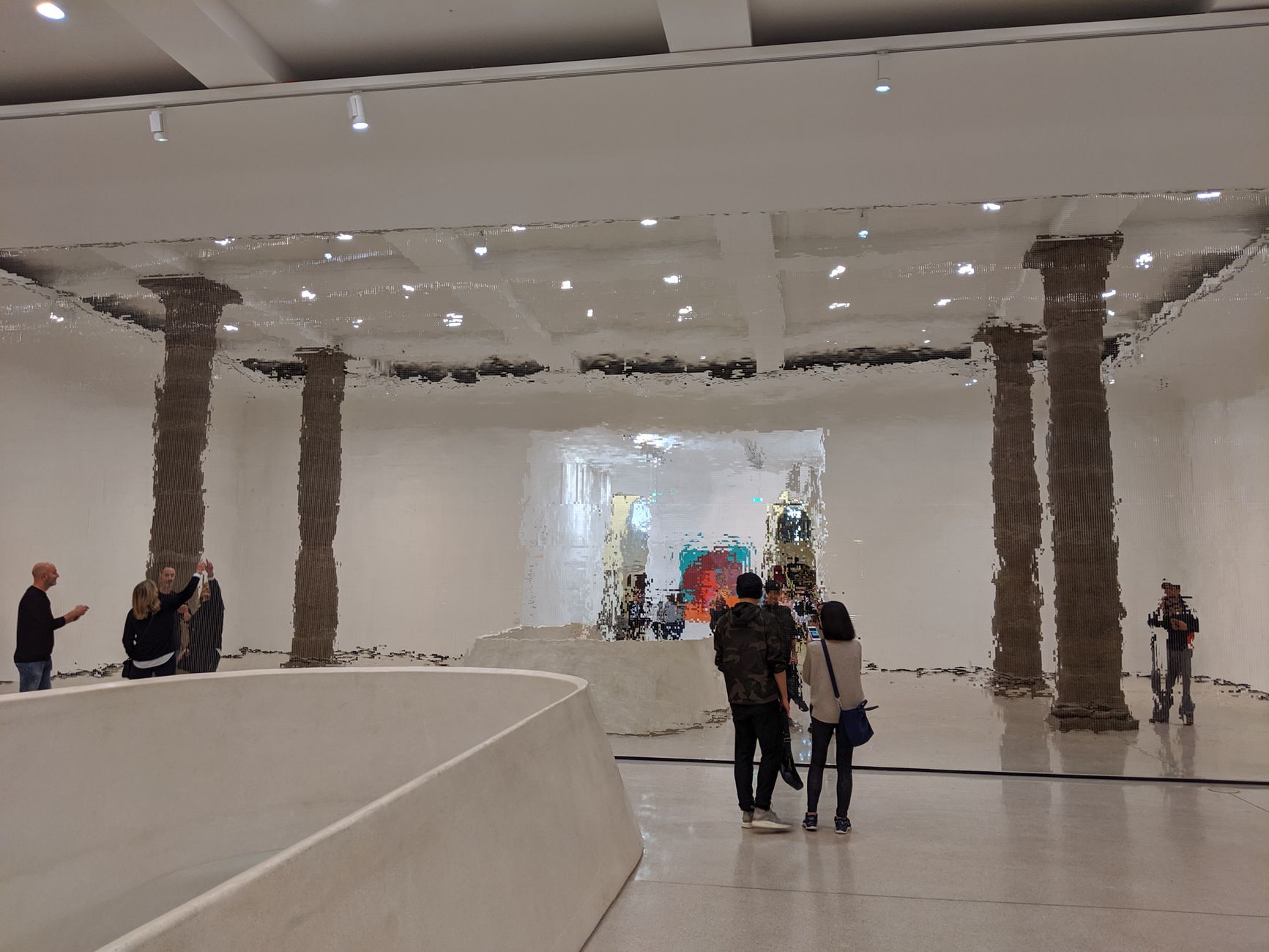
Abstract art installation with fragmented mirrors and neon lights in a Berlin gallery
Fragmentation as decoration: when radical aesthetics are absorbed into the gallery system, their political charge is neutralized.

The Performance of Inclusion

Berlin galleries have become experts at performing inclusion. Every Pride month brings a flurry of group shows featuring queer artists, complete with press releases that toss around words like “visibility” and “representation.” But visibility without structural change is a trap. It places the burden on individual artists to stand in for an entire community while leaving the power dynamics of the gallery system completely untouched. The same gallerists who curate these shows continue to represent overwhelmingly straight, cisgender artists. The same collectors who buy a queer photograph in June fill the rest of their portfolios with work that reinforces normative aesthetics.

This tokenism scales up to the institutional level. Major Berlin museums and kunsthalles have learned to program queer content strategically, often in ways that historicize and thus neutralize it. A retrospective of a queer artist who died decades ago is safe. A living artist whose work directly challenges the museum’s funding sources or board composition is not. The result is a landscape where queer art is visible but queer politics are absent. The radical potential of the work is converted into cultural capital for institutions that remain structurally unchanged.

The Economics of Exclusion

To understand why this happens, follow the money. Berlin’s gallery system isn’t a meritocracy of ideas; it’s a marketplace. Galleries depend on sales to private collectors, many of whom aren’t based in Berlin and whose tastes are shaped by international art fairs and auction houses. These collectors want work that signals sophistication and social awareness without challenging their position in the global economic order. A painting that hints at queer desire is acceptable. An installation that documents the displacement of queer communities by real estate speculation—speculation often bankrolled by the same class of collectors—is not.

The economics create a feedback loop. Galleries select artists whose work can sell. Artists, needing to survive, adapt their practices to what sells. The market defines what queer art looks like, and that definition is inevitably conservative. It favors the decorative over the disruptive, the individual over the collective, the ambiguous over the declarative. Queer artists who refuse this bargain find themselves pushed into off-spaces and DIY venues—spaces that are themselves under constant threat from the gentrification their work critiques.

Protest art installation with handwritten signs about queer visibility on a Berlin street
The street remains a site of unmediated queer expression, but its proximity to galleries is shrinking as the city’s cultural geography shifts.

Theoretical Refusal as Practice

What would it mean for a gallery to genuinely support queer art? It would require abandoning the pretense of neutrality and admitting that the white cube is not a blank slate but a political space. It would mean platforming work that implicates the gallery’s own economic foundations—work that asks uncomfortable questions about where the money comes from, who is excluded from the space, and what forms of life are rendered unlivable by the systems that sustain the art market.

This isn’t a call for better representation. Representation is a liberal trap that assumes the problem is one of visibility rather than power. The issue isn’t that queer artists are absent from Berlin’s galleries; they’re present, but on terms that neutralize their critique. The issue is that the gallery system itself is structured to absorb and commodify difference while leaving the underlying relations of capital, property, and normativity intact. A truly queer art space would be one that refuses the logic of the market, that prioritizes collective practice over individual authorship, and that understands aesthetics as inseparable from politics.

The Disappearing Off-Spaces

Berlin’s legendary off-spaces—the artist-run project rooms, the basement venues, the temporary squats turned exhibition halls—have historically provided a refuge from the market’s demands. These spaces allowed for experimentation and failure, for work that was too raw, too political, or too queer for the commercial circuit. But they’re disappearing. Rising rents, aggressive development, and the professionalization of the art world have made it nearly impossible for such spaces to survive. When they do persist, they’re often forced to adopt the language and practices of the institutions they once opposed: grant applications, corporate sponsorships, audience development strategies.

This institutionalization drains the radical potential from queer art spaces. They become another rung on the career ladder, a stepping stone to gallery representation rather than an alternative to it. The work produced in these spaces grows increasingly cautious, aware that it’s being watched by curators and collectors who might offer the next opportunity. The result is a queer art scene that performs marginality while aspiring to centrality, that speaks the language of resistance while practicing accommodation.

Beyond the Gallery: Queer Art as World-Making

If the gallery system is structurally incapable of supporting genuinely queer art, then the task isn’t to reform it but to build alternatives. These alternatives already exist in the cracks: the underground parties where art and activism merge, the mutual aid networks that sustain queer artists outside the market, the publishing projects that circulate ideas without needing gallery validation. These practices understand art not as a commodity but as a form of world-making, a way of creating the conditions for queer life in a city that is increasingly hostile to it.

This isn’t a romantic return to some mythical underground. The conditions that made Berlin’s 1990s queer scene possible—cheap rents, legal gray zones, a post-reunification vacuum of authority—are gone. But the impulse to create outside the market persists because it must. Queer art, at its most vital, is not a product but a practice of survival and solidarity. It happens in the spaces where people gather to care for each other, to mourn, to celebrate, to plot. The gallery can never contain this because the gallery’s function is to turn life into property. Queer life, by contrast, is a continuous refusal of property’s logic—a refusal to be owned, fixed, or sold.

FAQ

Why focus specifically on Berlin’s gallery scene rather than the art world generally?
Berlin occupies a unique position in the global art market. It has an outsized reputation for radicalism and experimentation, yet its commercial gallery sector is increasingly dominated by the same market forces that shape London, New York, and Hong Kong. This contradiction makes Berlin a particularly revealing case study. The city’s self-mythologizing as a queer haven masks the ways its institutions participate in the neutralization of queer politics.

Are there any Berlin galleries that do support genuinely radical queer art?
There are a handful of spaces that make genuine efforts, often operating on the precarious edge of financial viability. These tend to be smaller, artist-run initiatives that prioritize community accountability over market growth. However, their existence should not be taken as evidence that the system works. They survive despite the system, not because of it, and their precariousness is itself a symptom of the structural problem.

What can artists and audiences do to resist this dynamic?
The most meaningful resistance happens outside the gallery system: building alternative networks of support, creating spaces that are not dependent on sales or grants, and refusing the pressure to make work “market-ready.” For audiences, it means directing attention and resources away from institutions that perform inclusion without structural change and toward practices that prioritize collective liberation over individual career advancement. It also means developing a critical literacy that can distinguish between the appearance of queerness and the substance of queer politics.

Isn’t it better to have some queer visibility in galleries than none at all?
This question assumes that visibility is inherently good, but visibility on the market’s terms often does more harm than good. It creates the illusion of progress while foreclosing more radical possibilities. It allows institutions to claim inclusivity while continuing business as usual. The demand should not be for more queer art in galleries but for a fundamental transformation of how art is produced, circulated, and valued—a transformation that would make the current gallery system unrecognizable.

The White Cube’s Queer Shadow: How Berlin’s Art Market Erases Radical Voices

Berlin sells itself as a city of radical openness. The myth is sticky: cheap rents, legendary clubs, a gallery scene that supposedly welcomes every kind of experiment. But walk through the white cubes of Potsdamer Straße or the polished concrete of the Boros Collection, and you’ll notice a particular absence. Where are the queer artists who don’t fit the market’s current appetite? Where are the works that refuse to be palatable, that insist on the messy, the angry, the unresolved? The answer is structural. Berlin’s gallery system doesn’t just overlook queer radicalism—it actively filters it out, replacing it with a version of queerness that is safe, sellable, and stripped of its political teeth.

The Gentrification of Queer Aesthetics

Berlin’s art market has perfected a trick: it absorbs the visual language of queer subcultures while discarding the bodies and politics that created them. You can see it in the slick photographs of gender ambiguity that hang in Mitte galleries, priced for collectors who wouldn’t set foot in a queer squat. The aesthetics of drag, leather, and genderfuck have been laundered through a process I call curatorial gentrification. The imagery remains, but the context—the mutual aid networks, the anti-capitalist fury, the refusal of respectability—is carefully bleached out.

This isn’t accidental. Galleries depend on a collector class that demands investment-grade work. Queer art that openly critiques property, family, or the state is a liability. So curators select for what I term the acceptable transgression: work that flirts with deviance but ultimately affirms the viewer’s sophistication. A nude portrait of a non-binary body is fine, as long as it’s beautifully lit and doesn’t mention the housing crisis. A performance about cruising is welcome, provided it happens inside the gallery walls and not in the public park where actual cruising is being policed out of existence.

Abstract neon lights in a dark urban setting, symbolizing the underground queer spaces being erased by gentrification

The Economics of Invisibility

To understand why radical queer voices are missing, you have to follow the money. Berlin’s gallery system runs on a paradox: it markets the city’s reputation for edgy, underground culture while depending on the very gentrification that destroys that culture. Rents in formerly queer neighborhoods like Schöneberg and Kreuzberg have skyrocketed. The artists who once lived and worked there have been pushed to the periphery—or out of the city entirely. The galleries that remain curate a nostalgic, sanitized version of that history, selling it back to the people who can afford it.

This economic filter doesn’t just affect who can afford studio space. It shapes what kind of art gets made and shown. Artists who rely on gallery representation learn, consciously or not, to self-censor. A proposal that critiques a major collector’s real estate holdings won’t get funded. A performance that calls out a museum board member’s political donations won’t get staged. The result is a feedback loop: the market selects for work that flatters its own power structure, and that work becomes the only visible “queer art” in the city.

Meanwhile, the truly disruptive work happens elsewhere. It happens in autonomous spaces, in temporary squats, in online collectives that refuse the gallery model entirely. But these spaces are under constant threat of eviction and police harassment. The city that brands itself as a queer haven is, in practice, hostile to queer art that doesn’t pay rent.

The Myth of the “Post-Identity” Art World

Berlin galleries love to declare that we’ve moved beyond identity politics. The argument goes: we’re all individuals now, fluid and post-category, so why fixate on queer marginalization? This is a luxury belief held by those who’ve never been denied a show because their work was “too gay,” “too political,” or “too difficult for collectors.” The post-identity claim is itself a form of gatekeeping. It allows curators to dismiss explicitly queer work as passé while continuing to platform artists whose identities are safely unmarked—which is to say, artists who conform to a cis-heteronormative standard without having to name it.

What’s erased in this framing is the material reality of queer artists who don’t pass. Trans artists, artists of color, disabled artists, artists who work in collective or ephemeral modes—these practitioners face a gauntlet of barriers before they ever reach a gallery wall. The funding structures, the residency applications, the studio visits, the critical discourse: all of it is calibrated to a specific kind of artist-subject, one who can perform individuality without threatening the system that sustains it.

Empty gallery space with harsh lighting, representing the exclusionary nature of Berlin's art institutions

The Violence of Inclusion

When queer artists do get shown, it’s often under terms that neutralize their work. I’ve watched galleries stage “queer group shows” that carefully excise any mention of capitalism, policing, or housing struggles. The curatorial frame becomes a containment strategy: “Look at these diverse identities! Aren’t we progressive?” The work is celebrated for its representation while its critique is ignored. This is inclusion as violence—a gesture that pretends to open doors while demanding that you leave your politics at the threshold.

Consider the phenomenon of the “queer biennial” or the “pride month exhibition.” These events tokenize queer artists, extracting their labor and biographies for institutional credibility, then discarding them when the calendar flips. The artists are expected to be grateful for the exposure, even as their work is stripped of context and their communities see no material benefit. The gallery’s reputation gets a queer gloss; the artist gets a line on their CV and a return to precarity.

This is not inclusion. This is extraction. And it’s a pattern that repeats across Berlin’s commercial and institutional spaces, from small project rooms to major museums. The city’s art world has learned to metabolize queerness without ever having to confront the systems that make queer lives unlivable.

Refusing the Gaze: Strategies of Withdrawal

In response, a growing number of queer artists are refusing to participate. They’re withdrawing from the gallery system entirely, building alternative networks of production and distribution that don’t depend on market validation. These networks operate on principles of mutual aid, collective ownership, and direct action. They’re not interested in being “discovered” or “platformed.” They’re interested in survival, community, and art that serves a purpose beyond accumulation.

This refusal is not a retreat. It’s a strategic repositioning. By stepping outside the gallery system, these artists expose its limitations and its violence. They demonstrate that art can exist without the market, without the white cube, without the collector class. They reclaim the radical roots of queer cultural production—roots that were never about selling objects, but about building worlds.

The question Berlin’s art world must answer is not how to include these voices, but why it has made inclusion impossible. Until the economic and political structures of the art market are dismantled, any gesture toward “diversity” will remain a lie. The white cube will stay white, no matter how many rainbow flags it flies.

A solitary figure in a dimly lit space, evoking the isolation of queer artists outside mainstream galleries

Frequently Asked Questions

Why does Berlin’s art scene claim to be inclusive while excluding queer artists?

Berlin’s art market profits from a reputation of radical openness, but its economic structure depends on wealthy collectors and real estate speculation. Truly radical queer art often critiques these systems, making it a liability. Galleries opt for a sanitized, market-friendly version of queerness that doesn’t threaten their bottom line.

What can queer artists do to resist this marginalization?

Many are building alternative networks outside the gallery system—collectives, autonomous spaces, and digital platforms that prioritize community over commerce. By refusing to seek validation from the market, they reclaim art as a tool for survival and political action rather than a commodity.

How does gentrification specifically affect queer art spaces in Berlin?

Rising rents in historically queer neighborhoods like Schöneberg and Kreuzberg have displaced artists and DIY venues. The galleries that remain often commodify the area’s queer history while contributing to the economic pressures that erase living queer communities. This creates a feedback loop where only market-friendly queer art survives.

Is there any hope for change within Berlin’s gallery system?

Change would require a fundamental restructuring of how art is funded, exhibited, and valued—moving away from speculative investment and toward community accountability. Until then, the system will continue to marginalize voices that challenge its foundations, no matter how many diversity statements it issues.