Monthly Archives: June 2026

The White Cube’s Quiet Violence: How Berlin’s Galleries Keep Queer Bodies Out

The Invitation You Never Got

Berlin sells itself as a city of radical openness. The techno beats promise liberation, the crumbling facades whisper that anything goes. But step into the commercial gallery circuit—those pristine white rooms clustered around Potsdamer Strasse and Auguststrasse—and the air changes. The walls contract. The bodies on display become strangely uniform. Queerness, when it appears at all, arrives pre-sanitized, safely abstracted into geometric pastels or academic text pieces that wouldn’t startle a collector’s dachshund. The city that mythologizes its sexual underground has perfected a gallery system that quietly, methodically, pushes queer artists to the margins.

I’ve watched this machinery operate for over a decade. Not through dramatic rejections or overt bigotry—Berlin galleries are far too sophisticated for that—but through a thousand small exclusions. The studio visit that never gets scheduled. The group show where your work hangs next to the fire exit. The curator who loves your “energy” but can’t quite place you in their program. This isn’t censorship; it’s something more insidious. It’s a filtration system designed to let certain bodies pass while trapping others in a permanent state of almost-visible.

The Architecture of Exclusion

Walk into any mid-tier Berlin gallery during Gallery Weekend. Observe the bodies that occupy the center of the room—the ones standing confidently beside their large-scale installations, shaking hands with collectors in Rimowa sneakers. Now observe the periphery. That’s where you’ll find the queer artists, if they’re present at all. The spatial politics of the white cube have always been about power, but in Berlin they’ve evolved into something uniquely pernicious: a system that performs inclusivity while maintaining rigid hierarchies of value.

The gallery floor plan itself becomes a diagram of marginalization. Center spaces go to work that can be described as “rigorous,” “intellectually demanding,” “formally innovative”—code words that almost always attach to artists who move through the world with a certain unmarked ease. Queer work, particularly when it engages the body explicitly, gets shunted to project rooms, back offices, the video screening corner with two folding chairs. The message is clear: your desires are welcome here, but only as a sideshow.

The Abstraction Alibi

Berlin galleries have mastered a particular rhetorical move I’ve come to call the abstraction alibi. When queer content does make it into a primary exhibition space, it must arrive disguised. A trans artist’s exploration of embodiment becomes “a meditation on form and transformation.” A lesbian photographer’s intimate domestic scenes get reframed as “investigations of private versus public space.” The specific, messy, desiring body is translated into universal themes that won’t make anyone’s spouse uncomfortable at the opening dinner.

This translation work is exhausting. It demands that queer artists become fluent in a language that was designed to erase them—the neutered dialect of the press release, the wall text that mentions “identity” exactly once and then pivots quickly to “materiality.” I’ve sat in meetings where gallerists literally edited the word “queer” out of an artist statement, replacing it with “non-normative.” The violence here isn’t physical, but it lands in the body all the same. It teaches you that your lived experience is unprofessional, that your anger is unmarketable, that your joy is too specific to sell.

Empty white gallery space with polished concrete floors and track lighting, embodying the sterile environment that often excludes queer narratives
The white cube’s promise of neutrality often masks a quiet hostility toward bodies that refuse to abstract themselves.

The Collector’s Comfort Zone

Follow the money and the picture sharpens. Berlin’s gallery scene runs on a collector class that skews heavily toward straight, white, male, and German—or international buyers who share those coordinates. These collectors didn’t build their fortunes by challenging power structures; they built them by fitting neatly inside them. When they purchase art, they’re purchasing a reflection of their own sophistication. Queer art that refuses to perform its trauma in acceptable ways, that insists on desire as something unruly and specific rather than theoretical, makes these buyers uncomfortable. Not in the productive way that good art should unsettle, but in a way that threatens the transaction itself.

Galleries respond accordingly. They become gatekeepers who pre-filter what reaches the collector’s eye. An artist friend of mine—a brilliant painter whose work grapples with cruising culture and public sex—was told by a prominent Berlin gallerist that her paintings were “too narrative” for their program. Translation: too explicitly gay. The same gallery represents multiple male painters whose abstract grids are praised for their “queer sensibility,” a phrase that means nothing and everything. It means the artist is safely gay, the kind of gay that enhances a dinner party rather than complicating it.

The Performance of Inclusion

Berlin galleries have learned to perform inclusion with alarming skill. Pride month brings a flurry of group shows featuring queer artists—often the same handful of acceptable names, rotated through spaces like a traveling circus. These exhibitions are heavy on text, light on risk. They feature work that explains queerness rather than enacting it, that translates difference into something digestible for a straight audience. The wall texts do the heavy lifting, assuring viewers that they are participating in something important while the art itself remains safely within the bounds of good taste.

This performative inclusion serves multiple functions. It lets galleries claim progressive credentials without altering their core roster. It provides a pressure valve for queer artists who might otherwise organize or agitate. And it creates a secondary market tier where queer work circulates at lower price points, never quite breaking into the primary market that determines career-making value. The system absorbs dissent by offering just enough visibility to maintain hope, while structurally ensuring that hope rarely materializes into sustained institutional support.

The Body Problem

At the root of this marginalization is a profound discomfort with the queer body itself—not the idea of the queer body, which Berlin galleries love to theorize, but the actual flesh, the actual desires, the actual mess of living outside heteronormative structures. Galleries are comfortable with queer abstraction because abstraction doesn’t sweat, doesn’t fuck, doesn’t bleed. It doesn’t remind collectors that their world is built on the exclusion of certain bodies. But let a queer artist present work that is too embodied, too specific, too angry or too joyful, and the machinery of taste suddenly discovers it has other priorities.

Consider the fate of artists working with explicit queer sexuality. They are routinely shunted toward project spaces, off-spaces, temporary venues that exist outside the market proper. These spaces are vital—they keep queer art alive in Berlin—but they also function as a containment strategy. The commercial gallery system can point to them and say, “Look, queer art is thriving!” while ensuring it never contaminates the primary market. The project space becomes a reservation, a place where queer artists are free to be as radical as they like, so long as they don’t expect to sell work or build sustainable careers.

A person standing alone in a vast, empty gallery room with white walls and minimal lighting, symbolizing isolation within institutional art spaces
The gallery’s emptiness mirrors the isolation queer artists often feel within spaces that claim to welcome them.

The Economics of Invisibility

Let’s talk numbers, because the art world hates when you do. Berlin’s commercial gallery sector is dominated by a handful of mid-to-large galleries that control access to major fairs, institutional partnerships, and serious collector networks. A review of artist rosters across these spaces reveals a pattern: queer artists are present, but almost exclusively in supporting roles. They appear in group shows, they participate in curated programs, they occasionally get a project room. But when it comes to solo exhibitions in main spaces, representation on international fair booths, or placement in museum collections through gallery advocacy, the numbers drop precipitously.

This isn’t a pipeline problem. Berlin has one of the largest concentrations of queer artists in Europe. The city’s reputation for sexual freedom, combined with relatively affordable studio rents, has drawn generations of LGBTQ+ creators. The raw material is here. The talent is here. What’s missing is the institutional will to convert that presence into power. Galleries that pride themselves on discovering “emerging” artists somehow never discover the ones who are too visibly queer. The discovery narrative itself is a myth that obscures how carefully galleries curate not just their exhibitions but their entire artist stables to reflect collector comfort.

The Gentrification of Queer Space

Berlin’s queer nightlife and underground culture have been systematically mined for aesthetic content while the actual communities that produced them are pushed out. Galleries host openings with drag performers, then represent zero drag artists. They mount exhibitions about club culture, then refuse to show work that critiques the clubs’ increasing hostility toward trans bodies. They celebrate the “energy” of queer Berlin while contributing to the economic pressures that make it impossible for queer artists to remain in the city.

This extraction logic is familiar from other contexts—the way white institutions mine Black culture while excluding Black people, the way galleries in historically immigrant neighborhoods accelerate displacement. But it has a specific texture in Berlin’s queer context. The city’s self-mythology depends on the idea of sexual freedom as a birthright, a natural resource that bubbles up from the streets. Galleries can tap that resource without ever acknowledging the labor that produces it, the bodies that sustain it, the artists who make it visible. They take the aura and leave the people.

Institutional Complicity

The problem extends beyond commercial galleries to the institutions that validate them. Berlin’s major museums and kunsthalles draw heavily from the same artist pool, reinforcing the same hierarchies. When a queer artist does break through to institutional recognition, it’s often through a lens of trauma or tragedy—the AIDS retrospective, the archive of loss, the memorial. Queer joy, queer thriving, queer futures remain suspiciously absent from institutional programming. The message is that queer lives are worthy of attention only when they are suffering or dead.

This isn’t accidental. It reflects a deep institutional anxiety about what it would mean to truly center queer perspectives—not as a special topic, not as a marginalized voice to be amplified, but as a fundamental way of seeing and making that challenges the very premises these institutions are built on. Queer art at its best doesn’t ask for a seat at the table; it asks why the table exists, who built it, and what bodies had to be excluded for it to stand. Those are questions that no museum board or gallery owner wants to answer publicly.
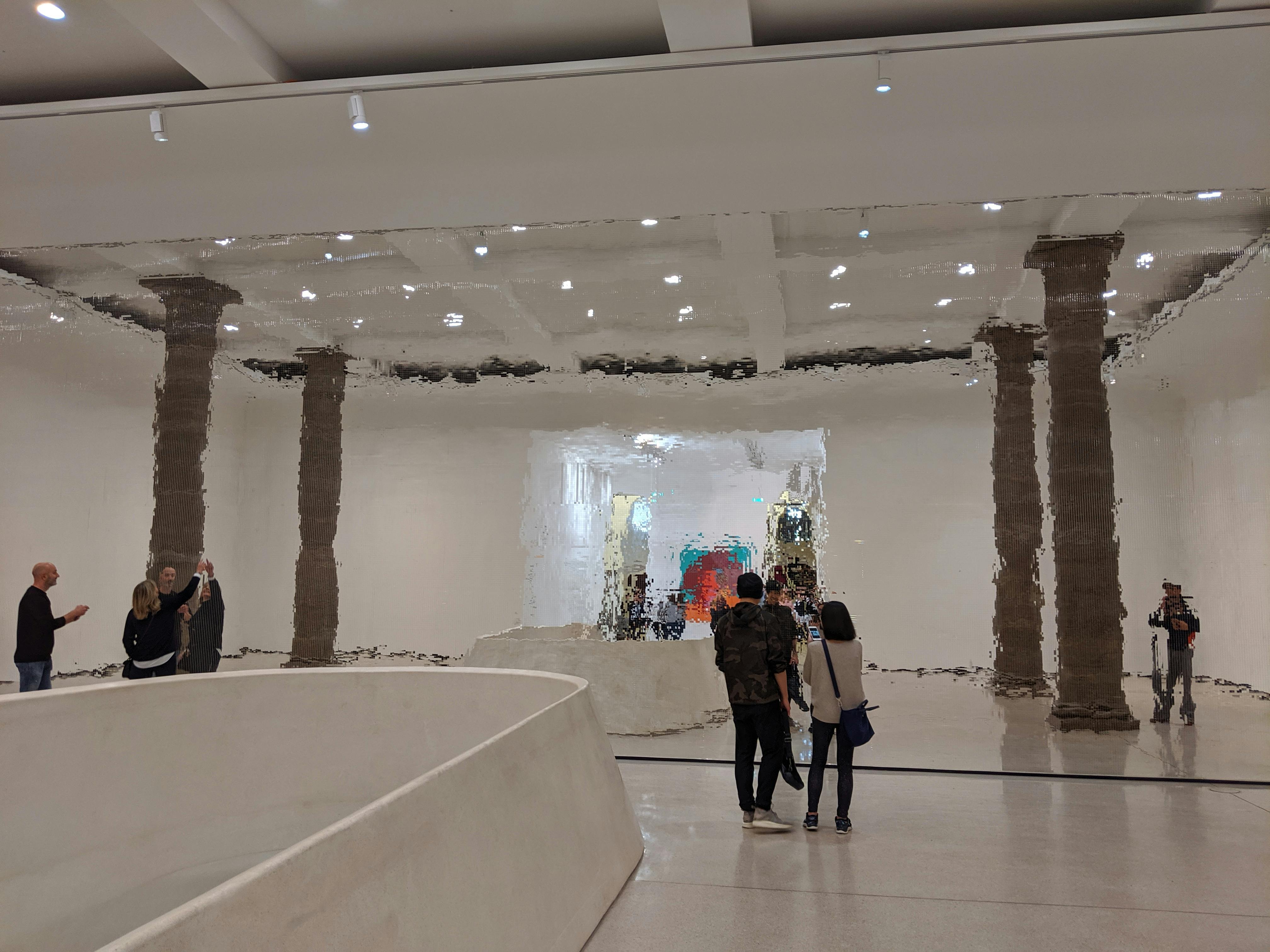
A dimly lit gallery corner with a single artwork partially visible, representing the marginal placement of queer art in mainstream spaces
Queer work is often relegated to the periphery—both spatially and conceptually—within Berlin’s gallery ecosystem.

Resistance Outside the White Cube

If the gallery system is structurally hostile to queer voices, then the response cannot be simply to demand better representation within it. Representation without structural change is just decoration. The queer artists I know who are doing the most vital work in Berlin have largely stopped waiting for gallery validation. They’re building alternative networks—artist-run spaces, underground exhibitions in former squats, publishing projects that bypass the gatekeepers entirely. These initiatives don’t ask permission. They don’t translate themselves for collector comfort. They create their own contexts, their own audiences, their own economies of attention and care.

This isn’t a retreat; it’s a strategic refusal. By opting out of the gallery system’s promise of legitimacy, these artists are exposing that promise as hollow. They’re demonstrating that queer art can thrive without the white cube’s benediction, that audiences exist who want the real thing rather than the sanitized version. The gallery system’s power depends on the belief that it’s the only path to a sustainable career. When artists build viable alternatives, that belief crumbles.

The Future Is Not in the Gallery

I’m not optimistic about reform. The structures I’ve described are not bugs in the system; they are the system. Berlin’s commercial galleries exist to commodify art, and commodification requires standardization. Queerness, in its deepest sense, resists standardization. It’s not a fixed identity category but a continuous practice of unsettling norms, of refusing to be made into a stable product. The gallery system can only handle queerness by converting it into something else—a style, a theme, a market niche. That conversion is a form of death.

The future of queer art in Berlin lies elsewhere. It lies in the spaces that don’t show up on Gallery Weekend maps, the gatherings that aren’t listed in art magazines, the practices that refuse to separate art from life. It lies with artists who understand that visibility within a hostile system is not liberation—it’s assimilation. The task now is not to make queer art more palatable to galleries, but to make galleries irrelevant to queer art. That’s a long project, but it’s already underway. The white cube’s walls are cracking, and what’s seeping through is far more alive than anything hanging inside.

Frequently Asked Questions

Why does Berlin have a reputation for queer-friendliness if its galleries are so exclusionary?

Berlin’s queer reputation is built on its nightlife, its activist history, and its general culture of tolerance—not on its art market. The city genuinely offers more freedom for queer individuals in daily life than many other places. But the commercial gallery system operates by different rules, driven by collector preferences and market logic rather than by the city’s street-level culture. The two Berlins coexist without really touching. Tourists and newcomers often confuse the city’s social permissiveness with institutional support, but they’re not the same thing.

Are there any Berlin galleries that genuinely support queer artists?

A few smaller galleries and project spaces do meaningful work, but they operate at the margins of the market with limited resources. The structural problem remains: galleries that can actually build careers—those with fair access, institutional connections, and serious collector bases—overwhelmingly favor artists whose queerness is either abstracted or invisible. Individual exceptions don’t disprove the pattern; they often serve to legitimize it by allowing the system to point to token successes.

What can queer artists do to navigate this system?

The most strategic response is to stop treating gallery representation as the ultimate goal. Build alternative networks, develop audiences outside the collector class, and create work that doesn’t depend on institutional validation. Some artists successfully play the gallery game by strategically modulating their visibility, but that comes at a psychological cost and often requires diluting the very queerness that makes the work urgent. The healthier long-term strategy is collective: building infrastructure that doesn’t replicate the exclusions of the existing system.

Isn’t this just how the art world works for everyone who isn’t a straight white man?

There are overlaps with other forms of marginalization—artists of color, disabled artists, and working-class artists face similar barriers. But queer marginalization has specific mechanisms, particularly around the body and desire. Galleries can more easily incorporate abstract identity categories than explicit sexuality or gender nonconformity that disturbs the viewing experience. The art world’s discomfort with actual queer bodies, as opposed to queer theory, is a distinct phenomenon worth naming and analyzing on its own terms.


The White Cube’s Quiet Violence: How Berlin’s Galleries Keep Queer Art at the Margins

The Architecture of Exclusion

Walk into a big Mitte gallery on a Thursday night. You know the scene: black-clad collectors, curators in designer glasses, a handful of artists who already hold the keys to the kingdom. The wine is organic, the lighting is flawless, the walls are so white they practically hum. And somewhere, in a back room or not invited at all, are the queer artists whose work built the cultural capital this city now sells to tourists. The white cube doesn’t just show art—it polices bodies. It decides which ones get to be inside.

Berlin markets itself as a paradise of sexual freedom and artistic risk. The tourism board can’t get enough of the techno-tolerance slogans. But the commercial gallery system runs on a different engine. It rewards work that hangs clean, prices easy, and doesn’t make a collector squirm over their canapés. Queer art—the kind that insists on the mess of actual life, on desire that hasn’t been scrubbed, on anger that isn’t safely abstracted—gets pushed into project spaces, one-night performances, the shaky edges of the scene. The center holds. The center is straight.

Empty white gallery space with polished concrete floor and track lighting, symbolizing institutional sterility

The Gentrification of Dissent

Berlin’s gallery map didn’t always look like this. In the ’90s and early 2000s, cheap rents and legal gray zones made room for something genuinely feral. Queer artists ran squats that doubled as venues. Performance nights in Kreuzberg basements blurred the line between art and direct action. The work was confrontational, often pornographic, sometimes illegal, and it didn’t care about selling. It was about presence, not product.

Then the money arrived. International galleries opened satellites. Rents shot up. The squats got evicted or went legit. What survived was a version of queer art you could hang safely on a wall: abstract photos of gender-nonconforming bodies, tasteful neon signs reading “Queer Love Forever,” paintings that gesture at transgression without ever naming it. The market learned to swallow dissent and spit it back as decoration. That’s not inclusion. That’s digestion.

The mechanism is quiet. Galleries don’t post a sign saying “no queers.” They simply apply criteria that queer practices often can’t satisfy. They want consistency—a recognizable brand. But queer experience is often discontinuous, fractured by violence, migration, medicalization, the constant renegotiation of self. They want professionalism—polished CVs, international residencies, fluent art-speak. But queer artists get locked out of those networks because they don’t pass the class, gender, or respectability filters that guard the doors. The gallery doesn’t say “no queers.” It says “no mess.” The result is identical.

The Performance Trap

When queer work does slip into Berlin’s commercial galleries, it’s usually through the performance program—temporary, fleeting, and conveniently impossible to collect. A trans artist gets invited to do a one-night piece in the basement while the main floor holds minimalist paintings by a straight white guy. The performance generates buzz, signals the gallery’s progressive credentials, and leaves no trace. No object enters the market. No value builds for the artist. The institution extracts queer energy, converts it into cultural capital, and the artist stays broke.

This isn’t an accident. Performance is easier to contain. It happens at a set time, in a controlled space, and then it’s done. The gallery doesn’t have to commit to representing the artist, doesn’t have to sell their work to collectors who might flinch at content that’s too explicitly political or sexual. The queer body becomes a spectacle, not a stakeholder. The artist is left with documentation—a few photos, maybe a video—that will never fetch the prices of painting or sculpture. The hierarchy of mediums is also a hierarchy of bodies.

Dimly lit performance space with a single spotlight on an empty stage, evoking the temporary visibility given to queer artists

Collectors and the Fear of Contagion

Let’s talk about collectors. The Berlin gallery system runs on them—private buyers, corporate funds, the odd museum acquisition budget. Collectors buy what they want to live with. A big abstract canvas in muted tones fits above the sofa. A video installation about chemsex does not. A bronze torso fragment reads as classical. A resin-cast fetish object reads as deviant. The collector’s home is a space of comfort and status, and queer art that refuses to be decorative threatens that comfort.

But the problem cuts deeper than interior design. Collectors are also investors. They need to believe the work will appreciate, that institutions will validate it, that it will hold its place in the canon. The canon, despite decades of critique, remains overwhelmingly straight, white, and male. A collector betting on a young queer artist is taking a risk not just on the work but on the whole apparatus of art-historical legitimacy. Most won’t do it. The ones who do often demand the work be “universal”—code for detaching it from the specificities of queer life that give it urgency. They want the aesthetics of queerness without the politics. The glow without the heat.

The Myth of the Berlin Exception

Berlin’s self-image as a queer paradise makes this marginalization harder to spot and harder to fight. In London or New York, the exclusion is more blunt—fewer queer artists shown, fewer queer narratives in major institutions, less pretense about it. Berlin wraps its exclusion in a rainbow flag. The city’s mythology says: we are already free, already open, already past these provincial battles. So when a queer artist points out they can’t get gallery representation, the response is often disbelief. “But Berlin is so queer!” The myth silences the reality.

This myth serves the market. It lets galleries claim progressive values without changing their rosters. It lets collectors feel edgy for attending a performance while their purchases stay safely conservative. It lets the city brand itself as a queer destination while queer artists share crumbling studios in Lichtenberg because they’ve been priced out of the neighborhoods their predecessors made desirable. The myth is a smokescreen. Behind it, the machinery of exclusion hums along.

What Gets Shown, What Gets Sold

Look at the program of any major Berlin gallery during Gallery Weekend. Count the solo shows by artists who are openly queer and whose work tackles queer experience head-on—not as a subtle undertone, not as a biographical footnote, but as the central subject. The numbers are grim. Now cross-reference with gender. Queer women and non-binary artists are even more absent. The few queer artists who do land gallery representation are overwhelmingly white, overwhelmingly male, and overwhelmingly working in abstraction or conceptual modes that distance the work from the body. The queer body, especially the trans body, the disabled body, the racialized body, remains largely unrepresentable in the commercial sphere.

This isn’t about individual galleries being “bad.” It’s about a system that selects for certain kinds of work and certain kinds of artists. The system is built on scarcity, prestige, and the promise of financial return. Queer art that insists on abundance, on community, on anti-capitalist critique, is structurally incompatible with that system. The gallery can’t fix this by adding a queer artist to its roster. The problem is the roster itself—the logic of the roster, the logic of the solo show, the logic of the market. Inclusion isn’t the answer when the structure is the violence.

Gallery visitors in dark clothing standing before a large abstract painting, representing the homogeneity of art audiences

The Alternative Scene and Its Limits

Berlin does have a lively alternative art scene. Project spaces, artist-run initiatives, queer collectives, and underground venues hang on despite gentrification. Places like alpha nova & galerie futura, Somos, and various temporary spots in Wedding and Neukölln keep showing work that commercial galleries won’t touch. These spaces are vital. They keep queer art breathing in the city. But they operate on a different scale—tiny budgets, volunteer labor, audiences of friends and community members. They don’t feed into the market. They don’t build careers in the traditional sense. They exist parallel to the art world, not inside it.

This parallel existence creates a false sense of pluralism. The commercial sector can gesture at the alternative scene and say, “See? Queer art is thriving in Berlin.” But thriving on what terms? Precarity, exhaustion, and constant fundraising aren’t thriving. The alternative scene is a direct response to exclusion, not proof that exclusion doesn’t exist. It’s a survival tactic, not a fix. And the commercial sector benefits from this arrangement—it gets to offload the messy, unprofitable work onto underfunded spaces while keeping its own image spotless.

Theoretical Framing: The Body as Disruption

To understand why this matters, we need to think about what queer art actually does. Queer art, at its sharpest, isn’t about representation—it’s about disruption. It interrupts the smooth functioning of meaning. It makes the body present in ways that unsettle the viewer’s assumptions about gender, desire, and power. This is why the white cube fears it. The white cube is designed to neutralize context, to make any object appear autonomous and purely aesthetic. But queer art often refuses autonomy. It insists on its embeddedness in social relations, in histories of violence, in specific communities. It won’t be neutralized. So the white cube excludes it.

This isn’t a new argument. Scholars like José Esteban Muñoz and Jack Halberstam have written extensively about the incompatibility of queer aesthetics with mainstream institutions. Muñoz’s concept of “disidentification” describes how queer artists navigate dominant culture by recycling and subverting its forms. But disidentification requires a stage. When the stage is denied, the strategy collapses. Halberstam’s “queer art of failure” celebrates the refusal of success on capitalism’s terms. But that refusal is romantic only when it’s chosen. For most queer artists in Berlin, failure isn’t a choice—it’s a structural condition. The gallery system imposes failure and then aestheticizes it as edgy.

Language and the Policing of Discourse

Even the language used to discuss queer art in Berlin has been co-opted. Terms like “queer,” “non-binary,” and “transgressive” now appear in press releases for artists whose work has no meaningful connection to queer experience. The words become branding tools, emptied of political content. A gallery can describe a heterosexual painter’s abstract compositions as “queering the picture plane” and feel progressive. This linguistic theft makes it harder for actually queer artists to articulate what their work does. The vocabulary of resistance becomes the vocabulary of marketing. The market eats language too.

When queer artists try to push back, they’re often accused of gatekeeping or essentialism. “Who’s to say what’s really queer?” The question is disingenuous. It’s not about policing identities—it’s about recognizing that queer art emerges from queer experience, from the material realities of living outside normative gender and sexuality. When those realities are absent from the work, when the work is just a formal gesture dressed in queer terminology, something has been lost. The gallery system encourages this loss because it makes the work safer. It prefers the signifier without the signified. It wants the word without the body.

What Would Real Change Look Like?

Real change wouldn’t look like more queer artists in the same galleries. It would look like a different kind of gallery altogether. Spaces that don’t demand consistency but embrace discontinuity. Spaces that don’t prioritize objects over relationships. Spaces that pay artists for their labor regardless of sales. Spaces that are accountable to communities, not just collectors. These spaces exist in Berlin, but they’re not called galleries—they’re called collectives, archives, community centers. They’re not recognized by the art market because they don’t participate in its logic. Recognition by the market isn’t the goal. The goal is to build something that doesn’t need that recognition to sustain itself.

This is a defiant position. It refuses the narrative of progress that says queer artists just need to wait their turn, that the arc of the art world bends toward inclusion. The arc doesn’t bend. It’s held in place by money, by habit, by the comfort of the powerful. Queer artists in Berlin need to stop asking for a seat at the table and start asking why the table exists, who built it, and who it’s crushing underneath. The white cube is not a neutral container. It’s a weapon. And sometimes the only ethical response to a weapon is to refuse to enter its range.

FAQ

Why are there so few openly queer artists in Berlin’s top galleries?
The commercial gallery system selects for work that is easily marketable, consistent in style, and comfortable for collectors. Queer art that engages directly with sexuality, politics, or lived experience often doesn’t meet these criteria. Galleries also favor artists with traditional career trajectories, which queer artists are frequently excluded from due to systemic barriers. The result is a filtering process that sidelines queer voices without explicit discrimination.

Doesn’t Berlin have a huge queer alternative scene? Isn’t that enough?
Berlin’s alternative spaces are essential, but they operate on precarious budgets and rarely lead to sustainable careers. They exist because of exclusion from the commercial sector, not as a sign of healthy pluralism. The commercial art world benefits from this arrangement by outsourcing queer work to underfunded spaces while maintaining its own progressive image. The alternative scene is a survival response, not a solution to structural marginalization.

What can queer artists do to break into the gallery system?
The question assumes that breaking into the system is the goal. Many queer artists are instead working to build alternative structures—collectives, archives, and community-based spaces—that don’t depend on market validation. For those who do seek gallery representation, the barriers are often insurmountable without compromising the content of their work. The more urgent task is to challenge the system’s criteria, not to conform to them.

How does Berlin’s self-image as a queer city affect this issue?
Berlin’s reputation as a queer paradise makes the exclusion harder to see and harder to criticize. The city’s mythology suggests that queer artists are already fully integrated, so complaints are dismissed as ungrateful or inaccurate. This myth serves the market by allowing galleries and collectors to feel progressive without making structural changes. It’s a form of pinkwashing that obscures the real power dynamics at play.

The Glass Cube: How Berlin’s Gallery Scene Polices Queer Aesthetics

Berlin sells itself as a city of open arms. The tourism blurbs practically sweat with promises of underground clubs, gender-neutral toilets, and a long history of sticking it to the mainstream. But walk into the white-cube galleries lining Potsdamer Strasse or the buffed-up project spaces in Mitte, and you’ve crossed into a parallel world. Here, the queer body is welcome only if it performs its difference in a register the market can digest. The scene doesn’t shut queer artists out—that would be too obvious, too easy to call out. Instead, it deploys a softer, more insidious trick: it marginalizes through embrace, swallowing queer aesthetics while draining them of their political charge.

I’ve watched this happen for over a decade. Radical practices get flattened into market-friendly gestures. Gallerists coo over a trans artist’s “raw vulnerability” but won’t fund work that names state violence. Curators ask queer artists of color to perform their trauma for a mostly white, mostly wealthy audience, then dismiss them as “too identity-focused” when they push back. This isn’t a glitch in a few bad institutions. It’s the operating system of a scene that treats queerness as seasoning, not a structural threat.

The Gentrification of Dissent

Berlin’s art market is addicted to the smell of the underground but can’t stomach its actual texture. Galleries want the thrill of queer nightlife—the darkrooms, the DIY zines, the squatted venues—but they want it cleaned up, framed, and priced by the square meter. What you get is a gentrification of dissent: the symbols of queer resistance ripped from their histories and sold back to us as luxury items.

Look at the arc of a typical Berlin gallery show. A young queer artist, maybe just out of the Städelschule or UdK, lands a solo debut. The press release hums with words like “subversive,” “fluid,” “embodied.” But the work itself is usually a safe echo of what the market already knows: abstract paintings with a whisper of eroticism, photographs of gender-nonconforming bodies bathed in soft light, installations that nod toward club culture without the sweat or the danger. The artist gets a moment of celebration—then is expected to churn out that same safe version of queerness forever. Step outside the lines, and the silence is deafening. The galleries that once courted them drift to the next fresh face, leaving the artist to wonder if they were ever really seen at all.

This isn’t about individual taste. It’s a structural filter. Berlin galleries lean on a collector base that’s mostly straight, white, and male. Those collectors might enjoy the frisson of a queer aesthetic, but they’re not about to bankroll work that interrogates their own power. A painting that hints at BDSM is edgy; a performance that takes apart the property relations of the art market is a liability. The scene rewards queer artists for being decorative and punishes them for being difficult.

Abstract painting with bold colors and fluid shapes
The kind of work that slips through Berlin’s gallery filters without a hitch: abstract, suggestive, never confrontational.

The Curatorial Gaze as Disciplinary Apparatus

If the market sets the economic terms, curators police the aesthetic ones. In Berlin’s institutional spaces—the biennials, the kunsthalles, the grant-funded project rooms—queer work gets slotted into thematic shows that neutralize its specificity. A trans artist’s video about medical gatekeeping sits next to a cis artist’s meditation on “the body” in general. A Black queer photographer’s series on ballroom culture is framed as a celebration of “diversity,” with zero mention of the structural racism ballroom was built to survive. The curatorial frame becomes a containment tactic, a way of saying: your anger is just one flavor in our multicultural buffet.

This isn’t inclusion. It’s a kind of epistemic violence. By flattening the political content of queer work into a universalized story of “identity” or “the body,” curators strip it of its ability to name specific systems of harm. A piece about the violence of the German state’s trans healthcare system becomes just another “exploration of the self.” A documentary on the gentrification of queer spaces in Kreuzberg becomes a nostalgic “love letter to Berlin.” The work is made safe for audiences who can consume it without ever feeling implicated.

The nastiest effect is internalized. Artists learn to pre-censor. They anticipate the curatorial gaze and tweak their proposals accordingly. They soften their language, universalize their references, and avoid naming their enemies. The result is a generation of queer artists trained to speak in code, to bury their politics inside formal experimentation, to make work that can pass. This isn’t artistic freedom. It’s survival under occupation.

The Economy of Queer Visibility

Visibility is a trap. The mainstream art world loves to pat itself on the back for how many queer artists it now shows, as if representation were the finish line. But visibility without power is just surveillance. When a gallery exhibits a queer artist, it’s not necessarily endorsing their vision; it’s extracting value from their identity. The artist’s name becomes a credential, a sign that the gallery is “inclusive,” while the actual conditions of production stay exactly the same. Queer artists are still paid less, collected less, and written about less seriously than their straight peers. They’re invited to the party but never asked to help plan it.

This dynamic cuts deepest for queer artists of color, trans artists, and those working outside the academic-gallery pipeline. Berlin’s art scene is overwhelmingly white, and its institutions are gatekept by a tight network of curators, critics, and collectors who share a common class background. A queer refugee artist might get tokenized for a group show on “migration,” but they won’t be offered a solo show at a major gallery. A trans sex worker’s performance might be excerpted for a biennial, but they won’t be invited to the board. The economy of visibility runs on a principle of extraction: take the most photogenic, least threatening bits of a community, and toss the rest.

Person standing in front of a colorful mural in an urban setting
Queer visibility in Berlin often means being a backdrop for someone else’s story.

The Myth of the Autonomous Scene

Some will push back: what about the independent spaces? The off-spaces, the artist-run initiatives, the queer collectives that operate outside the commercial circuit? They exist, and they matter. But they’re not autonomous. They’re locked in a parasitic relationship with the mainstream scene, which feeds on their energy and gives nothing back. A queer collective might run a brilliant program for two years, funded by volunteer labor and tiny grants. Then a major gallery poaches its most marketable members, or a curator lifts its aesthetic for a biennial without credit or compensation. The underground is treated as an R&D lab for the overground, a free source of innovation to be mined and abandoned.

This isn’t a new story. It’s the history of avant-gardes under capitalism. But Berlin’s version has a particular cruelty because the city markets itself as a haven for exactly this kind of experimentation. Artists move here believing they’ll find community and support; instead, they find a machine that consumes their ideas and spits them out. The myth of Berlin as a queer paradise is one of the scene’s most effective tools for attracting fresh talent to exploit.

Toward a Refusalist Practice

What would it mean to refuse this system? Not to reform it, not to demand a seat at the table, but to walk away from the table entirely. I’m not talking about a retreat into private expression. I’m talking about a practice that treats the gallery not as a destination but as a site of antagonism. Show the work, but refuse the press release. Accept the invitation, but use the opening to stage a teach-in on the gallery’s board members. Make the work so specific, so demanding, so unmarketable that it cannot be absorbed. Force the institution to either reject you outright—revealing its limits—or to accommodate you on your terms, which may be impossible.

This isn’t a strategy for career advancement. It’s a strategy for dignity. The Berlin gallery scene, as currently structured, will never be a home for queer art. It’s a landlord. And the only ethical relationship to a landlord, in a city where rents climb and communities get displaced, is to organize against them. Queer artists need to build structures of support that don’t depend on the market’s approval: cooperative studios, mutual aid networks, self-organized exhibitions, and critical publications that refuse the language of the press release. These already exist in embryonic form. They need to be defended, funded, and scaled.

Empty white gallery space with concrete floors and track lighting
The white cube is not a neutral container. It’s a disciplinary architecture that shapes what can be seen and how.

The International Alibi

Berlin galleries love to point to their international programs as proof of their progressive politics. They bring artists from the Global South, from post-Soviet states, from diasporic communities, and present them as evidence of a borderless vision. But this internationalism is often a form of alibi-making. It lets a gallery claim a global perspective while ignoring the queer communities in its own neighborhood. A gallery in Kreuzberg will fly in a queer artist from São Paulo but never work with the queer Turkish collective down the street. The international is a shield against the local, a way of dodging accountability to the people who actually live in the city.

This pattern isn’t accidental. It reflects the deep class logic of the art market. International artists come with a certain prestige, a certain distance, that makes them easier to commodify. Local queer artists, especially those from migrant or working-class backgrounds, are too close, too messy, too likely to demand something real. The gallery system prefers its queerness imported, sanitized, and ready for display.

FAQ

Why do Berlin galleries seem to show so many queer artists if they are marginalizing them?

Visibility is not the same as power. Galleries show queer artists because queerness has market value as an aesthetic category—it signals edginess, contemporaneity, and a certain cosmopolitan cool. But the work that gets shown is often the least politically threatening kind. Queer artists are welcome as decorators of the status quo, not as critics of it. The scene’s apparent openness is a management strategy, not a genuine embrace.

What can queer artists do to resist this dynamic?

Resistance begins with refusing to internalize the market’s demands. This means making work that is unapologetically specific, politically direct, and formally challenging—even if it costs you shows. It also means building alternative structures: artist-run spaces, mutual aid networks, and critical platforms that operate outside the commercial circuit. Collective action is more powerful than individual career moves. The goal is not to be included in a broken system but to build something else.

Are there any Berlin galleries that genuinely support radical queer work?

A few small, artist-run spaces and project rooms operate with integrity, but they are constantly under financial pressure and at risk of co-optation. The structural problem is that the art market as a whole is built on extraction. Even well-intentioned galleries must sell work to survive, and that means catering to collectors whose tastes are conservative. The solution is not to find a “good” gallery but to weaken the market’s hold on queer artistic production altogether.

Conclusion: The Refusal to Be Curated

Berlin’s gallery scene is not a neutral platform. It’s a sorting machine that separates queer aesthetics from queer politics, rewarding the former and punishing the latter. It turns artists into brands, communities into demographics, and resistance into lifestyle accessories. To be a queer artist in this city is to be constantly tempted by the promise of visibility, and constantly betrayed by its terms.

The answer is not to try harder to be understood. It’s to stop performing for an audience that will never see you as anything but a trend. It’s to make work that refuses to be curated, that insists on its own context, that names its enemies and demands its due. It’s to treat the gallery not as a home but as a contested site—a place to stage an argument, not to seek approval. The white cube can be a prison or a battleground. The choice is ours, but only if we stop pretending it was ever a sanctuary.

The White Cube’s Glass Closet: Berlin’s Gallery Scene and the Quiet Erasure of Queer Art

Empty white gallery space with polished concrete floor and stark lighting

Berlin wears its queerness like a vintage leather jacket—broken in, stylish, and endlessly photographed. The city sells itself as a sanctuary for sexual dissidents, a place where Christopher Isherwood’s ghosts still rattle through the U-Bahn and the Berghain door policy has hardened into a secular ritual of exclusion. But walk into the commercial gallery circuit—the white cubes along Potsdamer Straße, the repurposed industrial halls of Kreuzberg, the spotless storefronts in Charlottenburg—and that queerness thins to a whisper. It becomes a coded glance, a safely abstracted gesture. For all its self-congratulatory progressivism, Berlin’s gallery scene runs a quiet machine that pushes queer voices to the edges, or worse, swallows them into a market-friendly aesthetic that scrubs away their disruptive charge.

This isn’t about overt discrimination. No gallerist angling for a Frieze booth would admit to shutting out artists based on sexuality or gender identity. The mechanism is slicker than that: a structural hunger for work that can be universalized, that can speak to a hypothetical “everyone” without making the straight, cisgender collector squirm. Queer art that insists on its own specificity—that names desire outright, that traces the scars of state violence, that refuses to translate its codes for a mainstream crowd—gets quietly labeled unmarketable. Too niche. Too political. Too awkward to hang in the living rooms of the freshly arrived tech class.

The Universalism Trap

The reigning aesthetic ideology in Berlin’s commercial galleries is a bloodless universalism. Abstraction calls the shots. Big paintings that gesture toward nothing in particular, installations that poke at “materiality” and “space” without ever brushing against a body, conceptual pieces whose political commitments are so foggy they could mean anything. This is the stuff that fills the booths at Gallery Weekend Berlin, that lands the solo shows at the major venues, that ends up in the collections of the Sammlung Boros and the private foundations shaping the city’s canon.

When queer work does slip through, it’s usually framed in terms that drain its voltage. A photographer documenting Berlin’s underground sex clubs gets presented as an anthropological observer of “subcultures,” not as someone moving through the scenes they capture. A painter wrestling with trans embodiment is written about under the banners of “identity” and “transformation,” the critic sidestepping any language that might hint the artist’s own body is on the line. The work is made safe for consumption by cutting its tether to lived experience. It becomes a curiosity, a window onto an exotic world, rather than a shove against the viewer’s own position.

This universalism is a trap. It demands that queer artists either empty their work of specific content or accept a ghettoized slot in the “queer art” niche—a niche the major galleries treat as a charity checkbox, ticked once a season before they get back to the serious business of selling abstraction to investment bankers. The message hums underneath: your experience is only worth something if it can be made palatable to people who don’t share it.

Gallery opening crowd dressed in black, standing in clusters, ignoring the art on the walls

The Economics of Invisibility

Follow the money and the pattern gets hard to deny. Berlin’s gallery system is stratified in ways that mirror the city’s rapid gentrification. The top tier—the galleries with international reach, museum ties, and serious collector bases—represent vanishingly few openly queer artists. When they do, those artists tend to be either safely dead (the historical recuperation model) or working in modes that downplay explicit content. The mid-tier galleries, hungry for relevance but allergic to risk, occasionally throw together group shows around Pride month, assembling a roster of queer artists under a thematic umbrella that signals this is a special interest topic, not a fundamental axis of human experience.

The actual queer art scene—the work that’s messy, embodied, politically uncompromising—scrapes by in the cracks. It pops up in project spaces run on shoestring budgets, in artist-run initiatives that fold after two seasons, in one-night performances in borrowed basements. These spaces are vital, but they’re structurally blocked from accumulating the kind of cultural capital that translates into institutional recognition. The artists showing there stay “emerging” indefinitely, while their straight peers with UdK MFAs climb the ranks.

The collector class shoulders a big piece of this. Berlin’s collector base leans heavily toward straight, cisgender men who made their money in finance, tech, or inherited wealth. These collectors might hold liberal views—they almost certainly voted Grüne—but their purchasing patterns reveal a deep conservatism. They buy what their advisors tell them is a safe investment. They buy what will look respectable in their Zehlendorf villas. They buy art that won’t force them to explain anything uncomfortable to dinner guests. A painting of a fisting scene, no matter how formally accomplished, doesn’t make the cut.

The Gentrification of Queer Space

Berlin’s transformation from a cheap, chaotic post-reunification playground into a regulated, expensive metropolis has run parallel to the gallery system’s absorption and neutralization of queer aesthetics. The same forces that turned SO36 from a punk-anarchist queer stronghold into a neighborhood of organic bakeries and concept stores have turned queer art from a confrontational practice into a lifestyle accessory.

Look at the trajectory of the Schwules Museum. Founded in 1985 as a grassroots archive of gay history, it has steadily adopted the language and programming models of mainstream institutions. Its exhibitions have grown more polished, more academically framed, more palatable to the cultural funding bodies that keep it breathing. This isn’t a swipe at the museum’s survival strategy—institutionalization is often the price of staying alive—but it’s a symptom of a broader dynamic. Queer culture, to get funded, has to become respectable. And respectability, in the art world, means putting distance between yourself and the actual mess of queer life: the sex, the drugs, the grief, the rage.

The same pattern plays out in the commercial sphere. Galleries that once showed edgy queer work gradually “mature” into safer programming as their overhead swells and their collector base hardens. The artist who made their name with explicit performances is now showing abstract paintings. The collective that documented Berlin’s chemsex scene has disbanded, its members absorbed into solo careers making more salable objects. The market disciplines desire, channels it into forms that can be priced, shipped, and hung without controversy.

Lone figure standing in a dimly lit gallery corner, looking at a small, intimate artwork

Theoretical Refusal: Against Incorporation

What would it mean for queer art to refuse this machinery? Not to chase inclusion in the white cube on the white cube’s terms, but to demand that the terms themselves get rewritten? This is a theoretical question with urgent practical stakes. The history of queer art is a history of tactical refusal: refusal to be named, refusal to be categorized, refusal to be made legible to power. From the AIDS activist graphics of Gran Fury to the drag terrorism of the Cockettes, queer cultural production has often been at its most potent when it rejects the very frameworks that would domesticate it.

Berlin’s gallery system offers a seductive bargain: moderate your content, professionalize your practice, and we’ll give you access to our networks, our collectors, our art fair booths. Plenty of queer artists, worn down by precarity, take the deal. It’s hard to blame them. But the cumulative effect is a slow bleaching of the city’s cultural fabric. Each artist who sands down their edges to fit the market makes it easier for the next gallerist to say, “See? Queer art can be universal. Why can’t you be more like them?”

The alternative isn’t purity—there’s no outside to the market, no pristine space of resistance untouched by capital. The alternative is a strategic insistence on difficulty. It’s the artist who, when offered a solo show, refuses to pull the most explicit works from the proposal. It’s the collective that demands their exhibition be accompanied by a statement naming the political conditions under which they work. It’s the curator who walks away from a position when told to tone down the “identity politics.” These individual acts of refusal pile up. They create a counter-pressure, a reminder that the art world’s claims to progressivism are conditional on compliance.

The International Alibi

Berlin galleries love to point to international contexts as proof of their openness. “Look at what we’re showing from São Paulo, from Beirut, from Johannesburg,” they say, as if geographic diversity automatically entails queer inclusion. This is a sleight of hand. Showing a queer artist from another country lets the gallery perform global consciousness while dodging the messier task of engaging with local queer communities. The international artist arrives, installs, attends the opening, and leaves. They don’t become part of Berlin’s social fabric. They don’t build sustained relationships with local queer audiences. They’re a visiting spectacle, a temporary disruption that confirms the gallery’s cosmopolitan credentials without requiring any structural change.

Meanwhile, Berlin-based queer artists—especially those who are trans, non-white, working-class, or otherwise multiply marginalized—struggle to get even a studio visit from these same galleries. The international is a safe distance. The local is too close, too demanding, too likely to ask uncomfortable questions about the gallery’s own practices. Who sits on the board? Who are the collectors? What are the labor conditions for the mostly-female, mostly-queer gallery assistants who actually run the day-to-day operations while the straight male owner takes the credit?

Language and Its Discontents

The marginalization of queer voices operates at the level of language, too. Press releases, catalogue essays, and wall texts deploy a vocabulary of euphemism and abstraction that systematically obscures queer content. An artist’s exploration of cruising gets described as “an investigation of public space and transient encounters.” A work about gender dysphoria becomes “a meditation on the relationship between interiority and exterior form.” The specific dissolves into the general, the body into the concept, the political into the philosophical.

This isn’t just stylistic preference. It’s a technique of depoliticization. By translating queer experience into the neutral idiom of art discourse, the gallery renders it safe for a public that might otherwise recoil. The straight collector can feel sophisticated for appreciating a work about “desire” without ever having to confront the fact that the desire in question is for someone of the same gender, in a public toilet, in defiance of both law and social norm. The work’s capacity to disturb is carefully managed, contained within a frame of aesthetic appreciation that neutralizes its charge.

Queer artists who write their own statements often find them edited, softened, stripped of direct references. “The gallery felt the language was too confrontational,” an artist told me recently, describing a solo show that never materialized. “They wanted me to make it more poetic. What they meant was: make it less gay.” The demand for poetry is a demand for opacity, for a language that lets the reader project their own meanings onto the work rather than being forced to reckon with the artist’s actual intent.

FAQ

Why does Berlin have a reputation as a queer-friendly city if its galleries are so exclusionary?

Berlin’s queer-friendliness operates mainly at the level of nightlife, lifestyle, and municipal rhetoric. The city government funds pride events, supports LGBTQ+ community centers, and markets the city as a destination for queer tourism. But the commercial art world runs on a different logic—one driven by private capital, collector preferences, and market trends. The gallery system isn’t accountable to municipal values. It’s accountable to sales. And the collectors who drive sales, even in Berlin, skew conservative in their tastes. The city’s progressive reputation provides convenient cover for a market that remains deeply conventional.

Are there any Berlin galleries that consistently show challenging queer work?

A handful of smaller, often artist-run spaces maintain a commitment to queer art that refuses to compromise. These include certain project spaces in Neukölln and Wedding, as well as occasional programming at non-commercial venues like the KW Institute for Contemporary Art. But these spaces operate with minimal budgets and limited visibility. They’re essential nodes of resistance, but they don’t shift the center of gravity in the commercial sector. The major galleries—the ones with the power to shape careers and canons—remain largely closed to work that insists on queer specificity.

What can queer artists do to resist this marginalization without compromising their careers?

There’s no easy answer. Some artists choose to work in multiple modes at once: making more salable work to fund their practice while maintaining an uncompromising queer output in alternative spaces. Others form collectives that pool resources and build independent audiences outside the gallery system. Still others engage in direct critique, using their platforms to call out the structural exclusions they face. The most effective strategy may be collective pressure: artists, writers, and curators working together to demand that institutions and collectors account for their choices, not in terms of individual “diversity” hires but in terms of systemic change. The goal isn’t to be included in a broken system but to break the system’s claim to legitimacy.

Toward a Queer Counter-Public

If the commercial gallery system can’t be reformed from within—and I’m increasingly convinced it can’t—then the task is to build alternatives that don’t depend on its validation. Berlin already has the raw materials for a queer counter-public in the arts: a dense network of artists, thinkers, and audiences hungry for work that speaks to their lives without apology. What’s missing is infrastructure: sustainable funding models, distribution channels, critical discourse that takes queer work seriously on its own terms rather than measuring it against the straight mainstream.

This isn’t a call for separatism. Queer art shouldn’t be confined to queer spaces, preaching to the converted. But it should be able to enter the broader cultural conversation without being required to check its specificity at the door. The burden of translation shouldn’t fall solely on queer artists; it should be shared by institutions, critics, and audiences willing to do the work of understanding experiences different from their own. Until that willingness shows up, the white cube will stay a glass closet: transparent enough to claim openness, solid enough to keep the truly disruptive outside.

The next time you walk through a Berlin gallery, look at what isn’t there. Look at the bodies absent from the walls, the desires smoothed into abstraction, the politics whispered when they should be shouted. The city’s queer artists aren’t missing. They’re working, in studios and basements and borrowed rooms, making the most vital art this city has to offer. The gallery system just doesn’t want you to see it.

The White Cube’s Queer Erasure: How Berlin’s Galleries Police Desire

Empty white gallery space with polished concrete floor and track lighting, representing institutional neutrality
The pristine void of the contemporary gallery—a space that claims neutrality while enforcing strict codes of visibility.

Berlin sells itself as a city of radical openness. The tourism pitch practically sweats with promises of hedonism, subculture, and sexual liberation. But walk into any of the city’s mid-tier to blue-chip galleries—those white cubes clustered around Potsdamer Strasse, the slick conversions along the Landwehrkanal, the ascetic spaces metastasizing through Charlottenburg—and you’ll encounter a strange phenomenon. Queerness is permitted only as a curated object, never as a structural presence. The bodies that built Berlin’s reputation for dissidence are welcome as content, not as context. The gallery scene has perfected a technique of extracting queer aesthetics while discarding queer subjectivity.

This isn’t about representation statistics. It’s about how space itself is organized to neutralize threat. The Berlin gallery operates on a logic of antiseptic professionalism that’s fundamentally hostile to the messiness of queer life—its leaky temporalities, its refusal of productive labor, its insistence on pleasure as a form of knowing. When queer work does appear, it’s framed as a safely historical artifact or a digestible provocation, never as a living challenge to the institution’s own operations.

The Architecture of Disappearance

Start with the physical space. The typical Berlin gallery—whether a converted factory floor in Wedding or a purpose-built cube in Mitte—performs a specific kind of violence through its architecture alone. White walls. Polished concrete. Track lighting calibrated to eliminate shadow. This environment is designed to strip objects of their context and render them available for frictionless consumption. It insists on its own neutrality while actively producing a mode of looking that is detached, evaluative, and fundamentally straight.

Queer aesthetics, historically, have emerged from spaces of density and texture. The darkroom. The cruising ground. The community center repurposed for a ball. The apartment crammed with too many bodies for a DIY performance. These are environments thick with history, risk, and mutual implication. When queer work is transplanted into the white cube, it undergoes a kind of taxidermy. The gestures remain, but the pulse is gone. The gallery doesn’t simply display queer art—it performs a conversion operation, transforming lived practice into legible commodity.

Abstract queer art installation with neon lights and reflective surfaces in a gallery setting
Queer aesthetics domesticated: neon and reflective surfaces become safe signifiers rather than disruptive interventions.

This conversion isn’t accidental. It’s the gallery’s primary function. The white cube is a machine for producing value, and value in the contemporary art market demands a certain kind of legibility—one that flattens the specificities of queer experience into recognizable forms. Berlin’s gallery scene has become expert at this flattening. It knows how to take the residue of a radical sexual culture and package it as lifestyle aspiration for collectors whose relationship to queerness is purely aesthetic.

The Curatorial Closet

Berlin’s curatorial class operates with a particular form of bad faith. They’re fluent in the language of inclusion, diversity, and “giving voice to marginalized perspectives.” But their programming decisions reveal a deeper logic. Queer artists are welcome when they produce work that can be framed as “exploring identity”—a phrase that safely contains any threat by positioning queerness as a theme rather than a structural position. The curator becomes a kind of ethnographer, collecting specimens of otherness for display in a context that remains resolutely unmarked, implicitly straight, and professionally detached.

This dynamic is most visible in the treatment of trans and gender-nonconforming artists. Berlin galleries have discovered that trans bodies generate buzz—they’re, in market terms, “interesting” content. But the interest is strictly conditional. The work must be legible within existing frameworks of aesthetic value. It must not demand too much of the viewer. It must not implicate the gallery itself in systems of violence. The trans artist is welcome as a guest, but only if they behave like one: grateful, well-mannered, and willing to perform their difference in ways the host finds edifying.

The structural exclusion operates through a thousand small mechanisms. The afterparty where only certain people are told the location. The studio visit that never gets scheduled because the artist’s practice is “not quite ready.” The grant application that requires institutional affiliations queer artists are systematically denied. The curator who loves your work but can’t “find the right context” for it—meaning a context that won’t disturb their other artists, their board, their collectors. These aren’t accidents. They’re the immune system of an art world that has learned to tolerate queerness only in homeopathic doses.

The Gentrification of Desire

Berlin’s transformation from a city of cheap rents and experimental spaces to a node in the global art market isn’t just an economic story. It’s a story about the disciplining of desire. The same forces that turned Schöneberg’s queer bars into tourist attractions, that converted Kreuzberg’s anarchist squats into luxury apartments, have also reshaped the gallery system. The galleries that now dominate the scene aren’t neutral platforms; they’re active agents of this gentrification, importing a model of professionalized art dealing that’s structurally incompatible with queer ways of making and being.

The professional gallery requires predictability. It needs artists who can produce consistent work for a market that operates on a two-year exhibition cycle. It needs work that photographs well for Instagram and Artforum. It needs artists who can perform the role of the creative professional—articulate, reliable, appropriately grateful, and above all, safe. Queer practice, in its most vital forms, refuses these demands. It’s often episodic, responsive to community needs, embedded in social relations that don’t translate to press releases, and fundamentally unconcerned with market viability.

Berlin street scene at night with neon signs and reflections on wet pavement, evoking queer nightlife
The Berlin of queer nightlife and street-level culture exists in tension with the sanitized spaces of the commercial gallery circuit.

The gallery system’s response to this incompatibility isn’t to adapt its structures but to select for queer artists who have already internalized its demands. The result is a scene populated by what we might call “gallery-friendly queers”—artists whose work references queer experience but whose professional comportment is indistinguishable from their straight peers. They attend the same dinners, speak the same art-lingo, and produce work that critiques power without ever threatening the power structures that sustain their careers. This isn’t a conspiracy; it’s a market logic operating with perfect efficiency.

The Violence of Inclusion

There’s a particular cruelty in the way Berlin galleries perform inclusion while maintaining exclusion. The group show that features one queer artist—always the same one, rotating through every space in the city—as proof of the gallery’s progressive credentials. The panel discussion on “Queer Futures” moderated by a straight curator who has never set foot in a queer space except as a researcher. The collector’s dinner where the artist is expected to be charming and decorative, to provide the frisson of otherness without the discomfort of actual difference.

This isn’t inclusion; it’s extraction. The gallery takes what it needs from queer culture—the aesthetic innovation, the edge, the cachet of transgression—and leaves behind everything that makes queer culture threatening to institutional power: the solidarity, the critique of property and propriety, the refusal of respectability, the insistence that pleasure and care are political practices, not lifestyle choices.

The violence here is subtle but real. It’s the violence of being seen but not heard, of being displayed but not consulted, of having your existence acknowledged only when it can be monetized. For queer artists who refuse this bargain, the consequences are material: exclusion from exhibition opportunities, from funding, from the networks that make sustainable careers possible. The choice the Berlin gallery scene offers isn’t between visibility and invisibility, but between a visibility that requires self-mutilation and an invisibility that is economically punishing.

Against the Curatorial Gaze

What would a gallery look like that refused this logic? Not a gallery that “includes” queer artists, but one that is itself queered—that reorganizes its spatial, temporal, and economic structures around queer ways of knowing and being? Such a space would have to abandon the pretense of neutrality. It would have to acknowledge that every architectural decision, every temporal rhythm, every economic arrangement is a political act that includes some bodies and excludes others.

A queered gallery might refuse the white cube entirely, opting instead for spaces that retain the traces of previous uses, that allow for darkness and intimacy, that can accommodate bodies in states other than standing and looking. It might reject the exhibition cycle in favor of longer, more porous engagements—residencies that blur into hangouts, openings that are actually open, programming that responds to community needs rather than market calendars. It might rethink the economic model entirely, moving away from the speculative commodification of objects toward something more like mutual aid.

These aren’t utopian fantasies. They’re descriptions of practices that already exist in Berlin’s queer underground—in the DIY spaces, the community archives, the collective studios that operate on shoestring budgets and survive through networks of care. The problem isn’t that these spaces are marginal; it’s that the gallery system actively extracts from them while refusing to recognize their legitimacy. The “professional” art world treats these spaces as training grounds or raw material sources, never as valid alternatives to its own model.

The Market’s Straightening Function

At the root of this dynamic is the art market itself—a structure that demands objects be alienable, prices be stable, and artists be manageable. Queer practice, at its most radical, refuses all three. It produces experiences rather than objects, values use over exchange, and insists on forms of relationality that cannot be reduced to contract. The market cannot tolerate this; it must either exclude such practice or transform it into something marketable. The Berlin gallery scene has chosen transformation, developing sophisticated techniques for converting queer intensity into safe, sellable product.

This conversion process isn’t neutral. It changes the work, stripping it of the very qualities that made it queer in the first place. A performance that was once embedded in a specific community, responding to specific needs and histories, becomes a re-performed documentation for an audience of collectors. A sculpture that emerged from a collaborative process of mutual care becomes a singular, authored object with a price tag. The market doesn’t just sell queer art; it straightens it, imposing the logic of the proper, the bounded, the ownable onto practices that were defined by their refusal of these categories.

Berlin’s galleries are particularly adept at this straightening because they operate in a city whose brand is built on queer culture. The contradiction is productive for them: they can claim proximity to radical scenes while maintaining the distance necessary for market operations. They can invoke the city’s sexual history while sanitizing its present. They can sell the aura of transgression without ever risking actual transgression. This is the core competency of the Berlin gallery scene, and it is a form of violence that the art world refuses to name.

FAQ

Why focus on Berlin specifically? Isn’t this a problem in all major art markets?

Berlin presents a particularly acute case because its global brand is so deeply entangled with queer subculture. The city markets itself as a haven of sexual freedom and artistic experimentation—a reputation built on actual queer communities that are now being displaced by the very art market that exploits their image. Other cities have similar dynamics, but Berlin’s hypocrisy is especially stark because its economic strategy depends on selling a queer authenticity that its institutions simultaneously destroy.

Are there any Berlin galleries that do support queer artists properly?

Some smaller, often collectively-run spaces operate with genuine accountability to queer communities. These tend to exist outside the commercial gallery circuit—project spaces, artist-run initiatives, and community venues that prioritize relationships over sales. The problem is structural: the closer a space gets to the commercial gallery model, the more it must discipline queer practice to fit market demands. The issue is not individual bad actors but a system that rewards domestication.

What would meaningful change look like in the Berlin gallery scene?

Meaningful change would require galleries to cede power, not just diversify programming. This means queer people in decision-making positions with actual authority over budgets, spatial design, and institutional priorities. It means funding models that support process and community rather than just objects. It means abandoning the fantasy of the neutral white cube and building spaces that accommodate queer temporalities, embodiments, and modes of relation. Anything less is just more efficient extraction.

The White Cube’s Closet: How Berlin’s Gallery Scene Marginalizes Queer Voices

Berlin loves to flaunt its queerness. The city sells itself as a playground of sexual liberation, a place where the techno never stops and identity is just another costume. But walk into the commercial galleries—the white cubes that decide what counts as serious art—and the story flips. Here, queerness gets a makeover. It’s tidied up, stripped of its anger, and packaged for collectors who want the thrill of transgression without the mess. The Berlin gallery scene doesn’t just overlook queer voices; it actively filters them out through a machinery of aesthetic gatekeeping, economic exclusion, and a quiet terror of work that refuses to play nice.

The Gentrification of Dissent

Berlin’s art market hungers for the edgy, the underground, the radical—but only after it’s been sanitized. Queer art that names structural violence, that points a finger at the systems doing the oppressing rather than dressing it up in metaphor, gets labeled “too political” or “not gallery-ready.” This isn’t a bug. It’s the whole operating system. The gatekeepers—gallerists, curators, selection committees—have internalized a neoliberal logic where marketability equals merit. Work that questions the market’s right to exist is, by definition, unmarketable. So it’s quietly shown the door.

Think about the artists who tackle the ongoing HIV crisis, transphobic violence, or the economic squeeze on queer lives. Their work rarely makes it into the white cubes of Potsdamer Straße or Auguststraße. Instead, it’s pushed into project spaces, one-night stands, or community-run venues with shoestring budgets. Meanwhile, the galleries display queer-adjacent work that’s formally safe: abstract paintings with a whisper of homoeroticism, photographs of gender-nonconforming bodies that are beautiful but never angry, installations that hint at trauma without naming its source. This is gentrification applied to dissent. The radical gesture gets absorbed, polished, and sold back to you as a luxury good.

Abstract representation of fragmented identity in Berlin's art scene

The Economics of Erasure

Money is the silent enforcer here. Berlin’s gallery system isn’t a meritocracy; it’s a network of patronage, inheritance, and access to private wealth. Queer artists—especially those who are trans, Black, or from working-class backgrounds—often lack the safety net that lets others float through unpaid internships, prestigious art schools, and years of precarity until a gallery finally picks them up. The romantic myth of the starving artist is just that: a myth. In reality, those without family money or a partner with a steady income get weeded out long before they ever see a gallery wall.

And if they do break through? Their work gets priced lower. Galleries frame it as “niche” or “hard to place” with serious collectors. It’s a self-fulfilling prophecy: price it cheap, signal it’s less valuable, attract less attention, and then point to the lack of attention as proof it was worth less all along. Meanwhile, abstract or conceptually vague work by straight-identified artists—or by queer artists who downplay their politics—commands premium prices. The market punishes specificity and rewards ambiguity. It’s a tax on telling the truth.

The Curatorial Closet

Curators are the doorkeepers of this system, and most of them share the same academic and economic pedigree. They operate with a shared set of assumptions about what “serious” art looks like. Queer work that’s too overtly political gets dismissed as didactic or activist—words that function as slurs in the art world. The preference is for work that “transcends” identity, as if identity were a stain to be scrubbed away rather than the lens through which the world is understood. This is the curatorial closet: a demand that queer artists universalize their experience until it’s unrecognizable.

When queer artists do get included in major exhibitions, it’s often under the banner of a vague, depoliticized “diversity.” The work is chosen to represent a category, not to unsettle the viewer. It becomes a token, a checkbox on a funding application. The radical potential of queer art—its capacity to disturb, to refuse, to imagine otherwise—gets neutralized. The artist is welcomed inside, but only if they check their politics at the door.

Berlin gallery interior with minimalist white walls and sparse attendance

The Performance of Inclusion

Berlin’s art scene has perfected the performance of inclusion. Panel discussions on queer art take place in pristine white cubes, sponsored by the very institutions that exclude the artists being discussed. Pride month triggers a flurry of queer-themed exhibitions, but they’re often curated by straight gallerists who treat queerness as a seasonal trend. The artists get paid in exposure, their work used to buff the gallery’s progressive credentials, then quietly dropped when the next theme—ecology, post-colonialism, whatever’s trending—rolls around.

This performance seeps into the language of press releases and catalog essays. Words like “subversive” and “transgressive” get thrown around like confetti, but they’re hollow. Actual subversion would threaten the gallery’s relationships with collectors, many of whom are conservative in their tastes if not their politics. Actual transgression would question the art market’s legitimacy as an arbiter of cultural value. So the language stays safely rhetorical—a velvet glove over an iron fist.

The Violence of Taste

Taste is never innocent. It’s a weapon of class distinction, a way of marking who belongs and who doesn’t. In Berlin’s gallery scene, taste is defined by a narrow set of references: a specific kind of conceptualism, a specific relationship to the European avant-garde, a specific coolness coded as intellectual sophistication. Queer art that draws on different traditions—community-based practices, activist aesthetics, the visual cultures of ballroom or drag—gets dismissed as unsophisticated, too loud, too emotional. This isn’t a judgment of quality. It’s a judgment of who the artist is and where they come from.

The violence of taste hits hardest in the treatment of trans artists. Their work is often exoticized or pathologized, framed as a window into a “fascinating” experience rather than as serious artistic production. Galleries that would never dream of tokenizing an artist based on race or gender feel perfectly comfortable doing it with trans artists, reducing them to their identity while claiming to celebrate it. This isn’t inclusion. It’s a form of epistemic violence that denies trans artists the capacity to produce complex, rigorous work.

The Alternative Scene and Its Limits

Yes, Berlin has a thriving alternative art scene. Squats, collectives, and underground spaces host queer exhibitions that are raw, political, and unapologetic. But these spaces are precarious, constantly threatened by gentrification, police raids, and a chronic lack of funding. They exist in a parallel universe, rarely intersecting with the commercial gallery world. The art market treats them as a kind of farm system: a place where interesting ideas can be harvested, polished, and sold, but never a place taken seriously on its own terms.

This separation isn’t natural. It’s maintained by the gallery system’s refusal to engage with work that challenges its economic foundations. A queer art that demands the abolition of the art market, that insists on new models of ownership and distribution, cannot be accommodated by galleries whose existence depends on commodifying objects. The alternative scene is tolerated precisely because it’s contained—a pressure-release valve that prevents real disruption.

Queer artist working in a makeshift studio space in Berlin

Toward a Refusal

What would it mean for queer artists to refuse this machinery? Not to beg for inclusion in a system that demands their erasure, but to build something else. This isn’t a call for separatism; it’s a call for critical, strategic disengagement. Queer artists might choose to exhibit only in spaces that are collectively owned, to sell work only under terms that challenge the speculative logic of the art market, to create work that is deliberately ephemeral or uncollectible. These aren’t new ideas, but they stay marginal because the gravitational pull of the gallery system is so strong.

The Berlin gallery scene’s marginalization of queer voices isn’t a glitch. It’s a feature. It’s how the system maintains its coherence, its market value, its cultural authority. To demand inclusion is to accept the terms of that system. The more radical move is to refuse those terms entirely, to build alternative structures that don’t depend on the approval of gallerists, curators, or collectors. This isn’t a retreat from the art world. It’s an insistence that the art world as currently constituted is not the only world worth building.

Frequently Asked Questions

Why do Berlin galleries claim to support queer art while excluding radical voices?

Galleries operate within a market that rewards work that is formally innovative but politically safe. Queer art that directly challenges power structures threatens the gallery’s relationships with conservative collectors and state funding bodies. Inclusion is permitted only when it can be depoliticized and commodified. The system absorbs the aesthetic of queerness while rejecting its political substance.

How does economic precarity specifically affect queer artists in Berlin?

Queer artists, especially those from marginalized backgrounds, often lack the family wealth or institutional support that sustains artists through unpaid internships, low-paying gallery jobs, and years of undercompensated labor. The Berlin art market’s reliance on this “precarity pipeline” means that those who cannot afford to participate are filtered out long before they reach gallery representation. Additionally, queer work is frequently undervalued in pricing, creating a cycle of economic marginalization.

What can queer artists do to resist this marginalization?

Resistance can take many forms: building independent, collectively-run exhibition spaces; creating work that is deliberately difficult to commodify (performance, digital, or community-based practices); refusing to participate in tokenizing “diversity” initiatives; and forming solidarity networks that share resources outside the gallery system. The goal is not to be included in a broken system but to construct alternatives that operate on different economic and aesthetic principles.

Is there any gallery in Berlin that genuinely supports queer art?

A few smaller, artist-run spaces and project rooms operate with integrity, but they remain marginal to the commercial market. The structural pressures of the art market—rent, collector expectations, fair participation—make it nearly impossible for a commercially viable gallery to consistently platform politically radical queer work. The problem is not individual gallerists but the system they are embedded in.